

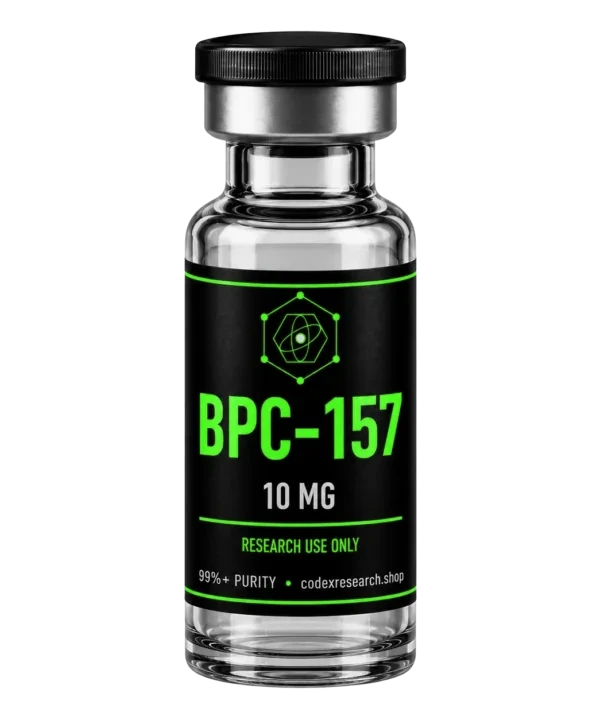
BPC-157 and TB-500 show up together in tissue-repair literature so often that they are easy to blur into one idea. They are not the same thing. They come from unrelated parent proteins, have very different sizes, and are studied for different pieces of the repair process. This guide lays out what each compound is, which pathways researchers associate with it, and why a study design might use one, the other, or both.
The short version
| BPC-157 | TB-500 | |
|---|---|---|
| Origin | Partial sequence of a protein isolated from gastric juice | Synthetic fragment based on thymosin beta-4 |
| Length | 15 amino acids | 7-amino-acid active region (Ac-LKKTETQ) in most research material |
| Primary research focus | Angiogenic and growth-factor signalling, cytoprotection | Actin regulation, cell migration |
| Typical model systems | Tendon, ligament, gastrointestinal mucosa | Dermal, corneal and cardiac tissue models |
| Codex format | Lyophilized vial | Lyophilized vial |
What BPC-157 is
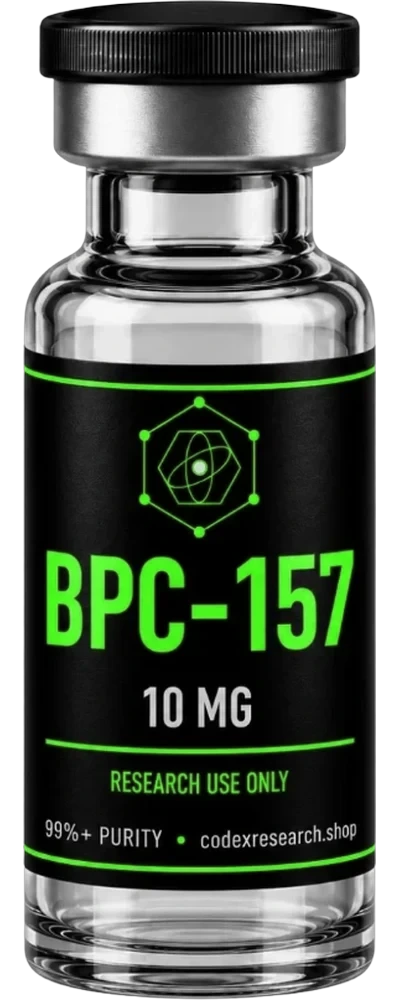
BPC-157 (Body Protection Compound-157) is a pentadecapeptide, a chain of fifteen amino acids, taken from a larger protective protein first described in gastric juice. One property that sets it apart from most short peptides is its stability in acidic conditions, which is part of why it has been examined in gastrointestinal models for decades.
In laboratory work, BPC-157 is most often discussed in connection with:
- Angiogenic signalling. Studies examine its interaction with the VEGFR2 receptor and the nitric-oxide system, both central to how new blood vessels form in a repair model.
- Fibroblast behaviour. Cell studies look at how fibroblasts, the cells that lay down connective tissue, spread and migrate in its presence, including effects on the FAK–paxillin pathway.
- Growth-hormone receptor expression in tendon fibroblast cultures, a line of research that links it to the tendon-repair literature.
What TB-500 is
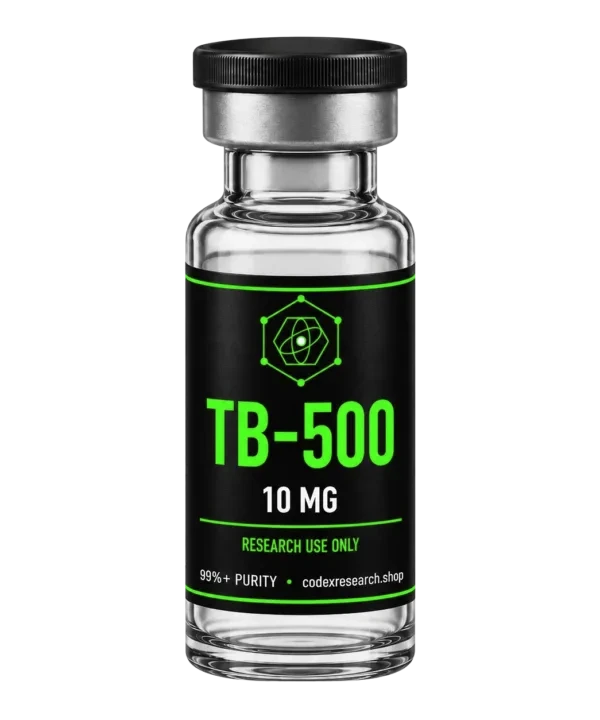
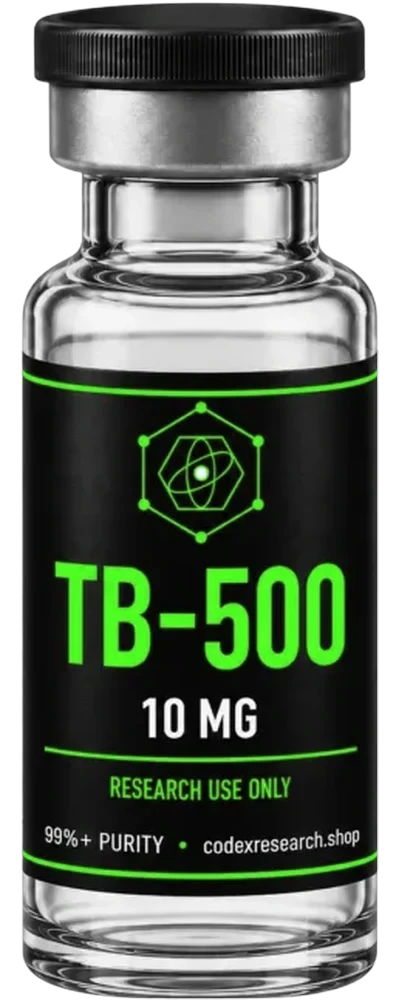
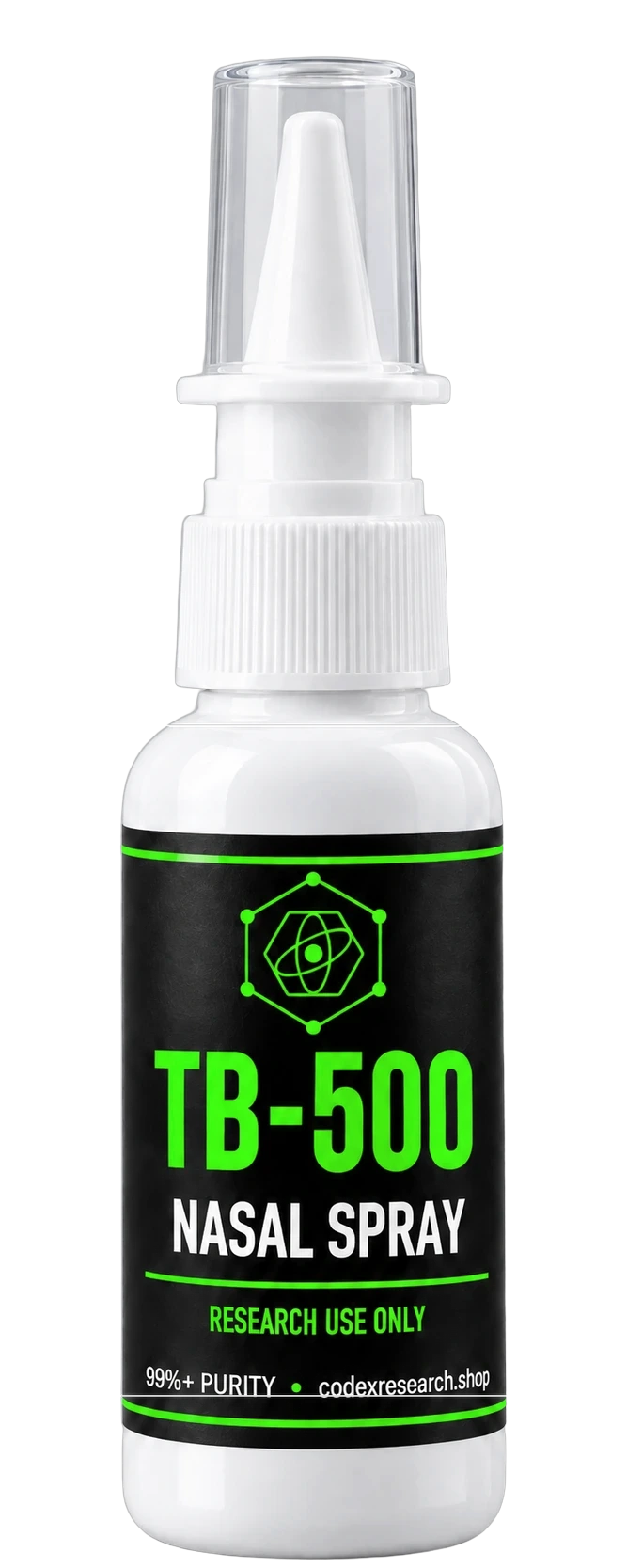
TB-500 is a synthetic peptide modelled on thymosin beta-4 (Tβ4), a 43-amino-acid protein found in almost every animal cell. Tβ4's main day-to-day job is binding G-actin, the building block of the cytoskeleton, which lets a cell control when and where actin filaments assemble.
The short LKKTETQ sequence is the actin-binding region of Tβ4, and it is the part most research material labelled "TB-500" is built around. Because actin assembly drives a cell's ability to move, TB-500 research centres on:
- Cell migration of keratinocytes, endothelial cells and other cell types in wound models.
- Actin sequestration and cytoskeletal remodelling.
- Endothelial cell organisation, which ties it to angiogenesis research from a different direction than BPC-157.
Note on naming: commercial "TB-500" is not always identical between suppliers. Some material is the acetylated 7-residue fragment and some is closer to full-length thymosin beta-4. The identity line on the certificate of analysis tells you which one you have.
Where the two overlap and where they don't
Both compounds appear in angiogenesis research, which is the main reason they get grouped together. The routes are different, though. BPC-157 work tends to focus on signalling: receptors, nitric oxide and growth-factor pathways. TB-500 work tends to focus on structure and movement: the actin cytoskeleton and how cells physically migrate into a damaged area.
That difference is why some study designs look at the two in parallel. One compound can be examined for its effect on vascular and growth-factor signalling while the other is examined for its effect on cell motility, within the same model.
Handling notes for both
Both are supplied as lyophilized (freeze-dried) powders and handled the same way:
- Store sealed vials cold and dark until use.
- Reconstitute with bacteriostatic water, running it gently down the vial wall. Use our reconstitution calculator to work out concentration and aliquot volume.
- Keep reconstituted material refrigerated and avoid repeated freeze–thaw.
See Peptide Storage and Stability for the full handling picture.
Checking what's in the vial
Because these two compounds are so frequently confused, and "TB-500" itself varies between suppliers, the certificate of analysis matters more than usual. Look for an identity result by mass spectrometry that matches the expected molecular weight, and an HPLC purity figure for the specific lot. Every Codex product page shows the current lot's report. Our guide to reading a certificate of analysis walks through each line.



 From lab to your door