

A peptide that degrades in storage gives results that don't reflect the compound you meant to study. Storage is not complicated, but the rules differ between freeze-dried powder and reconstituted solution, and a few common habits quietly shorten a peptide's usable life.
What actually damages a peptide
Peptides break down through a handful of chemical routes:
- Hydrolysis. Water slowly cleaves peptide bonds. This is why freeze-dried powder lasts far longer than solution.
- Oxidation. Residues such as methionine, cysteine and tryptophan react with oxygen. Light and air speed this up.
- Deamidation. Asparagine and glutamine residues, especially next to glycine, can convert to different residues over time in solution.
- Aggregation. Peptide chains can clump together, particularly after agitation or repeated freezing.
- Microbial growth in solution, which bacteriostatic water helps limit.
Temperature slows all of these, and removing water slows most of them dramatically.
Lyophilized (freeze-dried) peptides
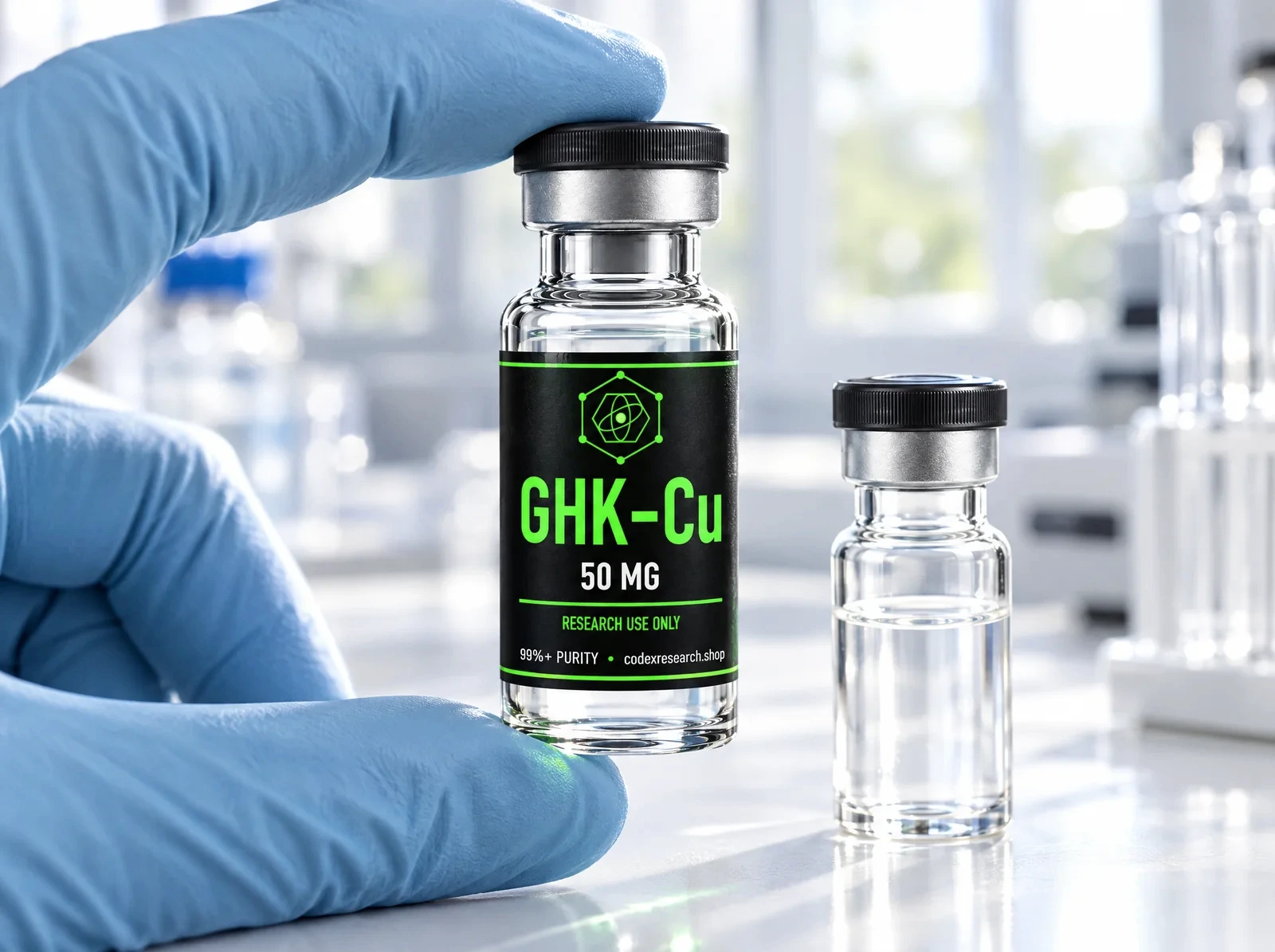
Sealed, freeze-dried peptides are the most stable form.
| Condition | Typical guidance |
|---|---|
| Long-term | −20 °C or colder, sealed, dark |
| Short-term | 2–8 °C refrigerated |
| Shipping / brief transit | Room temperature for days is generally tolerated |
Keep vials in their packaging or a dark container, and let a vial reach room temperature before opening so moisture doesn't condense onto the cold powder.
Reconstituted peptides
Once in solution, stability drops sharply.
- Store at 2–8 °C, protected from light.
- Use within a few weeks for most sequences. Some are more fragile and should be used sooner.
- Bacteriostatic water limits microbial growth but does not stop chemical degradation.
Freeze–thaw: the hidden problem
Every freeze–thaw cycle forms ice crystals and shifts local concentration and pH, which can denature and aggregate peptides. A vial taken in and out of the freezer repeatedly can lose meaningful activity.
The fix is aliquoting: after reconstitution, divide the solution into single-use portions, freeze them, and thaw only what you need. Each aliquot goes through one freeze–thaw cycle instead of many.
Signs a peptide has degraded
- Cloudiness or visible particles in a solution that was clear
- Discolouration
- Powder that has become sticky, clumped or glassy (a sign of moisture exposure)
- Inconsistent results between aliquots of the same vial
If you see these, treat the material as compromised.
A simple storage routine
- Log the vial on arrival and move it to the freezer if it won't be used soon.
- Warm to room temperature before opening.
- Reconstitute only what you need. The reconstitution calculator helps size the batch.
- Label with compound, concentration and date.
- Refrigerate the working vial; freeze single-use aliquots of the rest.
For the reconstitution steps themselves, see How to Reconstitute Lyophilized Peptides.

 From lab to your door