

A certificate of analysis (COA) is the lab report that shows what a specific batch of a compound actually contains. For research peptides it's the single most important document a supplier can give you, because a label is only a claim and the COA is the evidence. This guide explains each section of a typical peptide COA and the details that separate a meaningful report from a decorative one.
Start with the header: is this report for your lot?
Every COA should identify:
- The compound name exactly as sold
- A lot or batch number, which should match the number on your vial
- The testing laboratory, ideally an independent third party
- A report or sample ID and the date tested
If the lot number on the COA doesn't match the vial, the report tells you about a different batch. A generic "sample COA" that never changes between orders is a red flag.
Identity: is it the right molecule?
Identity is usually confirmed by mass spectrometry (MS), often paired with liquid chromatography as LC-MS. The instrument measures the molecular weight of the material and compares it with the theoretical weight of the expected sequence.
A passing identity result means the main component has the right mass. It's the line that catches the most serious problem: a vial that contains the wrong compound entirely.
Purity: how much of it is the target peptide?
Purity is measured by high-performance liquid chromatography (HPLC), most often reverse-phase HPLC. The sample is pushed through a column that separates its components, and a detector records each one as a peak.
Purity is the target peptide's peak area as a percentage of all detected peaks. A result of 99.2% means 99.2% of what the detector saw was the intended sequence, and 0.8% was something else. Typical impurities are truncated or deletion sequences left over from synthesis.
Purity is not the same as quantity. A vial can be 99% pure and still contain less peptide than its label states, which is why the next line matters.
Net peptide content and potency
Lyophilized peptides are never 100% peptide by weight. The powder also holds counter-ions (often acetate or trifluoroacetate, used during purification) and a small amount of bound water.
Net peptide content or an assay/potency result reports how much actual peptide is in the vial, for example "4.85 mg" on a 5 mg vial. This number is what makes reconstitution math accurate.
Safety and quality screens
Better reports go beyond identity and purity:
| Test | What it checks |
|---|---|
| Endotoxin (LAL) | Bacterial endotoxin contamination |
| Sterility | Microbial growth |
| Residual solvents (GC-MS) | Solvents left from synthesis |
| Heavy metals (ICP-OES/MS) | Lead, cadmium, arsenic, mercury |
| Water content / pH | Physical properties of the material |
Not every research application needs every test, but a report that includes them gives a fuller picture of the lot.
Red flags to watch for
- No lot number, or a lot number that doesn't match the vial
- No named laboratory, or a "lab" with no verifiable presence
- A purity figure with no method listed
- Identical reports across different products or dates
- A COA you can only get by emailing and waiting
How Codex Research handles COAs
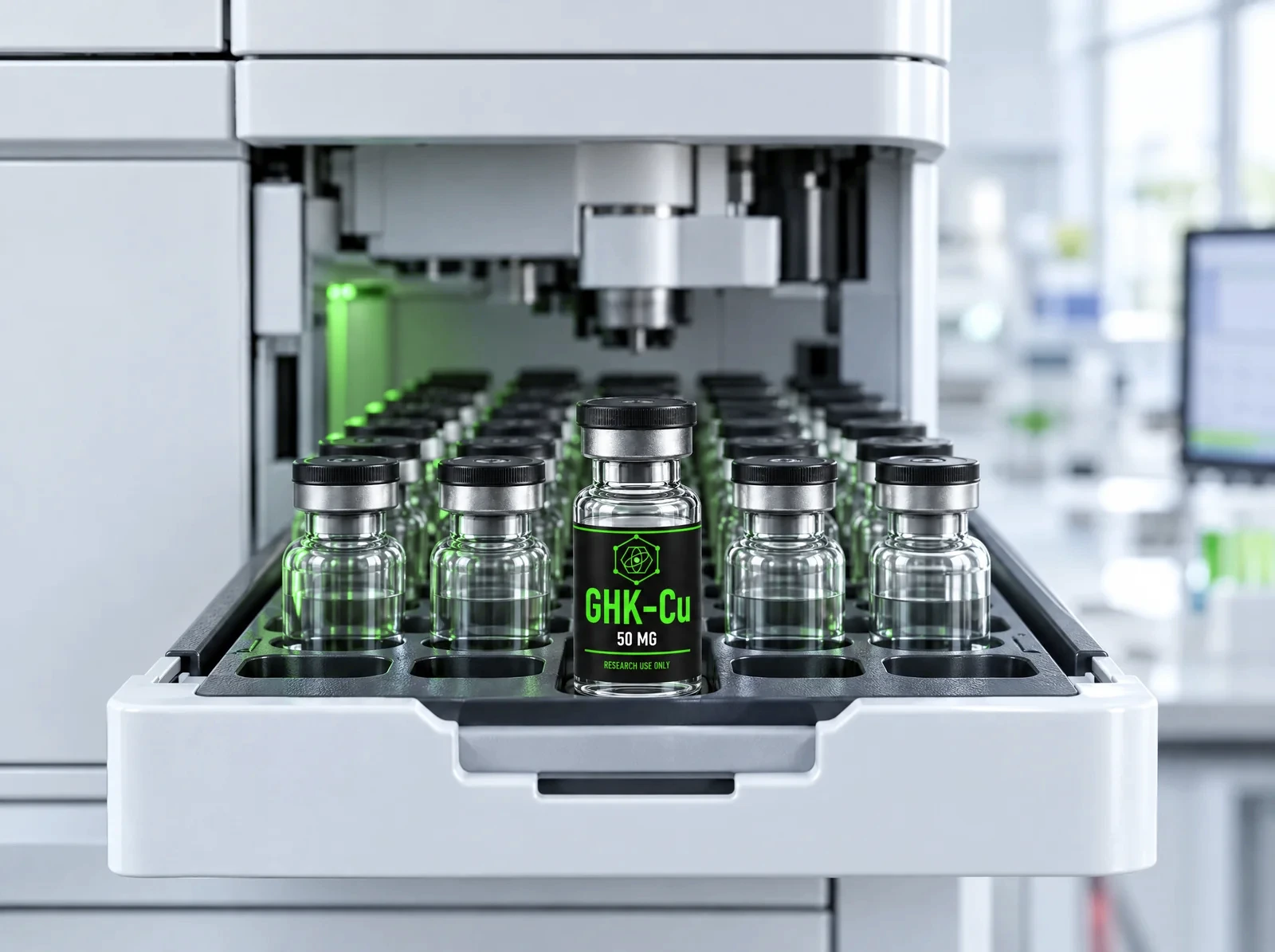
Every Codex product page shows the full report for the current lot, including identity by LC-MS, HPLC purity, assay, and the safety screens, with the lot number and testing date. BPC-157, for example, lists each test, its specification, method, result and status. If a lot changes, the report on the page changes with it.






 From lab to your door