
SiO₂
Most common
Silica gel
Porous silicon dioxide with a very large internal surface. The most common general-purpose desiccant.
(“DES-ih-kunt”)
A small packet doing a job the seal can’t do alone.
The short answer
A desiccant is a material that pulls water vapor out of the air inside a closed container, keeping humidity low around what it protects.
Desiccants such as silica gel and molecular sieve adsorb water vapor, lowering the humidity inside a sealed package. They matter for hygroscopic materials like freeze-dried peptides, which pull in moisture readily. But a desiccant has a fixed capacity: once it is full, it stops working, and it cannot help a container that is left open or opened while cold.
Reviewed by the Codex Research quality teamUpdated Nov 8, 2026
Word study
Say it
des·ic·cant
(“DES-ih-kunt”)
Roots and origin
RootLatin
The Latin siccus, dry, also gave English “siccative,” a drying oil. A desiccant does what the word promises: it dries things out thoroughly.
Around the world
Tap a language to hear it spokenDefinition
A desiccant is a drying agent: a material that takes up water vapor from the air around it. Placed inside a sealed container, it lowers the relative humidity, so moisture-sensitive contents have less water to pick up. Most packaging desiccants work by adsorption, holding water on an enormous internal surface rather than reacting with it.
USP general chapter <670>, on auxiliary packaging components, includes desiccants among the articles used to support or enhance container–closure systems, and sets standards for them. Common commercial types include silica gel, molecular sieve, bentonite clay, calcium chloride and calcium oxide. They differ in how much water they hold and how low a humidity they can reach.
A desiccant is one part of a moisture budget. Waterman and MacDonald’s review of packaging for moisture-sensitive products models the humidity inside a package from three things: the moisture already in the contents, the moisture that gets through the packaging over time, and how the desiccant and the product share water according to their sorption curves. Too little desiccant, or a leaky closure, and the humidity climbs anyway.
Capacity is finite. A desiccant keeps adsorbing until it is saturated, and then it stops. That is why a packet sealed in with a vial can protect it for a long time, while the same packet in a container that is opened often, or left open, fills up quickly. Opening a cold container in warm air is worse still: water condenses directly on the cold contents, faster than any desiccant can respond.
For freeze-dried peptides, which are hygroscopic, a desiccant is a sensible extra layer, not a substitute for the basics. A tight seal, the stated storage temperature, and letting a cold vial reach room temperature before opening do more to keep a powder dry than the packet alone.
Types
Porous silicon dioxide with a very large internal surface. The most common general-purpose desiccant.
Crystalline aluminosilicates with uniform pores. Can bring humidity in a closed space very low.
A natural clay desiccant, inexpensive and effective at moderate humidity.
High-capacity desiccants that bind water chemically or by forming hydrates.
Silica gel containing an indicator that changes color as it takes up water, showing when it is spent.
For buyers
Freeze-dried peptides pull in moisture readily, and water drives several kinds of degradation.
A desiccant works until it is saturated. Frequent opening uses it up fast.
Moisture getting through the closure is a major source of water in a package. A desiccant cannot outrun a poor seal.
At Codex Research
Codex Research materials ship sealed, with storage guidance on each product page and a lot-matched certificate of analysis for the lot in stock.
See it live: the hygroscopic guide, with a moisture pickup chart
Myth vs fact
Tap a card to flip it.
Watch for
Quick check
A tight closure is the first moisture barrier.
If it changes color, the desiccant is spent.
Let a cold vial reach room temperature before opening it.
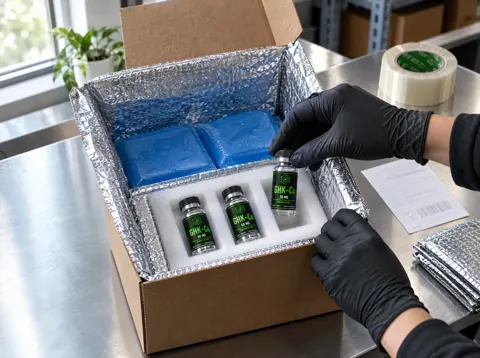 Full walkthrough · JournalResearch peptides in transit: heat, cold and storage
Questions
A drying agent that adsorbs water vapor, lowering the humidity inside a sealed container.
Silica gel, molecular sieve and bentonite clay, along with calcium chloride and calcium oxide.
Molecular sieve has uniform pores and can reach much lower humidity; silica gel is a common general-purpose choice.
Yes. Once saturated with water, a desiccant can adsorb no more.
Freeze-dried peptides are hygroscopic, and absorbed water can drive degradation.
No. A good seal and correct storage temperature matter more.
USP general chapter <670> on auxiliary packaging components.
Sources and standards
Written and reviewed by the Codex Research quality team · Last reviewed November 8, 2026 · For laboratory research use only.
On real products
Every Codex vial ships freeze-dried, sealed and lot-labelled. See how desiccant applies on a real product, then read the full guide.
 Repair
Research peptide
Immune Research
LL-37 is the only human cathelicidin peptide, a 37-residue amphipathic helix released from the hCAP-18 precursor encoded by the CAMP gene.
 Repair
Research peptide
Immune Research
Thymosin alpha-1 is a 28-residue acetylated peptide isolated from calf thymus in 1977 and generated from prothymosin alpha, studied in T-cell biology.
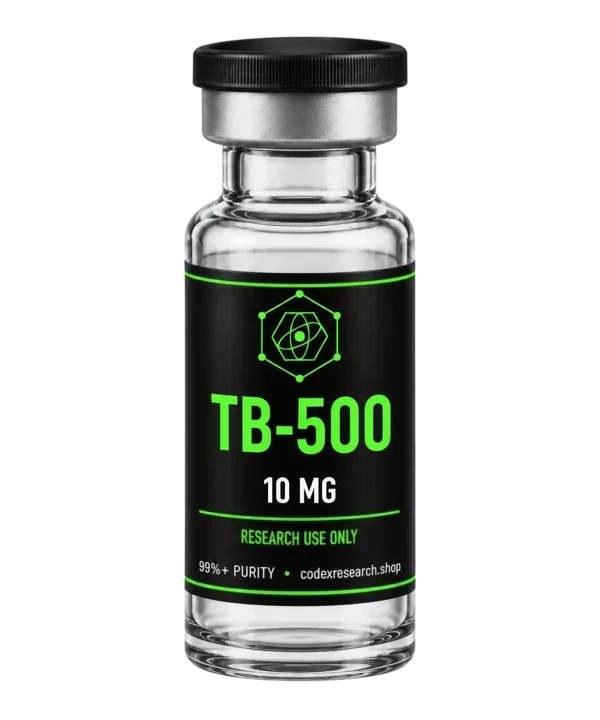 Repair
Research peptide
Tissue-Repair Research
TB-500 is Ac-LKKTETQ, the acetylated actin-binding fragment of Thymosin Beta-4 (residues 17–23), supplied as a lyophilized peptide for actin-regulation and cell-migration research.
Journal guideResearch peptides in transit: heat, cold and storageRead the guideKeep going
 From lab to your door
U.S.-made research vials, shipped with lot-matched, lab-tested COAs you can scan straight off the label.

21+ Only
Codex Research provides research-grade compounds for laboratory and research use only. By entering, you confirm you are at least 21 and agree to our Terms & Conditions.
By proceeding you affirm the statements above are true. Products are supplied for laboratory research use only — not for human or veterinary use, not for use in diagnostic procedures, and not evaluated by the U.S. Food and Drug Administration. Full disclaimer.


