

Freeze-dried peptides are shipped dry because the solid state is far more stable than solution, but parcels still spend most of their journey outside room temperature. This guide covers what heat, cold and time do to a sealed vial, where the risk is highest, and what to check on arrival.
Key takeaways
- Research peptides are shipped freeze-dried because removing water slows the chemical reactions that degrade a peptide.
- In the solid state, temperature is the main driver of degradation, and moisture matters more as temperature rises.
- Monitored test parcels spent an average of 68% of their transit time outside the 68–77 °F room-temperature range, in both summer and winter.
- Shorter transit cuts heat exposure: in one summer study, next-day parcels spent 14% of transit out of range against 43% for 3-day parcels.
- On arrival, check that the vial is sealed, the cake is intact and the lot number matches the published certificate, then store it as the label states.
ImportantResearch use only. This guide covers how sealed, freeze-dried laboratory research materials are shipped and received. It does not describe preparation, human or animal use. Codex Research compounds are not approved by the FDA and are sold for in-vitro laboratory research only.
Quick answer
Research peptides are shipped freeze-dried because the dry, solid state is far more stable than a solution. Removing water slows the reactions that break a peptide down, so a sealed vial tolerates ordinary shipping well. It is not immune, though. In the solid state, temperature is the main driver of degradation, and moisture matters more as temperature rises [1, 3].
Parcels also spend more time outside room temperature than most people assume. In a monitored study of test shipments, packages spent an average of 68% of their transit time outside 68–77 °F, in summer and winter alike [5]. The two things that reduce exposure are the ones a supplier controls, packaging and time in transit, and the one the recipient controls: bringing the parcel inside promptly.
Terms you will see
| Term | Meaning |
|---|---|
| Lyophilized (freeze-dried) | Material dried by freezing and removing water under vacuum, leaving a dry solid. |
| Cake | The dry solid left in the vial after freeze-drying. |
| Controlled room temperature | The 68–77 °F (20–25 °C) range the USP sets for room-temperature storage. |
| Temperature excursion | Time a product spends outside its recommended temperature range. |
| Hygroscopic | Readily absorbs moisture from the air. |
| Glass transition (Tg) | The temperature at which a rigid, glassy solid starts to soften and its molecules move more freely. |
| Plasticization | Softening of a solid by an absorbed substance, most often water, which lowers its glass transition. |
| Deamidation | A common degradation reaction at asparagine and glutamine residues. |
| Cold chain | A qualified system of packaging, transport and monitoring that holds a product within a set temperature range. |
Why peptides ship dry
Water takes part in several of the reactions that degrade peptides, and it also makes a solid more mobile, which lets reactions proceed faster. Freeze-drying removes most of that water, leaving a glassy solid in which molecules move very slowly [1, 7].
Solid-state reactions still happen. A review of protein and peptide stability lists deamidation, peptide bond cleavage, oxidation, the Maillard reaction and aggregation among the reactions that continue in dry formulations, and names temperature, moisture content and the physical state of the solid as the main factors that control them [1]. A later review of protein stability reached the same conclusion and noted that degradation in the dry state can occur over the time scales of drying, distribution and use [10].
The glassy state, explained simply
Most freeze-dried peptides are amorphous: the molecules are locked in place without forming crystals, a little like the structure of glass. In this state, chemistry depends heavily on how freely the molecules can move [11].
- Below the glass transition, the solid is rigid and molecular motion is very slow, so reactions crawl.
- As temperature approaches the glass transition, the solid softens and reactions accelerate.
- Absorbed water lowers the glass transition, so a solid that has picked up moisture softens at a lower temperature than a dry one [11, 12].
This is why heat and moisture work together. A dry vial in a warm truck may stay well below its softening point, while the same powder with extra moisture could be much closer to it [2, 12]. Reviews of solid-state stabilization describe both the mobility of the glassy matrix and the preservation of native structure as reasons dry formulations hold up so well [7].
What heat and moisture do to a dry peptide
The clearest recent data come from a six-month study of a model peptide stored as a dry powder at 25, 40 and 60 °C and 1%, 33% and 75% relative humidity [3]:
- Temperature had a major effect. Deamidation and covalent aggregation rates rose with temperature.
- Humidity depended on temperature. Moisture-driven degradation was minimal at 25 °C and 40 °C but became important at 60 °C.
- The solid itself changed. At 60 °C the powder took up moisture differently than at the lower temperatures.
Studies of a model hexapeptide in dry matrices found that its deamidation rate tracked how much absorbed water had softened the solid [2], and an earlier study of the same kind of peptide found that the conditions it was dried from shaped how sensitive it was to moisture and temperature in storage [4]. The practical lesson across this work is the same: keep the material dry, keep heat exposure short, and do not leave a vial in a hot place.
Degradation pathways in a dry vial
| Pathway | What happens | What speeds it up |
|---|---|---|
| Deamidation | Asparagine or glutamine residues convert to related forms, changing the molecule. | Heat, absorbed moisture, a softened solid [1, 2, 3] |
| Oxidation | Methionine, cysteine, tryptophan and similar residues react with oxygen. | Heat, oxygen in the headspace, light [1, 10] |
| Aggregation | Molecules bond or clump together, sometimes irreversibly. | Heat and moisture, especially in combination [3, 10] |
| Peptide bond cleavage | The chain breaks into fragments. | Moisture and heat [1] |
| Maillard reaction | Amino groups react with reducing sugars in a formulation. | Heat and moisture in sugar-containing solids [1] |
None of these require a solution to begin. All of them slow sharply when the solid is cold, dry and sealed.
Moisture: the hidden variable
Freeze-dried powders are hygroscopic: they pull water from the air. Moisture can affect a solid in two ways. It acts as a reactant in some reactions, and it softens the solid so that every reaction runs faster [12].
The relationship is not always simple. In one study of freeze-dried antibody formulations, degradation was lowest at a residual water content of about 2–3% rather than at the driest point, even though molecular mobility kept rising with water content [13]. That suggests water’s role is more complex than mobility alone. The general rule still holds: a sealed vial keeps the powder at the moisture level it was made to, and an opened or damaged vial lets humid air in.
That is also why condensation matters. A cold vial opened in a warm, humid room can collect moisture on and inside the vial before it warms up.
What a parcel actually experiences
Two independent studies put temperature loggers inside test parcels shipped across the United States.
| Study | What was shipped | Key finding |
|---|---|---|
| New Jersey, California and Tennessee routes, 2019–2020 [5] | Simulated shipments by different carriers and services, winter and summer | Packages spent an average of 68.3% of transit time outside 68–77 °F. Recorded package temperatures ranged from 5.1 °F to 102.3 °F. |
| Six US destinations by mail, 2019–2020 [6] | 48 unrefrigerated padded mailers with data loggers | Every shipment left the range at some point: 68–87% of transit time in winter and 27–54% in summer. |
Speed made a clear difference in summer. In the first study, next-business-day parcels spent 13.6% of transit out of range against 43.1% for 3-day parcels [5]. In winter the gap closed, because cold exposure at hubs and on trucks affects fast and slow services alike, and winter parcels in that study took roughly twice as long to arrive as summer ones [5].
Neither study tested freeze-dried peptides, and time out of range is not the same as damage. They do show that "room temperature" cannot be assumed for an ordinary parcel, which is why packaging and transit time matter.
Heat in the last mile
The hottest part of a trip is often after the carrier marks a parcel delivered. Researchers in Phoenix measured temperatures inside mailboxes and parked cars on summer days with outdoor temperatures around 110 °F and recorded readings above 158 °F (70 °C) [8]. In the same study, capsules of a powdered drug heated to those temperatures in their original packaging became visibly distorted and the powder clumped [8].
That study examined a different powder, not a peptide, but it shows how quickly an unattended parcel can heat up. A box on a sunny porch, in a metal mailbox or in a car seat can pass the temperatures used in accelerated stability testing within hours.
Cold, freezing and winter shipping
For sealed, dry material, cold is generally the lesser concern. Low temperatures slow chemical reactions [1], and a dry cake has no liquid water to form ice, unlike a solution.
Winter brings different issues:
- Longer transit. Storms, hub delays and holiday volume can add days, and the longer a parcel travels, the more total time it spends out of range [5].
- Cold hubs. Parcels can sit for hours in unheated sorting facilities and trucks, and logged parcels have recorded package temperatures as low as 5 °F [5].
- Condensation. A cold vial opened before it warms can draw moisture onto the powder.
How regulated medicines move
Medicines that need temperature control travel through a formal cold chain. WHO guidance for time- and temperature-sensitive pharmaceutical products describes qualified storage areas, validated shipping containers, transport route profiling and temperature monitoring throughout distribution [9].
Research parcels generally travel through ordinary carrier networks without that infrastructure. A supplier can still apply the same principles where it counts: short time in transit, insulation matched to the season, and no delays before dispatch.
Where time and temperature add up
Risk is highest where long summers, high humidity or long routes combine. Our state shipping guides cover each region in detail.
| Season | Highest-risk regions | What changes |
|---|---|---|
| Summer heat | The desert Southwest, Texas, the Gulf Coast and the Southeast. See Arizona, Texas, Florida and Georgia. | Hot trucks, porches and mailboxes. Choose faster shipping and bring parcels in promptly. |
| Hurricane season | The Gulf and Atlantic coasts. See Florida and South Carolina. | Carrier facilities can close ahead of a storm, lengthening transit. |
| Winter storms | The Great Lakes, the Northeast and the mountains. See Michigan, New York, Massachusetts and Illinois. | Delays and cold hubs. Cold slows degradation, but longer transit still adds up. |
Typical delivery times for every state are on the shipping locations page.
A season-by-season shipping calendar
| Months | Main risk | What helps most |
|---|---|---|
| December – February | Storm delays, cold hubs, holiday volume | Order early, watch tracking, let vials warm before opening |
| March – April | Changeable weather, early heat in the desert | Standard shipping suits most addresses |
| May – September | Heat in trucks, porches and mailboxes | 2-Day shipping in hot regions, prompt pickup |
| August – October | Hurricanes on the Gulf and Atlantic coasts | Avoid shipping into a forecast storm, consider an inland address |
| October – November | Lingering desert heat, holiday volume from late November | Keep using 2-Day in the low desert into October |
How Codex Research packs and ships
Every order is packed to keep exposure short and buffered:
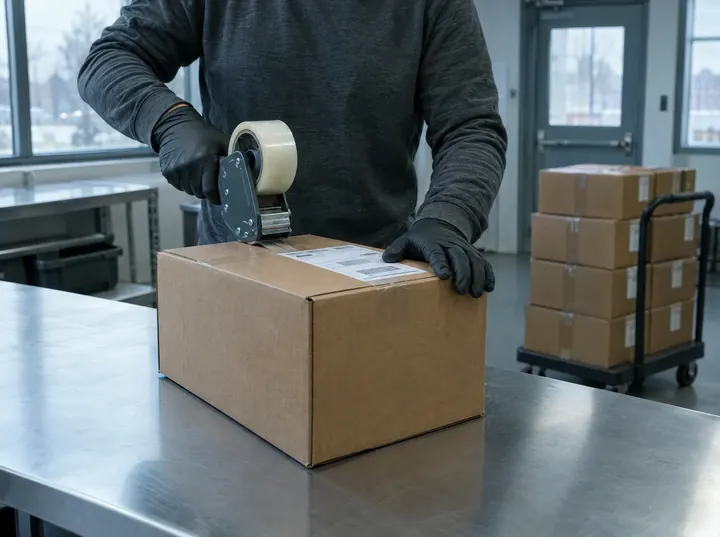
- Same-day dispatch. Orders placed before 3 PM ET on a business day leave the same day, so no parcel sits over a weekend waiting to ship.
- Insulated mailer with ice packs. The liner slows heat transfer in both directions, and the ice packs absorb heat during the warmest part of the trip.
- Short domestic routes. Orders ship from our facility in the Southeast. Standard delivery typically takes 1–2 business days in the Carolinas and Georgia, 2–4 along most of the East Coast and 4–5 on the West Coast.
- 2-Day everywhere. Available at checkout for any address, and worth choosing in summer for the hottest regions.
- Tracking from dispatch. A tracking number is emailed as soon as the parcel leaves, so you can plan to be available on delivery day.
When a parcel arrives
- Bring it inside promptly. A parcel on a sunny porch or in a metal mailbox can heat quickly after delivery.
- Check the vial. It should be sealed, with no cracks and an intact cap and crimp.
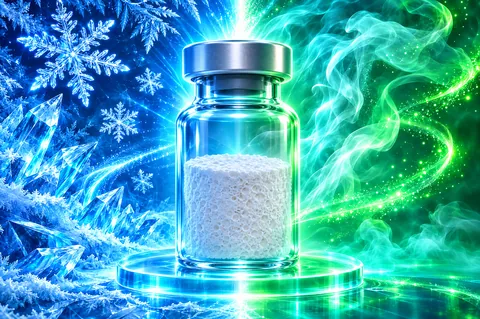
- Look at the cake. A freeze-dried cake is normally a uniform white or off-white solid. A shrunken, glassy, sticky or discolored cake can indicate moisture or heat exposure.
- Match the lot. Compare the lot number on the label with the certificate of analysis published on the product page.
- Store it as labeled. Move the vial to the storage conditions stated on its label and product page, and keep it sealed until use.
- Let a cold vial warm before opening. Opening a cold vial in a warm, humid room can draw condensation onto a hygroscopic powder.
- Record what you received. Note the delivery date, the lot number and the vial's condition in your lab records, so any later question can be traced to a specific lot and shipment.
If anything looks wrong, email info@codexresearch.shop with your order number and a photo within 48 hours of delivery.
Questions to ask any supplier about shipping
- How soon after an order is placed does it actually leave?
- What packaging is used, and does it change with the season?
- Where do orders ship from, and how long is a typical route to my state?
- Is a faster service available, and what does it cost?
- Is each vial matched to a published, lot-specific certificate of analysis?
- What happens if a parcel arrives damaged or is delayed in transit?
Common misconceptions
| Misconception | What the evidence says |
|---|---|
| "Freeze-dried means it can't degrade." | Reactions slow dramatically but continue in the solid state, faster at higher temperatures [1, 3]. |
| "Parcels travel at room temperature." | Monitored parcels spent most of their transit time outside 68–77 °F [5, 6]. |
| "Cold is as bad as heat." | For sealed, dry material, cold slows degradation. Heat and moisture are the bigger risks [1, 3]. |
| "Drier is always better." | One study found degradation was lowest at a small residual water content rather than the driest point [13]. |
| "Packaging makes transit time irrelevant." | Insulation buffers temperature for a limited time. Shorter transit still reduces exposure [5]. |
| "Delivery is the end of the risk." | Mailboxes and parked cars in summer can pass 158 °F [8]. |
| "A COA proves the vial arrived in good condition." | A COA describes the lot when tested, not the journey afterwards. |
What packaging cannot do
Insulation and ice packs buffer temperature swings for a period of time. They do not hold a fixed temperature indefinitely, and they cannot protect a parcel left in direct sun for hours after delivery. Fast dispatch, a short route and prompt pickup work together, and each one reduces the time a vial spends warm.
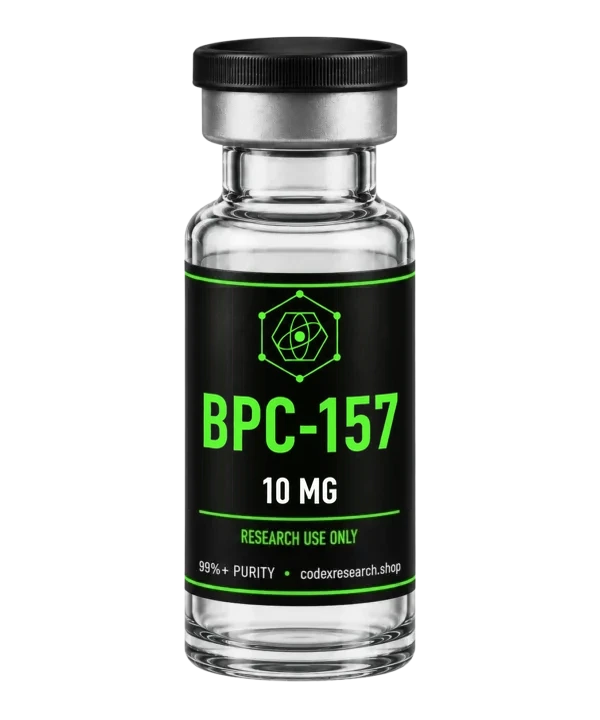
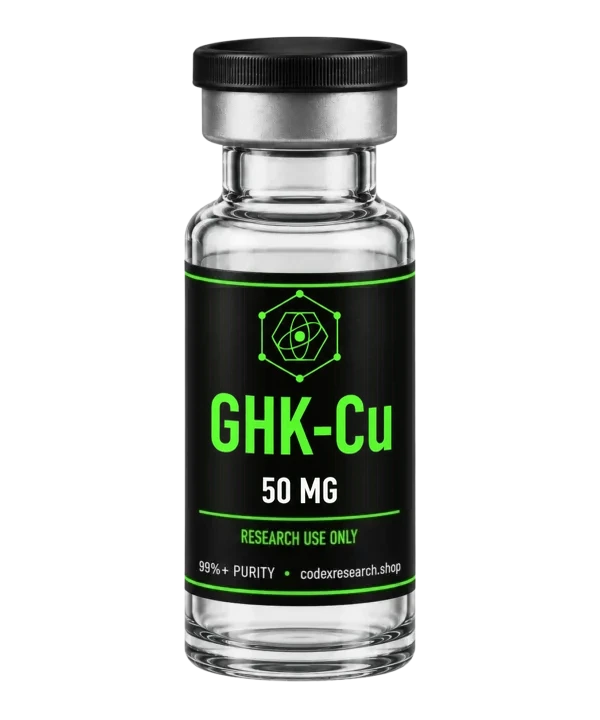
For how to verify the lot certificate that comes with each vial, see our guide on third-party testing, and for how sourcing affects the journey before dispatch, see US-made vs imported research peptides. Storage notes for individual compounds are in our BPC-157 and GHK-Cu profiles.
Frequently asked questions
Why are research peptides shipped freeze-dried?
Does heat in transit damage a freeze-dried peptide?
How hot does a parcel get in summer?
Is cold weather a problem for freeze-dried peptides?
Why does moisture matter for a dry powder?
How long are Codex Research orders in transit?
How are Codex Research orders packed?
When should I choose 2-Day shipping?
What should I check when a parcel arrives?
What does a collapsed or discolored cake mean?
Does a certificate of analysis cover shipping conditions?
Where can I see delivery notes for my state?
Why does a sealed vial matter so much?
Is a hot mailbox worse than a hot truck?
Do pharmaceutical companies ship the same way?
References
- Lai MC, Topp EM. Solid-state chemical stability of proteins and peptides. J Pharm Sci. 1999;88(5):489-500.
- Lai MC, Hageman MJ, Schowen RL, Borchardt RT, Topp EM. Chemical stability of peptides in polymers. 1. Effect of water on peptide deamidation in poly(vinyl alcohol) and poly(vinyl pyrrolidone) matrixes. J Pharm Sci. 1999;88(10):1073-1080.
- Fagan A, Bateman LM, O’Shea JP, Crean AM. Kinetics of human insulin degradation in the solid-state: an investigation of the effects of temperature and humidity. J Pharm Sci. 2025;114(2):1368-1375.
- Oliyai C, Patel JP, Carr L, Borchardt RT. Solid state chemical instability of an asparaginyl residue in a model hexapeptide. PDA J Pharm Sci Technol. 1994;48(3):167-173.
- Chowdhury DA, Jeong MS, Vyas L, et al. Evaluation of temperature excursions from USP <659> recommendations during mail transit. J Am Pharm Assoc. 2023;63(3):847-852.
- Paloukos K, Speckman M. Assessment of non-refrigerated shipping methods used by mail-order pharmacies and exposure of medications to unsafe temperatures. ASHP Midyear Clinical Meeting, December 2020 (news release).
- Chang LL, Pikal MJ. Mechanisms of protein stabilization in the solid state. J Pharm Sci. 2009;98(9):2886-2908.
- Robbins RA, Thomas AR, Proctor LM, Hoyt JC, Hayden JM. Heat decreases formoterol delivery. Chest. 2005;128(6):4036-4040.
- World Health Organization. Model guidance for the storage and transport of time- and temperature-sensitive pharmaceutical products. WHO Technical Report Series No. 961, Annex 9. 2011.
- Manning MC, Chou DK, Murphy BM, Payne RW, Katayama DS. Stability of protein pharmaceuticals: an update. Pharm Res. 2010;27(4):544-575.
- Hancock BC, Zografi G. Characteristics and significance of the amorphous state in pharmaceutical systems. J Pharm Sci. 1997;86(1):1-12.
- Ahlneck C, Zografi G. The molecular basis of moisture effects on the physical and chemical stability of drugs in the solid state. Int J Pharm. 1990;62(2-3):87-95.
- Chang LL, Shepherd D, Sun J, Tang X, Pikal MJ. Effect of sorbitol and residual moisture on the stability of lyophilized antibodies: implications for the mechanism of protein stabilization in the solid state. J Pharm Sci. 2005;94(7):1445-1455.






 From lab to your door