Maker’s lab
Issuer is the maker
In-house COA
Issued by the manufacturer’s own quality control lab. Common and legitimate, but you are relying on the same company that made the product to report on it.
(“sur-TIF-ih-kit of uh-NAL-uh-sis”)
The lab document that proves what is actually in one specific lot.
The short answer
A certificate of analysis is the lab record of what one specific lot was tested for, how it was tested, and what the results were.
It lists every test run on that lot, the method behind each one, the limit the lot had to pass and the result the lab measured. A COA only applies to the lot number printed on it, so that number should always match the one on your vial.
Reviewed by the Codex Research quality teamUpdated Nov 7, 2026
Word study
Say it
cer·tif·i·cate of a·nal·y·sis
(“sur-TIF-ih-kit of uh-NAL-uh-sis”)
Roots and origin
RootMedieval Latin
OriginGreek
Put together, the name describes exactly what the document does: it makes certain what a material is by breaking it down into the results of separate tests.
Around the world
Tap a language to hear it spokenDefinition
Almost always shortened to COA, a certificate of analysis is the document a laboratory issues after it tests a sample from a production lot. It lists each test that was run, the method used, the acceptance limit the lot had to meet, and the result the lab actually measured. It is signed or approved by the person responsible for the testing and carries a report or document number so it can be traced.
The key word is lot. A COA does not describe a product in general. It describes one run of that product, identified by a lot number that should appear on both the certificate and the label of the vial it belongs to. Two lots of the same compound will each have their own certificate, and their results will rarely be identical to the decimal.
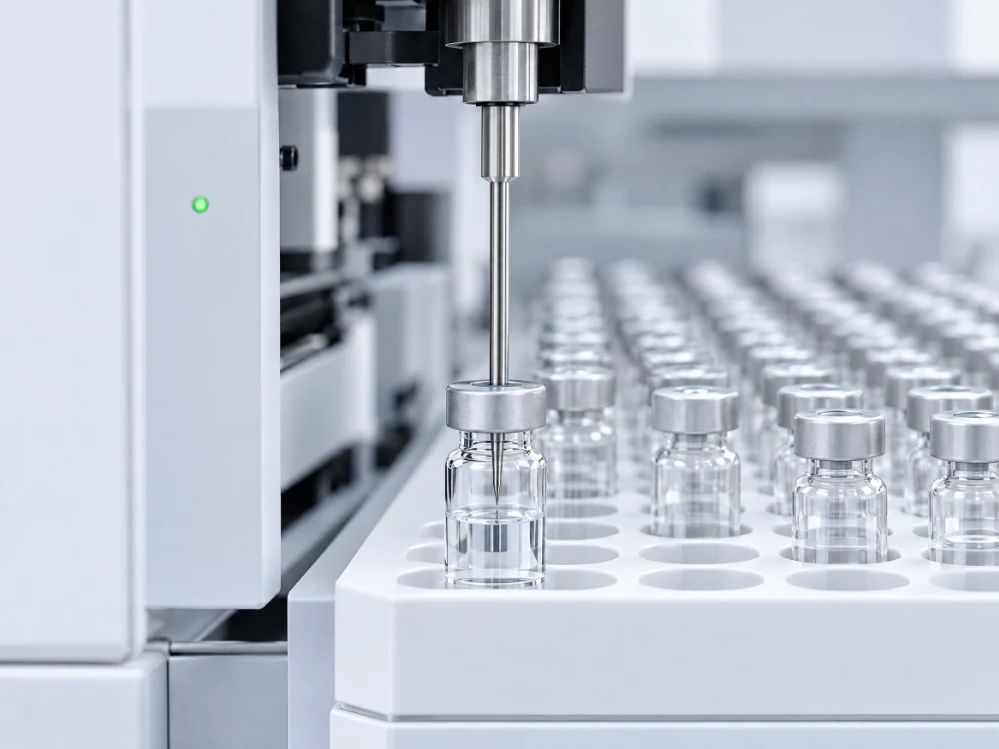
A COA sits at the end of a longer chain. A sample is pulled from the finished lot, logged, and sent to the testing lab with a chain of custody. The lab runs each test against a written method, an analyst records the raw data, and a second person reviews it before the report is released. The certificate is the one-page summary of that whole process.
A result only means something next to its specification. “99.2%” tells you very little on its own; “99.2% against a specification of 98.0% minimum, measured by HPLC at 220 nm” tells you the method, the bar the lot had to clear, and by how much it cleared it. That is why a well-made certificate always shows the limit beside the result.
COAs are used across pharmaceuticals, food, cosmetics, chemicals and research materials. In the research peptide market they are the main way a buyer can see evidence of quality before ordering, which is why how they are produced, presented and verified matters so much.
Not all the same
Issued by the manufacturer’s own quality control lab. Common and legitimate, but you are relying on the same company that made the product to report on it.
Issued by an independent lab with no stake in the result. Stronger evidence, provided the lab is identifiable and the report can be confirmed with it.
A certificate passed along by a distributor or reseller from the original manufacturer. Useful, as long as the lot number on it matches what is actually being sold.
A statement that a product meets its specification, often without the individual test results. It is not the same as a COA, which shows the measured numbers.
Interactive
Hover or tap a number to see what each part of a certificate tells you. The certificate shown is an illustrative sample with placeholder values, not a real report.
The lab that ran the testing, its address or accreditation, and a unique report number. The report number is what lets you confirm the document with the lab itself.
The material tested and the exact lot it came from. This lot number should match the one printed on the label of the vial you hold.
When the sample was received and tested, and when the report was issued. Some certificates also show a retest or expiry date for the lot.
Each analysis that was run, such as identity by mass spectrometry or purity by HPLC, with the method or technique named so the result can be interpreted.
The acceptance limit for that test. It is written as a minimum (≥ 98.0%), a maximum (≤ 5 EU/mg) or a match statement (“conforms to reference”), and it is set before the lot is tested, not after.
The value the lab actually measured, or a statement such as “conforms” for tests that compare against a reference. This is the line most people read first.
The name, signature or electronic approval of the person who reviewed and released the results, confirming the report is complete and final.
Line by line
Not every certificate includes every test. Identity and purity are the core; the rest depend on the product and its use.
For buyers
A product page can say anything. A COA ties a specific number to a specific lot, a specific method and a named lab, which makes it something you can check.
Because it is tied to a lot number, a COA lets a lab connect the exact material it used to the results on file, which is the basis of reproducible work.
A supplier that publishes a certificate for every lot is putting its testing on the record. One that will not is asking you to take quality on trust.
At Codex Research
Every Codex Research product page shows the certificate for the lot currently in stock, matched to the lot number printed on the vial. Each lot is tested for identity and HPLC purity before release, and a new certificate is published whenever a new lot comes in.
See it live: the lot-matched certificate on the BPC-157 product page
Myth vs fact
Tap a card to flip it.
Watch for
Quick check
The lot on the certificate should be the lot on your vial.
A result only means something next to its specification.
Use the report ID or lab portal to check it matches the lab’s own record.
 Full walkthrough · JournalThird-party testing and how to spot a fake COA
Questions
COA stands for certificate of analysis: the document a lab issues to report the test results for one specific production lot.
Either the manufacturer’s own quality control lab or an independent testing lab. The issuing lab is named on the certificate.
No. A COA reports the test results for one lot. A safety data sheet (SDS) describes a chemical’s hazards, safe handling, storage and disposal, and does not change from lot to lot.
The results describe the lot at the time it was tested. Many certificates show a retest or expiry date for the lot, after which the material should be retested before relying on those results.
At minimum, identity (usually by mass spectrometry) and purity (usually by HPLC). Depending on the product, it may also include content, water, endotoxin, heavy metals or residual solvents.
Each lot is a separate production run, so small differences are normal. Results can also differ if different methods, conditions or labs were used.
Yes, and some simply overstate. When researchers at Ghent University re-tested peptides ordered at 95% purity or higher, only 44% met the purity their supplier certificates claimed. That is why it is worth confirming a report with the issuing lab using its report number, and checking that the lot number, dates and methods all line up.
Sources and standards
Written and reviewed by the Codex Research quality team · Last reviewed November 7, 2026 · For laboratory research use only.
On real products
Every Codex product page publishes the certificate for the lot in stock. See certificate of analysis on a real product, then read the full guide.
 Cellular
Research peptide
Cellular Research
Cobalamin is a cobalt atom held in a corrin ring, the cofactor for methionine synthase and methylmalonyl-CoA mutase, studied in one-carbon metabolism.
 Cellular
Research peptide
Neuropeptide Research
VIP is a 28-residue neuropeptide of the secretin/glucagon superfamily that acts at the VPAC1 and VPAC2 receptors, studied in class B GPCR research.
 GH axis
Research peptide
GH-Axis Research
CJC-1295 without DAC is modified GRF(1-29) carrying four substitutions at positions 2, 8, 15 and 27 that resist the plasma enzyme cutting native GHRH.
Journal guideThird-party testing and how to spot a fake COARead the guideKeep going
 From lab to your door
U.S.-made research vials, shipped with lot-matched, lab-tested COAs you can scan straight off the label.

21+ Only
Codex Research provides research-grade compounds for laboratory and research use only. By entering, you confirm you are at least 21 and agree to our Terms & Conditions.
By proceeding you affirm the statements above are true. Products are supplied for laboratory research use only — not for human or veterinary use, not for use in diagnostic procedures, and not evaluated by the U.S. Food and Drug Administration. Full disclaimer.