
This pageIn glass
Laboratory
In vitro
In tubes, plates, purified systems or cultured cells, outside a living organism.
(“in VEE-troh · in VEE-voh”)
Two Latin phrases that set the boundary of where a research material belongs.
The short answer
In vitro means “in glass”: work done outside a living organism. In vivo means “in the living”: work done inside one.
In vitro research happens in controlled laboratory systems: test tubes, well plates, purified proteins and cultured cells. In vivo research happens in whole living organisms. The two answer different questions, and a result in one does not automatically carry over to the other. Materials sold for laboratory research use only are intended for in vitro work, not for use in humans or animals.
Reviewed by the Codex Research quality teamUpdated Nov 8, 2026
Word study
Say it
in vi·tro · in vi·vo
(“in VEE-troh · in VEE-voh”)
Roots and origin
RootLatin
OriginLatin
The glass is the laboratory glassware of early experiments: test tubes, flasks and dishes. The living is the whole organism. Between them sits most of the distance between a lab result and a real-world one.
Around the world
Tap a language to hear it spokenDefinition
In vitro is Latin for “in glass.” The National Cancer Institute defines it simply as in the laboratory, outside the body, and the opposite of in vivo. The Jackson Laboratory’s glossary describes it as a reaction or experiment in a metaphorical test tube rather than in a living organism. Cell cultures, enzyme assays, binding studies and analytical chemistry are all in vitro work.
In vivo is Latin for “in the living.” NCI defines it as in the body, the opposite of in vitro. In vivo research studies a living organism as a whole, with all of its interacting systems, and is subject to its own ethical review and regulatory requirements.
Between the two sits ex vivo: living cells or tissue taken out of an organism and studied while they remain viable, outside the body. In silico, a later coinage, describes work done by computer simulation. Each term describes where the work happens, not how good or important it is.
The terms describe different kinds of evidence. In vitro systems are controlled and repeatable, which makes them powerful for isolating one variable at a time, but they leave out the complexity of a whole organism. A result in a dish is a starting point; whether it holds in a living system is a separate question that needs separate evidence.
These terms also set the boundary for research materials. Materials sold for laboratory research use only are intended for in vitro research and analysis, not for administration to humans or animals. When a seller’s material is described in in vivo terms, or in vitro results are presented as if they were proof of effects in a living organism, that is a reason for caution.
Related terms
In tubes, plates, purified systems or cultured cells, outside a living organism.
Within a whole living organism.
Living tissue or cells studied outside the organism while still viable.
Studied in its original place, for example a molecule within intact tissue.
By computer modeling or simulation.
For buyers
In vitro isolates mechanisms; in vivo shows what happens in a whole organism. Neither replaces the other.
A finding in a dish needs separate evidence before it means anything about a living system.
Research-use-only materials are for in vitro laboratory work, which is the boundary they are sold within.
At Codex Research
Codex Research materials are sold for in vitro laboratory research use only. They are not for human or veterinary use, and every product page carries a lot-matched certificate of analysis.
See it live: the research use only guide in the glossary
Myth vs fact
Tap a card to flip it.
Watch for
Quick check
Was it cells, purified systems, tissue or a whole organism?
In vitro data should not be presented as in vivo proof.
Research-use-only materials belong to in vitro work.
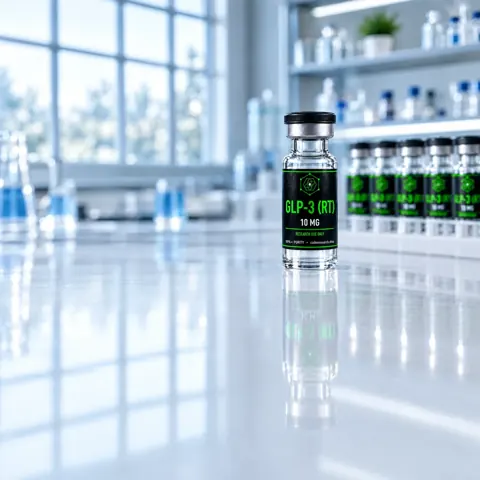 Full walkthrough · JournalWhat research use only means
Questions
Done outside a living organism, in a laboratory system such as a test tube, plate or cell culture. Literally “in glass.”
Done in a living organism. Literally “in the living.”
In vitro happens in controlled lab systems; in vivo happens in whole living organisms.
Living cells or tissue studied outside the organism while still viable.
Research done by computer modeling or simulation.
Not automatically. They need separate evidence from in vivo work.
In vitro laboratory research and analysis, not use in humans or animals.
Sources and standards
Written and reviewed by the Codex Research quality team · Last reviewed November 8, 2026 · For laboratory research use only.
On real products
See in vitro in context on real Codex research products, then read the full guide.
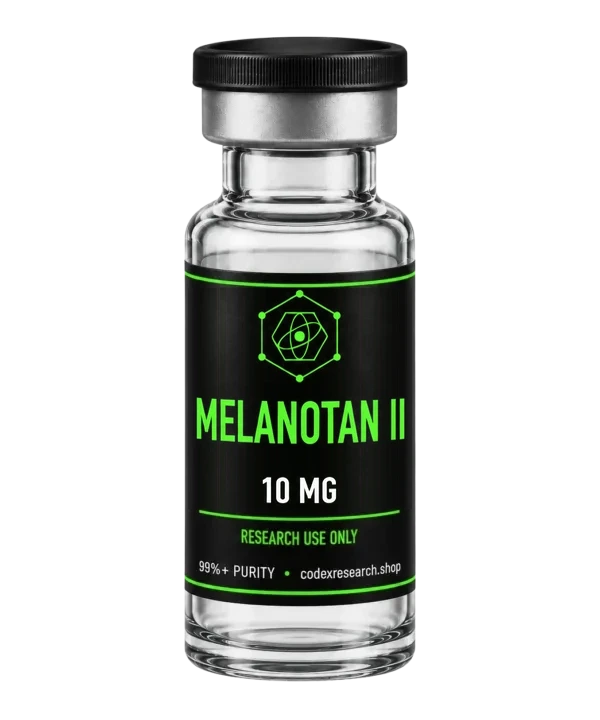 Dermal
Research peptide
Melanocortin Research
Melanotan II is a cyclic lactam analog of alpha-MSH that binds the melanocortin receptors, lot-tested at 99.91% purity with a published certificate.
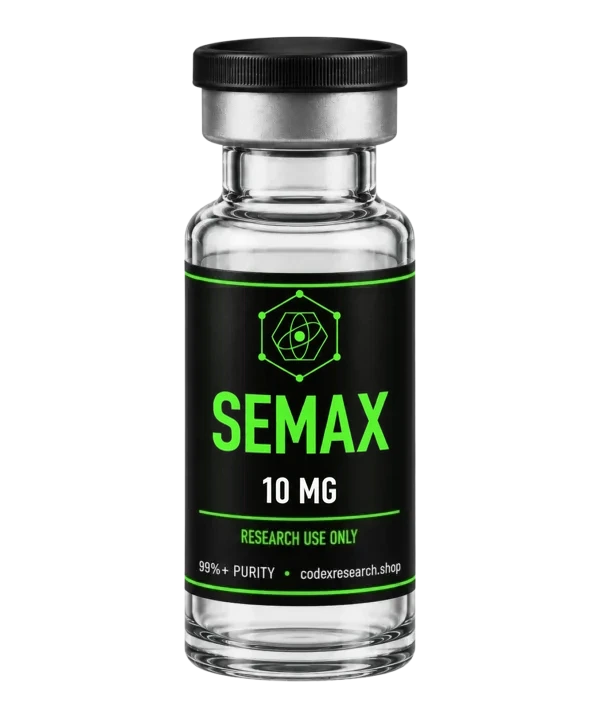 Neuro
Research peptide
Neuropeptide Research
Semax is a seven-residue ACTH(4-7) analogue with a Pro-Gly-Pro tail, studied in BDNF, trkB and cholinergic-neuron research. 5 mg and 10 mg vials, lot-tested by LC-MS.
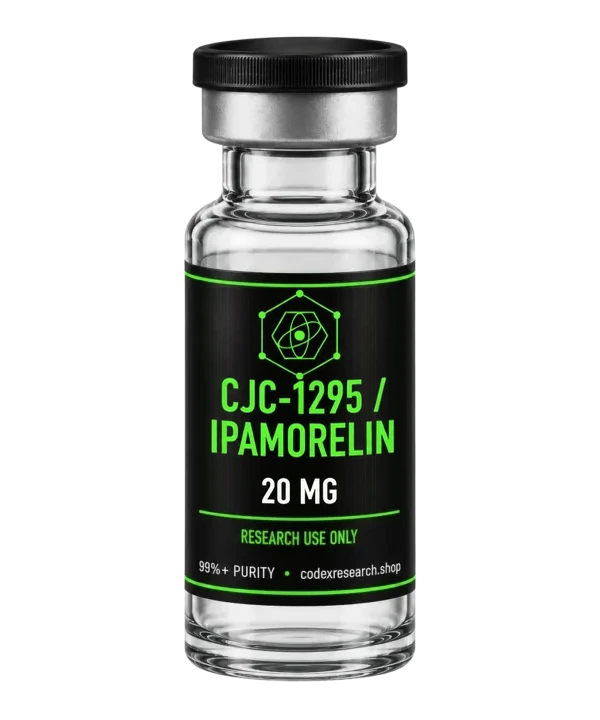 Blends
Research peptide
GH-Axis Research
A single vial pairing CJC-1295 without DAC, a tetrasubstituted GRF(1-29) analog, with Ipamorelin, a five-residue ghrelin-receptor agonist. Lot-tested by RP-HPLC.
Journal guideWhat research use only meansRead the guideKeep going
 From lab to your door
U.S.-made research vials, shipped with lot-matched, lab-tested COAs you can scan straight off the label.

21+ Only
Codex Research provides research-grade compounds for laboratory and research use only. By entering, you confirm you are at least 21 and agree to our Terms & Conditions.
By proceeding you affirm the statements above are true. Products are supplied for laboratory research use only — not for human or veterinary use, not for use in diagnostic procedures, and not evaluated by the U.S. Food and Drug Administration. Full disclaimer.


