

"Research Use Only" is one of the most misunderstood phrases in the peptide market. This guide explains where the label comes from in federal regulations, what it permits and what it does not, why the FDA judges intended use by more than the label, and what responsible RUO supply looks like.
Key takeaways
- Research Use Only (RUO) describes materials supplied for laboratory research, not for use in humans. For drugs used in in-vitro tests or lab research animals, the required caution statement is set out in 21 CFR § 312.160.
- RUO is not an approval, a safety rating or a quality grade. It says nothing about purity, identity or contamination.
- The label alone does not decide a product’s status. Under 21 CFR § 201.128, the FDA judges intended use by the seller’s claims, advertising and the circumstances of sale.
- FDA warning letters have rejected "research use only" disclaimers where websites or social media presented peptides for human use.
- For laboratory buyers, RUO means the material belongs inside a research program: documented, lot-traceable, handled under institutional policies and kept out of any human or animal use outside approved research.
ImportantNot legal advice. This guide summarizes publicly available U.S. regulations and FDA documents for general information. It is not legal advice. Codex Research compounds are not approved by the FDA and are sold for in-vitro laboratory research only, not for human or animal consumption.
Quick answer
Research Use Only (RUO) means a material is supplied for laboratory research and is not intended for use in humans or for clinical or diagnostic purposes. In U.S. regulations, the idea appears in two main places: 21 CFR § 312.160, which sets the caution label for drugs shipped for in-vitro tests or laboratory research animals, and 21 CFR § 809.10(c), which sets the RUO statement for in-vitro diagnostic products in the research phase [1, 2].
Three points matter most:
- RUO is not an approval. RUO materials have not been reviewed by the FDA for any human or veterinary use.
- RUO is not a quality grade. The label says nothing about purity, identity or contamination; only testing does.
- The label alone does not decide a product's status. The FDA judges intended use by everything a seller says and does, not just the words on the vial [4].
Where the "Research Use Only" label comes from
The phrase is used widely, but it has specific regulatory roots. Two sets of rules are most relevant:
| Drugs for laboratory research | In-vitro diagnostic (IVD) products | |
|---|---|---|
| Regulation | 21 CFR § 312.160 [1] | 21 CFR § 809.10(c) [2] |
| Covers | Drugs intended solely for tests in vitro or in animals used only for laboratory research | Diagnostic reagents and kits still in the laboratory research phase |
| Required statement | "CAUTION: Contains a new drug for investigational use only in laboratory research animals, or for tests in vitro. Not for use in humans." | "For Research Use Only. Not for use in diagnostic procedures." |
| Key condition | Material is used only for in-vitro or laboratory-animal research | Product must not be represented as an effective diagnostic |
| Related category | Investigational new drug (IND) studies in humans, which follow separate rules | Investigational Use Only (IUO), for products tested before commercial marketing |
The FDA has also published guidance explaining when IVD products are properly labeled RUO or IUO [3]. The common thread is the same in both settings: RUO describes material that has not been established for clinical use and is being supplied for research.
Why research-use rules exist at all
Science needs access to compounds long before anyone knows whether they will ever become medicines. Most molecules studied in laboratories never reach patients; they are tools for understanding receptors, pathways and cell behavior, or early candidates that fail and are dropped. If every one of them had to complete drug approval before a lab could buy a few milligrams, basic research would stall.
The research-use provisions solve that problem by creating a narrow lane. 21 CFR § 312.160 sits within the FDA's investigational new drug rules, and it lets drugs move to laboratories for in-vitro and laboratory-animal work without the full requirements that apply to human studies, on the condition that they stay in that lane: labeled for research and kept away from human use [1]. The IVD rules do the same for diagnostic reagents still in development [2].
That history explains the logic of the restriction. The exemption exists because the material is going to research. Once it is presented for any other purpose, the reason for the exemption disappears.
What the caution label says
For drugs shipped for in-vitro or laboratory-animal research, the regulation sets out the caution statement the label carries, ending in "Not for use in humans" [1]. It also sets conditions on how such material is shipped and handled, and the FDA can end the authorization to ship if the material ends up used for anything other than genuine scientific investigation [1]. In other words, the regulation describes material that stays in research, not just a sticker.
What RUO means, and what it does not
| RUO means | RUO does not mean |
|---|---|
| The material is supplied for laboratory research | The material is approved or cleared by the FDA |
| It is not intended for human use | It is safe for any use |
| It is not intended for clinical diagnosis | It has proven activity or effects |
| The supplier and buyer have research-only expectations | It meets any particular purity or quality standard |
| Labeling and records should reflect research supply | The label overrides how the product is marketed |
This distinction is the root of most confusion about RUO. The label is a use restriction, not a quality claim and not a legal shield.
Intended use: why the label alone is not enough
Federal drug law turns on intended use. The Federal Food, Drug, and Cosmetic Act defines a drug partly by what an article is intended for, such as use in the diagnosis, cure, mitigation, treatment or prevention of disease, or to affect the structure or function of the body [6]. A new drug cannot be introduced into interstate commerce without an approved application [7].
How is intended use decided? Under 21 CFR § 201.128, it is the objective intent of the people responsible for the product's labeling, and it may be shown by [4]:
- their expressions, including labeling claims, advertising and oral or written statements;
- the design or composition of the article;
- the circumstances surrounding its distribution, including situations where a product is, with the seller's knowledge, offered or used for a purpose for which it is neither labeled nor advertised.
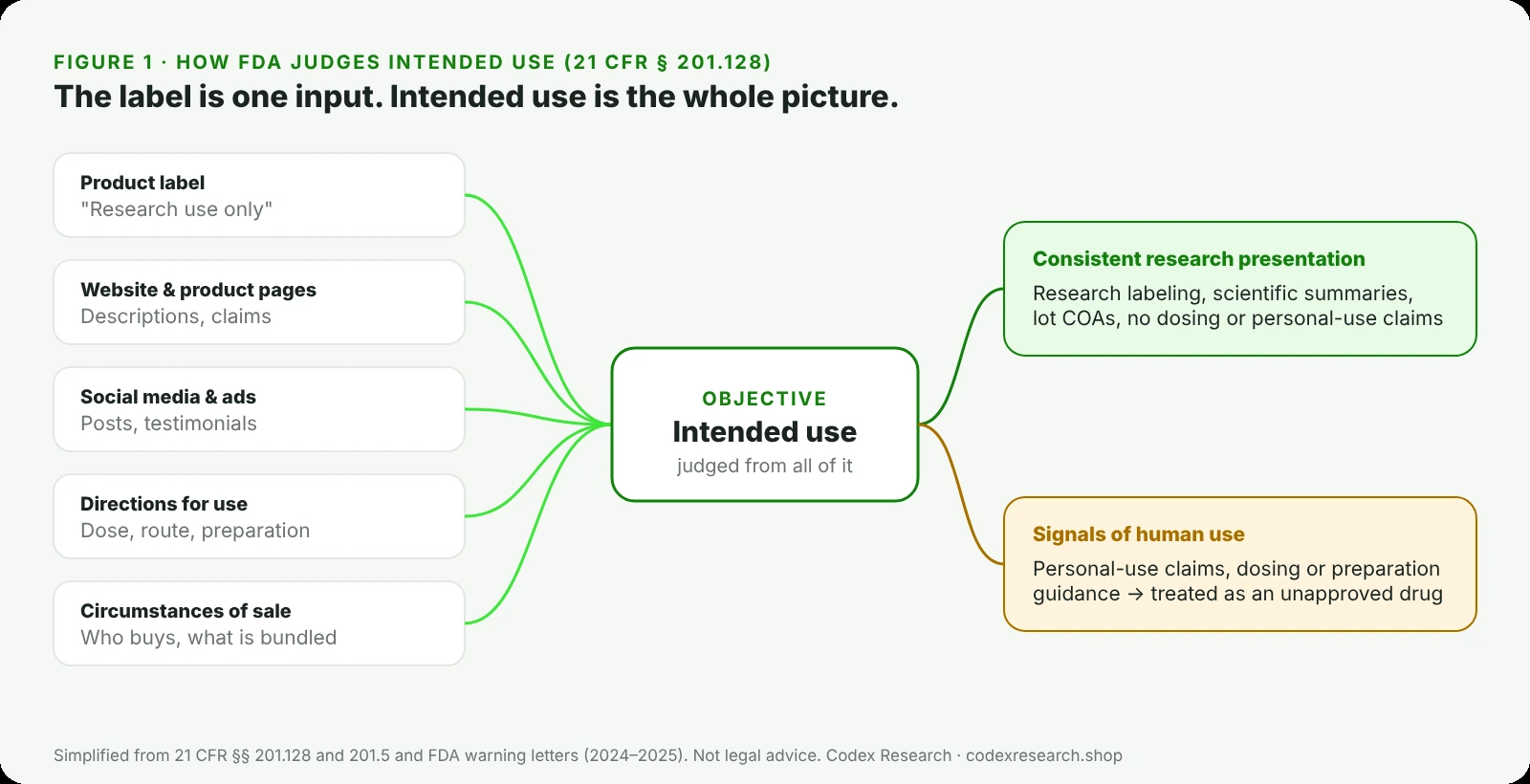
Figure 1. The label is only one input. Under 21 CFR § 201.128, intended use is judged from everything a seller says and does. Simplified; not legal advice.
The regulation also says that when a distributor or seller intends a product for different uses than its source did, that seller must supply labeling for the new intended use [4]. So a research label on the vial does not settle the question if the seller's website, social media or sales practices point elsewhere.
Why "directions for use" matter
A related rule explains what counts as directions for use for a drug. Under 21 CFR § 201.5, adequate directions cover the conditions and purposes of use, the quantity of dose, frequency, duration, time and route of administration, and preparation for use, such as dilution or other manipulation [5]. A drug that lacks adequate directions for its intended use is considered misbranded under the Act [8].
For research materials, the practical lesson is straightforward: dosing amounts, schedules, routes and human-oriented preparation instructions are the hallmarks of a drug intended for people. Their presence alongside an RUO product is evidence of exactly the intended use the label disclaims.
What FDA warning letters show
The FDA has applied these rules directly to online peptide sellers. Recent warning letters follow a consistent pattern:
| Letter | Date | What the FDA found |
|---|---|---|
| Online peptide seller [9] | December 10, 2024 | Products labeled for research and not for human consumption, but website and social media content established intended human drug use |
| Online peptide seller [10] | February 26, 2025 | Despite "research use only", "not for human consumption" and "lab purposes only" statements, claims on the website established the products were drugs intended for human use |
In these letters, the FDA quoted the sellers' own website and social media claims, such as descriptions of human outcomes and comparisons with approved branded medicines, as evidence of intended use under 21 CFR § 201.128. The RUO disclaimers did not change the conclusion.
TipThe takeaway for buyers: a supplier whose website reads like a guide to personal use is telling you how it really intends its products to be used, whatever the label says.
RUO is not a quality standard
Because RUO is a use category, it carries no built-in quality requirement. Purity, identity and contamination have to be shown by testing, and independent studies show why that matters:
- When researchers at Ghent University re-tested synthetic peptides ordered at 95% purity or higher for research use, only 44% met the required purity, and in one case the compound had a different structure from the one ordered [11].
- A 2024 study of semaglutide sold by illegal online pharmacies found measured purity of 7.7% to 14.37% against 99% claimed on the labels, with endotoxin detected in every sample [12].
- A study of somatropin bought from websites selling without prescription found significantly less active substance than labeled in every sample [13].
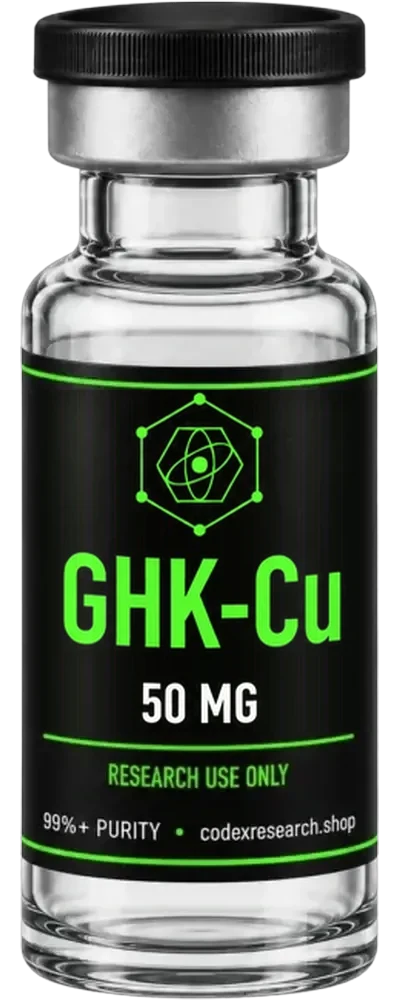
For a research lab, that makes the certificate of analysis the real quality document. See our guides to verifying a COA and purity grades. Our compound profiles of BPC-157 and GHK-Cu set out the regulatory position of each.
RUO compared with other labels you will see
| Label or term | What it means | Who oversees it |
|---|---|---|
| Research Use Only (RUO) | Supplied for laboratory research; not for human use or diagnosis | Labeling rules such as 21 CFR §§ 312.160 and 809.10 |
| Investigational Use Only (IUO) | IVD product in testing before commercial marketing | 21 CFR § 809.10(c) and device investigation rules |
| "Not for human consumption" | A plain-language warning; not a regulatory category on its own | Judged together with intended use |
| FDA-approved | A specific finished drug product approved for specific uses | FDA new drug review |
| GLP | How certain nonclinical laboratory studies are run and documented | 21 CFR Part 58 [14] |
| GMP | How approved drugs are manufactured | FDA current Good Manufacturing Practice rules |
| "Pharmaceutical grade" | No defined meaning for research materials | Not a regulatory term in this context |
What RUO means for laboratory buyers
For a researcher, an RUO material is the start of a documented chain, not the end of one. Good practice in a research setting typically includes:
- Keeping the material inside a defined research program. Know which project or protocol it supports and who is responsible for it.
- Matching the lot to its certificate. File the certificate of analysis for the lot you received, not a generic sample report.
- Recording receipt and disposition. Note the supplier, lot number, date received and what ultimately happened to the material.
- Following institutional policies. Universities and companies have chemical hygiene, biosafety and procurement rules that apply to research materials.
- Keeping it out of any human or animal use outside approved research. RUO materials are not evaluated for that, and research involving animals is governed by its own institutional approvals.
| Record | Why it helps |
|---|---|
| Supplier and product name | Identifies the source of the material |
| Lot number | Ties results to one batch |
| Certificate of analysis | Documents identity, purity and contaminant results for that lot |
| Date received | Places the material in the project timeline |
| Project or protocol | Shows the material served a research purpose |
| Final disposition | Closes the record, in line with institutional rules |
How to spot a responsible RUO supplier
The way a supplier presents its products says a great deal about how seriously it takes the research-only restriction.
| Signs of responsible RUO supply | Red flags |
|---|---|
| Clear research-use and not-for-human-use statements on labels and pages | Disclaimers in small print beside human-use claims |
| Scientific descriptions that summarize published research | Promises of personal benefits, results or transformations |
| No dosing, scheduling or administration guidance | Dosing charts, schedules or "protocols" |
| Lot-specific certificates of analysis | No COA, or one generic report for every order |
| Named, contactable testing laboratories | Untraceable labs or edited reports |
| Terms of sale that require research use | Testimonials describing personal use |
| No comparisons to approved branded medicines | "Same as" claims about approved drugs |
Common misconceptions about RUO
| Misconception | Reality |
|---|---|
| "RUO is a loophole that makes any sale legal." | Intended use is judged by the seller's claims and conduct, not the label alone [4]. |
| "RUO products are lower quality by definition." | RUO says nothing about quality either way. Testing shows quality. |
| "If it says RUO, it has been checked by the FDA." | RUO materials are not reviewed or approved by the FDA. |
| "A disclaimer at checkout covers everything." | Warning letters have looked past disclaimers to website and social media content [9, 10]. |
| "RUO and 'not for human consumption' are the same thing." | The regulatory caution statements are specific; "not for human consumption" is a plain-language warning. |
| "RUO only matters to the seller." | Buyers in research settings are expected to keep RUO materials within their research program and institutional rules. |
Questions to ask a supplier before you buy
A few questions quickly separate research suppliers from sellers using RUO as a label:
- Will you send the COA for the specific lot that ships to me? A real research supplier can.
- Which laboratory tested it, and can the report ID be verified? The answer should name a lab, not a slogan.
- Does the certificate show identity as well as purity? Purity alone cannot confirm the right molecule.
- What are your terms of sale? Research suppliers state that products are for research use and set expectations for buyers.
- Does your website give dosing or personal-use guidance? If it does, the RUO label is not being taken seriously.
What the RUO label does not tell you
An RUO label does not tell you that a compound is safe, effective, approved, pure or correctly identified. It tells you only that the material is intended for laboratory research. Everything else has to come from evidence: published research for what is known about a compound, and lot-specific testing for what is in the vial.
How Codex Research applies RUO
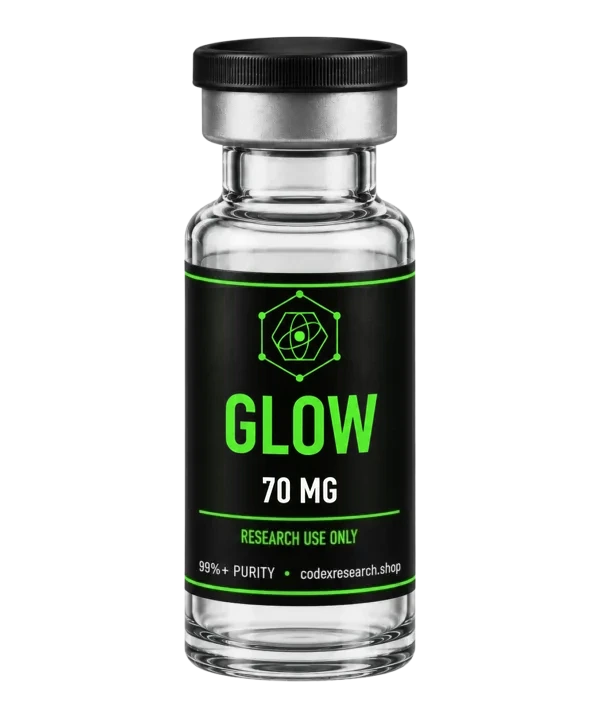
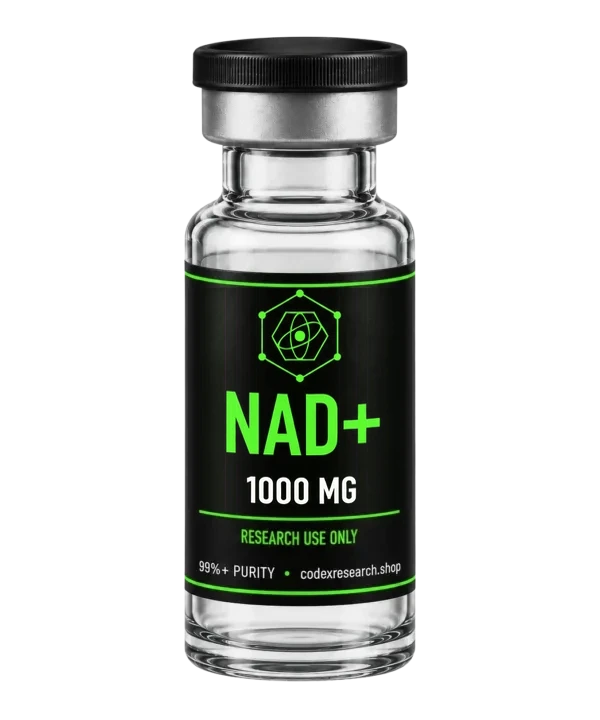
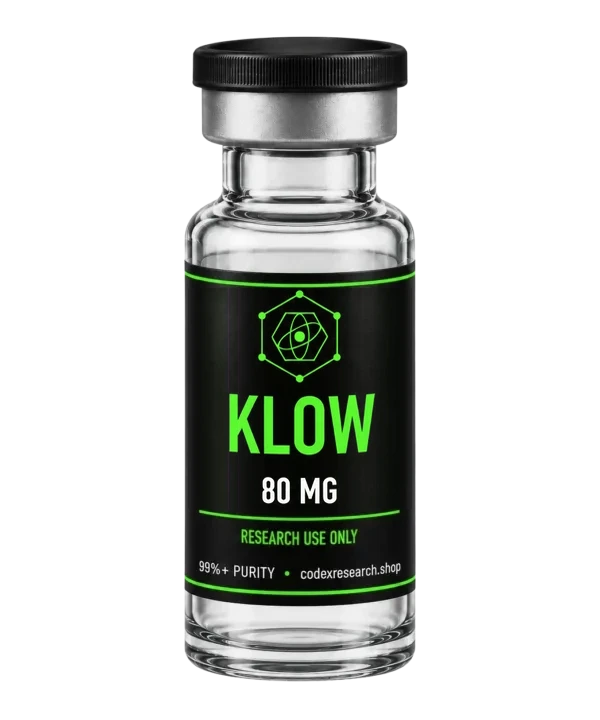
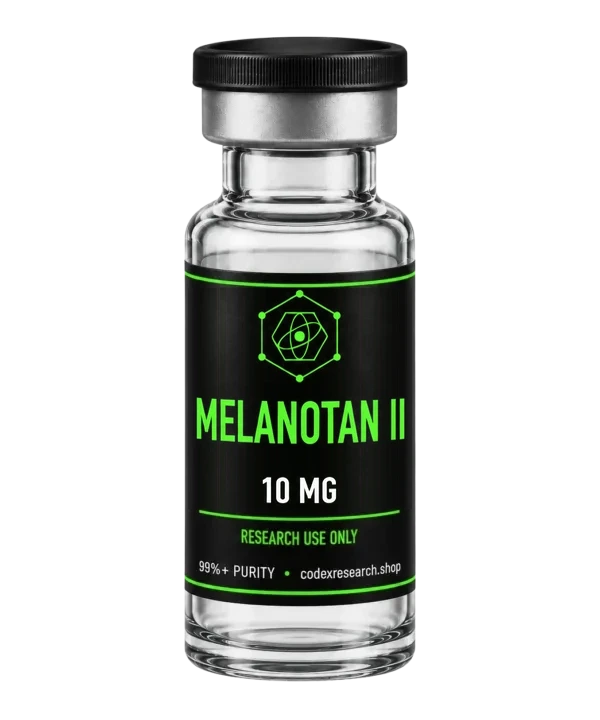
Codex Research products are sold for in-vitro laboratory research only. They are labeled as not for human or animal consumption and are not approved by the FDA. Our product pages summarize published laboratory research rather than personal-use claims, and where a lot's results have been reported, the page shows the lot-specific certificate of analysis so researchers can document exactly what they received. Questions about a lot or a certificate can go to info@codexresearch.shop.
Frequently asked questions
What does Research Use Only (RUO) mean?
Is RUO a legal term?
Does RUO mean a product is FDA approved?
Does a "research use only" label make a product legal to sell for any purpose?
What is the difference between RUO and IUO?
Does RUO tell me anything about purity?
Who is supposed to buy RUO products?
Why do RUO peptides say "not for human consumption"?
What does the 21 CFR § 312.160 caution label say?
What is "intended use" under FDA rules?
What did FDA warning letters to peptide sellers say about RUO labels?
Can a research peptide supplier give dosing advice?
What should a laboratory keep on file for RUO materials?
Is RUO the same as GLP or GMP?
How does Codex Research apply RUO?
References
- Electronic Code of Federal Regulations. 21 CFR § 312.160, Drugs for investigational use in laboratory research animals or in vitro tests.
- Electronic Code of Federal Regulations. 21 CFR § 809.10, Labeling for in vitro diagnostic products.
- U.S. FDA. Distribution of In Vitro Diagnostic Products Labeled for Research Use Only or Investigational Use Only. Guidance for Industry and FDA Staff, November 2013.
- Electronic Code of Federal Regulations. 21 CFR § 201.128, Meaning of "intended uses" (as amended, 86 FR 41401, Aug. 2, 2021).
- Electronic Code of Federal Regulations. 21 CFR § 201.5, Drugs; adequate directions for use.
- Federal Food, Drug, and Cosmetic Act § 201, 21 U.S.C. § 321, Definitions.
- Federal Food, Drug, and Cosmetic Act § 505, 21 U.S.C. § 355, New drugs.
- Federal Food, Drug, and Cosmetic Act § 502, 21 U.S.C. § 352, Misbranded drugs and devices.
- U.S. FDA. Warning letter to an online research peptide seller, MARCS-CMS 695607, December 10, 2024.
- U.S. FDA. Warning letter to an online research peptide seller, MARCS-CMS 696885, February 26, 2025.
- Verbeke F, Wynendaele E, Braet S, D’Hondt M, De Spiegeleer B. Quality evaluation of synthetic quorum sensing peptides used in R&D. J Pharm Anal. 2015;5(3):169-181.
- Ashraf AR, Mackey TK, Vida RG, et al. Multifactor quality and safety analysis of semaglutide products sold by online sellers without a prescription. J Med Internet Res. 2024;26:e65440.
- Vida RG, Fittler A, Mikulka I, et al. Availability and quality of illegitimate somatropin products obtained from the Internet. Int J Clin Pharm. 2017;39(1):78-87.
- Electronic Code of Federal Regulations. 21 CFR Part 58, Good Laboratory Practice for Nonclinical Laboratory Studies.











 From lab to your door