
YGGFL
Compact
One-letter code
Each amino acid as a single capital letter, such as YGGFL. Concise for long sequences.
(“SEE-kwens”)
Same letters, different order, different molecule. Same mass, though.
The short answer
A sequence is the exact order of amino acids in a peptide, written from the N-terminus to the C-terminus.
A peptide sequence lists its amino acids in order, by convention from the free amino end (N-terminus) to the carboxyl end (C-terminus). It is written in three-letter codes such as Tyr-Gly-Gly, or one-letter codes such as YGG. Two peptides with the same amino acids in a different order have the same mass, so confirming a sequence takes more than an intact mass: tandem mass spectrometry breaks the peptide and reads the order from the pieces.
Reviewed by the Codex Research quality teamUpdated Nov 8, 2026
Word study
Say it
se·quence
(“SEE-kwens”)
Roots and origin
RootLatin
A sequence is what follows what. In a peptide, each residue follows the one before it along the chain, and the meaning is entirely in that order.
Around the world
Tap a language to hear it spokenDefinition
A peptide’s sequence, also called its primary structure, is the order in which its amino acids are joined. By convention it is written starting at the N-terminus, where an unbonded amino group sits, and ending at the C-terminus, where an unbonded carboxyl group sits. Reversing the order gives a different peptide, even though the letters are the same.
The notation comes from the IUPAC-IUB Joint Commission on Biochemical Nomenclature. Its recommendations define three-letter symbols, such as Tyr-Gly-Gly-Phe-Leu, and a one-letter system, YGGFL, for writing long sequences concisely. The commission notes the one-letter system is harder for non-specialists to read, which is why three-letter codes still appear in detailed reports.
Modifications are part of the sequence. A C-terminal amide is commonly written as -NH₂, an acetylated N-terminus as Ac-, and disulfide bridges between cysteines are noted separately. D-amino acids, non-standard residues and cyclic structures all need to be stated explicitly. Two products with the same letters can differ entirely in these details, and with them in mass and identity.
An intact mass cannot confirm order. The mass of a peptide is the sum of its residue masses plus one water, so any rearrangement of the same residues weighs exactly the same. Mass spectrometry of the whole molecule confirms that the right amino acids are present in the right amounts; it does not prove they are in the right order.
Order is read by breaking the peptide. In tandem mass spectrometry (MS/MS), the peptide is fragmented along its backbone, and the masses of the pieces form a ladder whose steps correspond to individual residues. Steen and Mann describe how this approach displaced chemical Edman sequencing, and the fragment ion names used today, such as b and y ions, follow the nomenclature proposed by Roepstorff and Fohlman.
Interactive
Rearrange a sequence and compare. The intact mass never changes, but the fragment ladder does, which is how tandem MS tells the two apart.
| Fragment | Original | Rearranged |
|---|
Masses are monoisotopic, for singly charged b ions (the N-terminal pieces left when a peptide breaks at a peptide bond in tandem MS). The intact mass is the sum of the residues plus one water, so it cannot tell two orders apart; the fragment ladder can. Leucine and isoleucine have identical masses, which is one reason some sequences need more than MS/MS to resolve. Up to 12 residues.
Notation
Each amino acid as a single capital letter, such as YGGFL. Concise for long sequences.
Each amino acid as a three-letter symbol joined by hyphens, such as Tyr-Gly-Gly-Phe-Leu.
Written at the ends: Ac- for an acetylated N-terminus, -NH₂ for a C-terminal amide.
Links between cysteines, stated separately or with bridge notation, because the letters alone do not show them.
D-amino acids and unusual residues, shown with prefixes or bracketed abbreviations.
For buyers
The same amino acids in a different order make a different peptide.
Rearranged sequences have identical intact masses. Fragments are what reveal the order.
Amides, acetyl groups, disulfides and D-amino acids all alter identity and mass.
At Codex Research
Each Codex Research product page carries a lot-matched certificate of analysis reporting mass spectrometry identity for the lot in stock, so the measured mass can be checked against the expected sequence.
See it live: the amino acid guide, with a sequence decoder
Myth vs fact
Tap a card to flip it.
Watch for
Quick check
N-terminus to C-terminus, with any end groups shown.
The stated molecular weight fits the full sequence and modifications.
Intact MS confirms composition; MS/MS confirms order.
 Full walkthrough · JournalHPLC vs mass spec: how purity is tested
Questions
The order of amino acids in a peptide, written from the N-terminus to the C-terminus.
A system where each amino acid is a single letter, such as Y for tyrosine and G for glycine.
It is the convention set by biochemical nomenclature, matching the direction of the chain from its free amino end.
Intact mass confirms composition. Tandem MS, which fragments the peptide, confirms the order.
Fragment ions from the N-terminal and C-terminal ends of a broken peptide, used to read its sequence.
For example Ac- for an acetylated N-terminus and -NH₂ for a C-terminal amide.
Yes, if they contain the same residues, regardless of order.
Sources and standards
Written and reviewed by the Codex Research quality team · Last reviewed November 8, 2026 · For laboratory research use only.
On real products
See sequence in context on real Codex research products, then read the full guide.
 Blends
Research peptide
Repair Blend
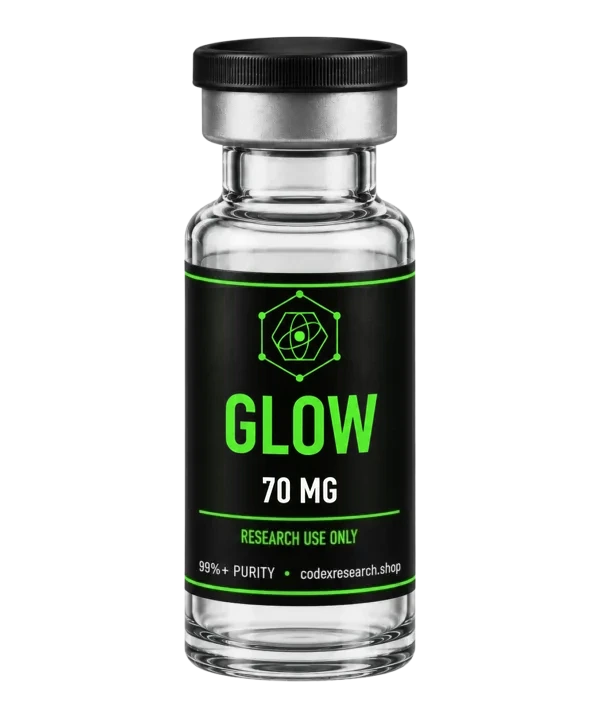
Glow is a three-peptide research blend: 49.87 mg GHK-Cu, 9.88 mg BPC-157 and 9.32 mg TB-500 per vial on the current lot, measured by HPLC and tested on a full safety panel.
 Blends
Research peptide
Repair Blend
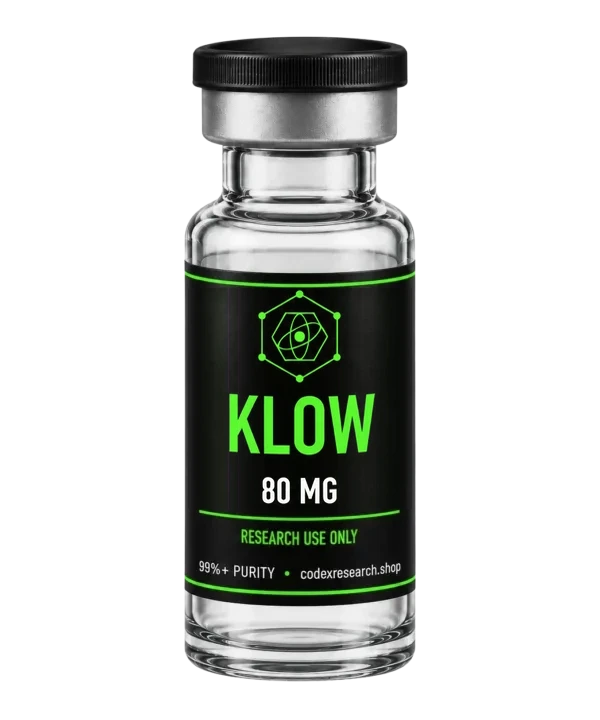
Klow is a four-peptide research blend: 51.33 mg GHK-Cu, 11.55 mg KPV, 9.32 mg TB-500 and 8.00 mg BPC-157 per vial on the current lot, for multi-pathway laboratory research.
 GH axis
Research peptide
GH-Axis Research
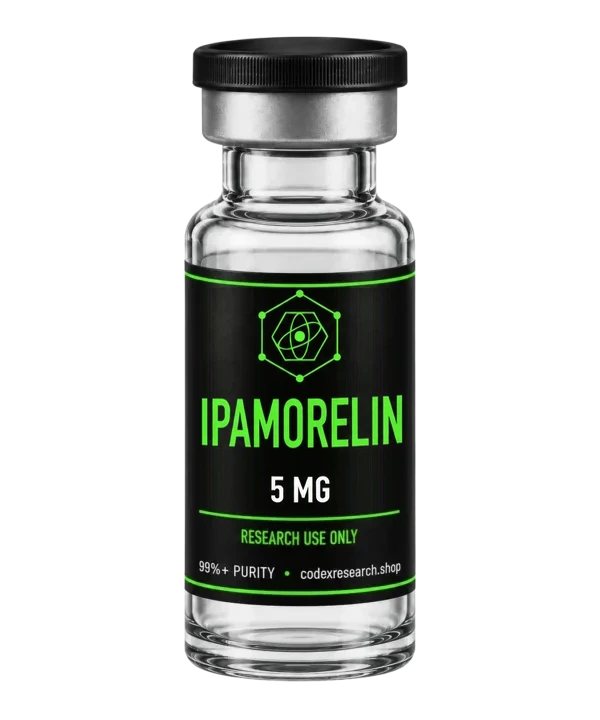
Ipamorelin is a five-residue synthetic peptide, Aib-His-D-2-Nal-D-Phe-Lys-NH2, studied as a selective agonist at the ghrelin receptor. Lot-tested by RP-HPLC.
Journal guideHPLC vs mass spec: how purity is testedRead the guideKeep going
 From lab to your door
U.S.-made research vials, shipped with lot-matched, lab-tested COAs you can scan straight off the label.

21+ Only
Codex Research provides research-grade compounds for laboratory and research use only. By entering, you confirm you are at least 21 and agree to our Terms & Conditions.
By proceeding you affirm the statements above are true. Products are supplied for laboratory research use only — not for human or veterinary use, not for use in diagnostic procedures, and not evaluated by the U.S. Food and Drug Administration. Full disclaimer.


