
2–3
Two or three residues
Dipeptides and tripeptides
The smallest peptides: two or three residues joined by one or two peptide bonds. GHK, glycyl-histidyl-lysine, is a tripeptide.
(“PEP-tide”)
The molecule behind every product name in the catalog, explained from the bond up.
The short answer
A peptide is a chain of two or more amino acids joined end to end by peptide bonds.
Each link in the chain is a peptide bond, an amide link joining one amino acid's carboxyl group to the next one's amino group, releasing one water molecule. A peptide is defined by its sequence: which amino acids, in which order, read from the N-terminus to the C-terminus. That sequence fixes its mass, its chemistry and how it behaves in every test.
Reviewed by the Codex Research quality teamUpdated Nov 8, 2026
Word study
Say it
pep·tide
(“PEP-tide”)
Roots and origin
RootGreek
Origin
The name comes by way of peptone, an older term for the products of protein digestion. Emil Fischer, who first linked amino acids into short chains in the laboratory, introduced “peptide” in 1902 for exactly these chains.
Around the world
Tap a language to hear it spokenDefinition
A peptide is a chain of amino acids linked by peptide bonds. IUPAC defines peptides as amides formed from two or more amino acids, where the carbonyl carbon of one is bonded to the nitrogen of the next with the formal loss of water. Each amino acid built into the chain is called a residue, because it is what remains of the free amino acid once that water is gone.
Every chain has two ends. One carries a free amino group, the N-terminus; the other carries a free carboxyl group, the C-terminus. By convention a sequence is written from the N-terminus to the C-terminus, in three-letter or one-letter codes, so Gly-His-Lys and GHK describe the same tripeptide. Reversing the order describes a different molecule.
Size is where definitions differ. The National Human Genome Research Institute describes a peptide as a chain of typically 2 to 50 amino acids and calls longer chains polypeptides. IUPAC uses “polypeptide” for chains of ten or more residues. In everyday use, “peptide” means a short chain and “protein” a long one that folds into a stable three-dimensional structure.
The sequence decides everything else. It sets the exact molecular weight, the net charge at a given pH, how the peptide behaves on an HPLC column, which bonds are prone to change in storage, and how many counter-ions the dried material carries. Two peptides with the same amino acids in a different order are different compounds with different mass spectra and retention times.
For a buyer, a peptide is defined on paper by three things: its name, its sequence and its expected mass. A certificate of analysis then confirms identity, usually by mass spectrometry, and purity, usually by HPLC. A listing that offers a name with no sequence or mass gives you nothing to check the certificate against.
Interactive
Drag the chain longer or shorter, or jump to a well-known sequence. Its usual name and approximate mass change as it grows, and two respected references draw the line in different places.
NHGRI glossaryPeptide 2–50 · polypeptide 51+
IUPACPolypeptide from 10 residues
Mass is estimated at about 110 Da per residue plus one water (18 Da); the exact value depends on the sequence. Where “peptide” ends and “protein” begins is a convention, not a sharp line, and different references draw it at different lengths.
By size and shape
The smallest peptides: two or three residues joined by one or two peptide bonds. GHK, glycyl-histidyl-lysine, is a tripeptide.
Short chains of a few residues. Oxytocin, with nine residues, was the first peptide hormone to be made synthetically, in the 1950s.
Chains of ten residues or more. Most research peptides fall between about 10 and 50 residues; BPC-157 has 15.
Chains whose ends, or side chains, are bonded into a ring. A ring changes shape and stability without changing the residue count.
Chains carrying extra groups, such as an acetylated N-terminus, an amidated C-terminus or a bound metal ion. Each modification changes the expected mass.
For buyers
Two peptides can share every amino acid and still be different compounds. The order is what a mass spectrum and an HPLC trace confirm.
The expected molecular weight follows directly from the sequence, so a measured mass that matches is direct evidence the right chain is present.
Longer chains have more closely related variants that differ by a single residue, which makes separation and identity testing more demanding.
At Codex Research
Every Codex Research compound is a synthetic peptide listed by name with a lot-matched certificate of analysis. Identity is confirmed by mass spectrometry against the expected mass, and purity is measured by HPLC for the lot in stock.
See it live: the GHK-Cu product page, a copper complex of a tripeptide
Myth vs fact
Tap a card to flip it.
Watch for
Quick check
The listing or certificate should state which residues, in which order.
The measured mass should match the expected mass for that sequence.
HPLC purity and net peptide content measure two separate things.
 Full walkthrough · JournalPeptide purity grades explained
Questions
A short chain of amino acids linked end to end. Each link is a peptide bond, formed when two amino acids join and release a molecule of water.
At least two. References commonly describe peptides as up to about 50 residues long, though the exact cut-off varies between sources.
Length and structure. Proteins are longer chains, often hundreds of residues, that fold into stable shapes. Peptides are shorter.
An amide link that joins one amino acid's carboxyl group to the amino group of the next, giving off one water molecule as it forms.
By convention they begin at the N-terminus, which ends in an unbonded amino group, and finish at the C-terminus, which ends in an unbonded carboxyl group.
One amino acid unit within a peptide chain. It is called a residue because it is what remains of the amino acid after water is lost in forming the bond.
Usually by mass spectrometry, which checks that the measured molecular weight matches the expected weight for the stated sequence.
Sources and standards
Written and reviewed by the Codex Research quality team · Last reviewed November 8, 2026 · For laboratory research use only.
On real products
See peptide in context on real Codex research products, then read the full guide.
 Repair
Research peptide
Tissue-Repair Research
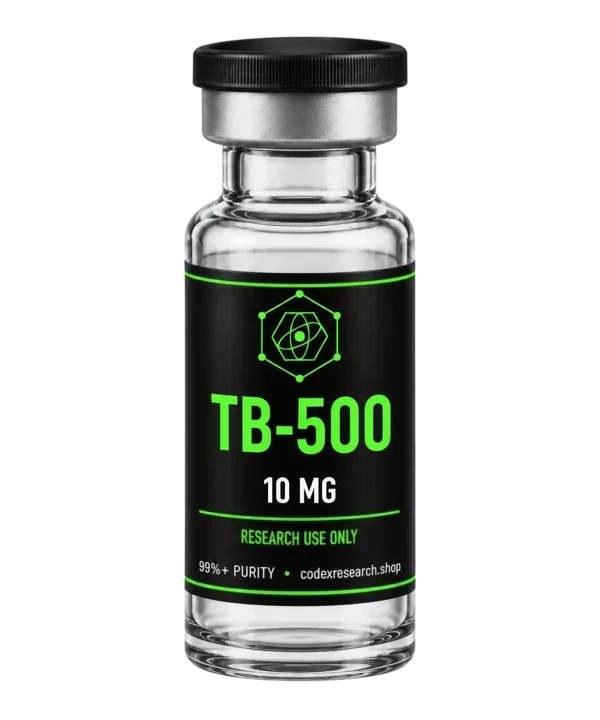
TB-500 is Ac-LKKTETQ, the acetylated actin-binding fragment of Thymosin Beta-4 (residues 17–23), supplied as a lyophilized peptide for actin-regulation and cell-migration research.
 Blends
Research peptide
Repair Blend
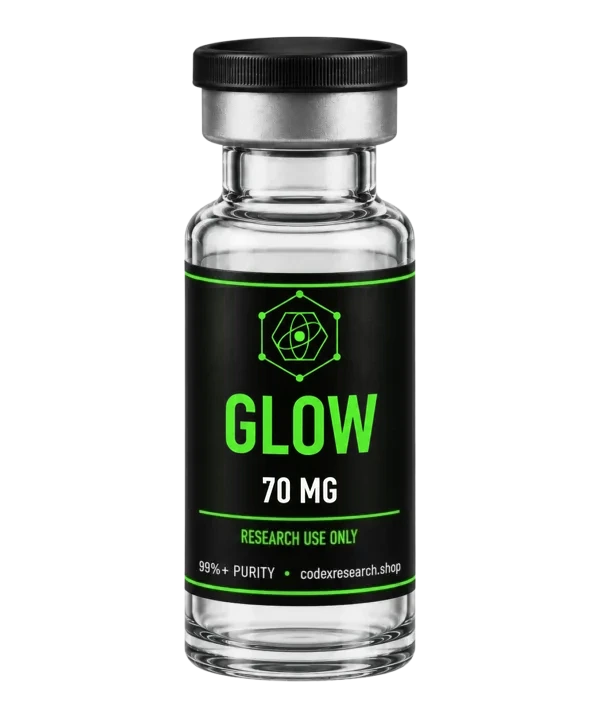
Glow is a three-peptide research blend: 49.87 mg GHK-Cu, 9.88 mg BPC-157 and 9.32 mg TB-500 per vial on the current lot, measured by HPLC and tested on a full safety panel.
 Blends
Research peptide
Repair Blend
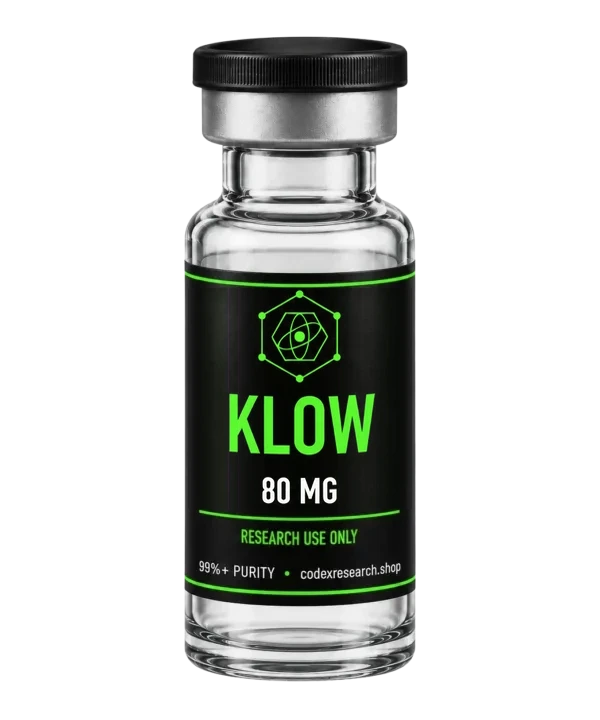
Klow is a four-peptide research blend: 51.33 mg GHK-Cu, 11.55 mg KPV, 9.32 mg TB-500 and 8.00 mg BPC-157 per vial on the current lot, for multi-pathway laboratory research.
Journal guidePeptide purity grades explainedRead the guideKeep going
 From lab to your door
U.S.-made research vials, shipped with lot-matched, lab-tested COAs you can scan straight off the label.

21+ Only
Codex Research provides research-grade compounds for laboratory and research use only. By entering, you confirm you are at least 21 and agree to our Terms & Conditions.
By proceeding you affirm the statements above are true. Products are supplied for laboratory research use only — not for human or veterinary use, not for use in diagnostic procedures, and not evaluated by the U.S. Food and Drug Administration. Full disclaimer.


