
ESI
Liquid sample
ESI-MS
Electrospray ionization. Sprays the sample as a charged mist and produces multiply charged ions. The standard for peptides, usually coupled to HPLC.
(“MASS spek-TROM-ih-tree”)
The test that answers whether the compound in the vial is the one on the label.
The short answer
Mass spectrometry is a method that weighs molecules by turning them into charged ions and sorting them by their mass-to-charge ratio.
On a peptide COA, mass spectrometry is the identity test: the mass the instrument measures should match the mass calculated from the peptide’s sequence, within a small tolerance. It confirms what the main compound is, but it does not measure purity on its own.
Reviewed by the Codex Research quality teamUpdated Nov 8, 2026
Word study
Say it
mass spec·trom·e·try
(“MASS spek-TROM-ih-tree”)
Roots and origin
RootLatin
OriginGreek
A spectrometer is literally a device for measuring a spread of appearances. In a mass spectrometer, what gets spread out is not light but ions, laid out by mass-to-charge ratio, and the resulting plot is the mass spectrum.
Around the world
Tap a language to hear it spokenDefinition
A mass spectrometer does three things. It turns molecules into ions, sorts those ions by their mass-to-charge ratio, written m/z, and counts how many arrive at each value. The output, the mass spectrum, is a plot of signal against m/z, and the position of the peaks tells you the mass of what was in the sample.
Large, fragile molecules like peptides were hard to ionize intact until two techniques arrived in the late 1980s: electrospray ionization, which sprays the sample as a fine charged mist, and matrix-assisted laser desorption, which lifts molecules off a surface with a laser. Their developers shared the 2002 Nobel Prize in Chemistry. Electrospray is now the workhorse for peptides, usually connected directly to an HPLC as LC-MS.
Electrospray has a characteristic signature. A peptide usually picks up more than one proton, so the same molecule appears as several peaks: the molecule plus one proton, plus two protons divided by two, plus three divided by three, and so on. Each of these charge states points back to the same molecular weight, and software works backwards from the series, a step called deconvolution, to report a single mass.
On a certificate of analysis, mass spectrometry is the identity test. The lab calculates the theoretical mass from the peptide’s sequence and compares it with the observed mass. A match within the instrument’s tolerance, often within a dalton for routine instruments and within a few parts per million for high-resolution ones, shows that the main component has the mass the sequence calls for. The result should say whether the mass is monoisotopic or average, because the two differ.
Mass alone has limits. Two peptides with the same amino acids in a different order have the same mass, and so do the L and D forms of a residue. MS also does not measure purity: a sample can give a clean, correct mass and still contain significant impurities. That is why identity by MS and purity by HPLC are reported together, and why LC-MS, which weighs each separated peak, is the most informative of the routine combinations.
Interactive
Electrospray gives a peptide one or more extra protons, so the same molecule appears at several mass-to-charge values. Pick a peptide or enter a mass: each peak is the molecule plus n protons, divided by n, and working backwards from any of them recovers the same molecular weight.
Simulated electrospray spectrum using average mass and one proton (1.007 Da) per charge. Relative heights are illustrative; real spectra also show isotope patterns and adducts such as sodium.
Methods
Electrospray ionization. Sprays the sample as a charged mist and produces multiply charged ions. The standard for peptides, usually coupled to HPLC.
A laser lifts molecules out of a crystal matrix and their flight time is measured. Fast, mostly singly charged ions; common for quick mass checks.
HPLC and MS in one run. Each peak from the column is weighed as it elutes, so impurities can be identified, not just counted.
Selects one ion, breaks it apart and weighs the fragments. The fragments reveal the sequence, which mass alone cannot.
On the COA
An identity result is only as good as what it is compared against. These are the details that make one checkable.
For buyers
Purity says how much of the main peak there is; mass spectrometry says what that main peak is. Without it, a pure sample of the wrong compound would pass.
A missing amino acid, an extra one or a lost protecting group each shift the mass by a known amount, which MS picks up directly.
Paired with HPLC as LC-MS, it weighs each minor peak too, turning an anonymous impurity into a known one.
At Codex Research
Every Codex Research lot is tested for identity before release, and the lot-matched certificate on each product page reports the identity result alongside HPLC purity for the lot in stock.
See it live: the lot-matched certificate on the BPC-157 product page
Myth vs fact
Tap a card to flip it.
Watch for
Quick check
There should be a theoretical and an observed value.
It should fall inside the stated tolerance.
Monoisotopic and average masses should not be mixed.
 Full walkthrough · JournalHPLC vs mass spec: how purity is tested
Questions
The mass-to-charge ratio of ions. From that, the mass of the original molecule can be worked out.
It is the identity test. A measured mass that matches the mass calculated from the sequence shows the main compound is the right one.
LC-MS runs the sample through HPLC first and weighs each separated component as it comes off the column, so impurities can be identified as well.
The molecule (M) carrying two extra protons and therefore two positive charges. It appears at roughly half the molecule’s mass on the m/z scale.
Monoisotopic mass uses the most common isotope of each element; average mass weights all natural isotopes. They differ by about a dalton or more for a typical peptide.
It can identify impurities whose mass differs from the peptide, especially as LC-MS. It does not measure how much of the sample they make up; that is HPLC’s job.
Yes. Peptides with the same amino acids in a different order, or with L and D forms of a residue, have identical masses.
Sources and standards
Written and reviewed by the Codex Research quality team · Last reviewed November 8, 2026 · For laboratory research use only.
On real products
These products’ current certificates confirm identity by LC-MS, which is where mass spectrometry appears. See it on each product page, then read the full guide.
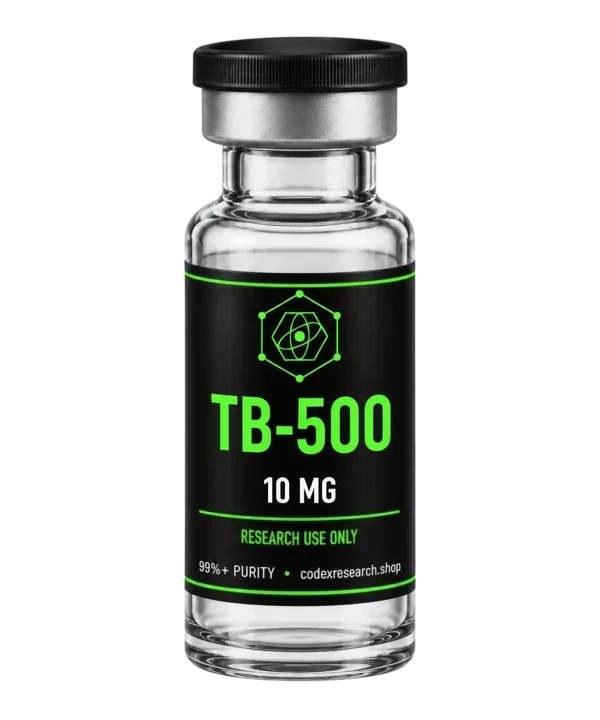 Repair
Research peptide
Tissue-Repair Research
TB-500 is Ac-LKKTETQ, the acetylated actin-binding fragment of Thymosin Beta-4 (residues 17–23), supplied as a lyophilized peptide for actin-regulation and cell-migration research.
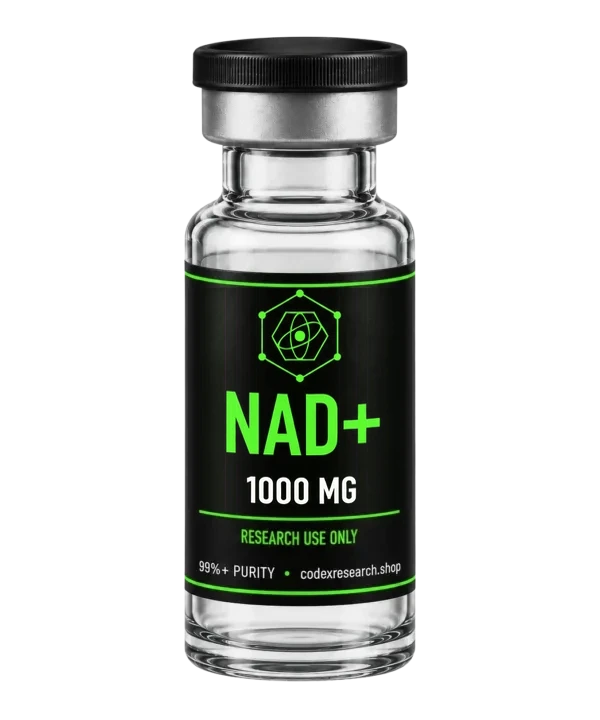 Cellular
Research peptide
Cellular Research
NAD+ is nicotinamide adenine dinucleotide, the oxidized redox coenzyme and sirtuin substrate, supplied as lyophilized powder in 500 mg and 1000 mg vials. Lot-tested by LC-MS.
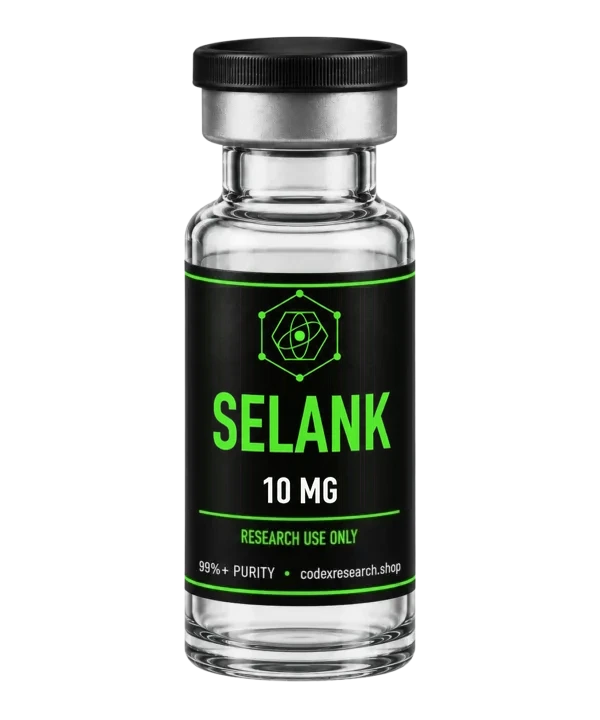 Neuro
Research peptide
Neuropeptide Research
Selank is a seven-residue tuftsin analogue, Thr-Lys-Pro-Arg-Pro-Gly-Pro, studied in enkephalinase and neurotransmission gene-expression research. Lot-tested by LC-MS.
Journal guideHPLC vs mass spec: how purity is testedRead the guideKeep going
 From lab to your door
U.S.-made research vials, shipped with lot-matched, lab-tested COAs you can scan straight off the label.

21+ Only
Codex Research provides research-grade compounds for laboratory and research use only. By entering, you confirm you are at least 21 and agree to our Terms & Conditions.
By proceeding you affirm the statements above are true. Products are supplied for laboratory research use only — not for human or veterinary use, not for use in diagnostic procedures, and not evaluated by the U.S. Food and Drug Administration. Full disclaimer.


