
Expiry
Use-by limit
Expiration date
The date after which the material should not be used. Set from stability data and tied to the labelled storage condition.
(“SHELF life”)
A date is only as good as the data behind it.
The short answer
Shelf life is how long a material is expected to stay within its quality specification when stored as directed.
Shelf life is set from a stability study: samples are stored under defined conditions and tested over time. The trend is fitted with a line, and the shelf life is where a conservative confidence limit on that line meets the specification, not where the average does. ICH Q1E limits how far beyond the actual data the estimate can be pushed. A date with no storage condition attached means little.
Reviewed by the Codex Research quality teamUpdated Nov 8, 2026
Word study
Say it
shelf life
(“SHELF life”)
Roots and origin
RootOld English
OriginOld English
The phrase describes a product’s lifetime while it sits on a shelf. In quality terms it is the period during which the material still meets its specification.
Around the world
Tap a language to hear it spokenDefinition
Shelf life is the period during which a material is expected to stay within its specification when stored under the conditions on its label. ICH Q1A(R2) describes it in terms of an expiration dating period for a product and a retest period for a drug substance: the window during which the material can be used, provided it has been stored as directed.
It is estimated, not guessed. A stability study stores samples under defined temperature and humidity and tests them at intervals such as 0, 3, 6, 9, 12, 18 and 24 months. The measured attribute, often purity, is plotted against time and a line is fitted to the trend.
The estimate is deliberately conservative. ICH Q1E sets out that, for an attribute expected to decrease, the shelf life is the time at which the lower one-sided 95% confidence limit for the mean crosses the acceptance criterion. Because the confidence limit sits below the fitted line and widens as you move away from the data, the resulting date comes earlier than where the average would cross. Noisy data or few time points pull it earlier still.
Extrapolation has firm limits. Q1E allows a shelf life to extend beyond the period covered by long-term data only under certain conditions, and caps it, commonly at up to twice the period covered and no more than 12 months beyond it. A claim of years of shelf life backed by a few months of data is not something the guidance supports.
A date only applies under its storage condition. Shelf life established at −20 °C says nothing about storage at room temperature. In U.S. drug regulation, 21 CFR 211.137 requires expiration dates to be supported by stability testing and tied to the storage conditions on the label, which is the right standard to apply to any expiry claim. For freeze-dried peptides, the stated storage temperature is part of the date.
Interactive
Adjust how fast purity drops, the specification limit and how many months of data exist. The date comes from the lower confidence line, and it cannot run far past the data.
Simulated purity results from a long-term study. Following the approach in ICH Q1E, the shelf life is the earliest time at which the lower one-sided 95% confidence limit for the mean crosses the specification. Extrapolation beyond the data is limited: here to no more than twice the data period and no more than 12 months beyond it.
Dates
The date after which the material should not be used. Set from stability data and tied to the labelled storage condition.
The date by which a material should be re-examined to confirm it still meets specification. Common for raw materials.
When the lot was made. The starting point for counting shelf life, not a quality claim itself.
The temperature and protection under which the date applies, such as −20 °C, protected from light and moisture.
For buyers
A shelf life comes from measured stability data, not from a default period.
The confidence limit makes the estimate cautious, so the material should still be in specification at the date.
The date applies only under its storage condition. Different storage means a different shelf life.
At Codex Research
Each Codex Research product page carries a lot-matched certificate of analysis for the lot in stock, along with storage guidance. For dating information on a specific lot, contact us.
See it live: the stability study guide in the glossary
Myth vs fact
Tap a card to flip it.
Watch for
Quick check
A temperature and protection stated with the date.
Manufacture or retest date for the lot in hand.
Stability data that cover the period claimed.
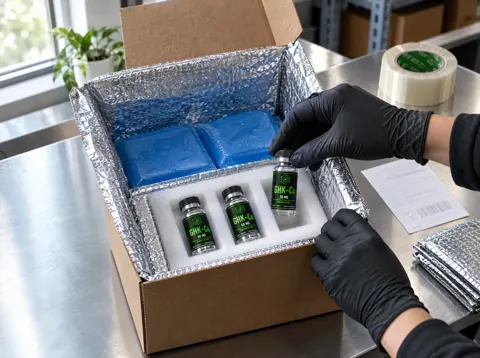 Full walkthrough · JournalResearch peptides in transit: heat, cold and storage
Questions
The time a material is expected to stay within its specification when stored as directed.
From a stability study: the trend over time is fitted and the date is where a lower confidence limit meets the specification.
An expiry date is a use-by limit. A retest date is when the material should be re-examined to confirm it still meets specification.
Only to a limited extent under ICH Q1E, commonly up to twice the data period and no more than 12 months beyond it.
A shelf life is valid only under the storage condition it was established for.
Because it uses a confidence limit that sits below the average trend, so the material should still be in specification at the date.
The date, the storage condition and the lot it applies to.
Sources and standards
Written and reviewed by the Codex Research quality team · Last reviewed November 8, 2026 · For laboratory research use only.
On real products
Every Codex vial ships freeze-dried, sealed and lot-labelled. See how shelf life applies on a real product, then read the full guide.
 Dermal
Research peptide
Dermal Research
SNAP-8 is an eight-amino-acid peptide modelled on the SNAP-25 N-terminus, studied in SNARE-complex assembly research.
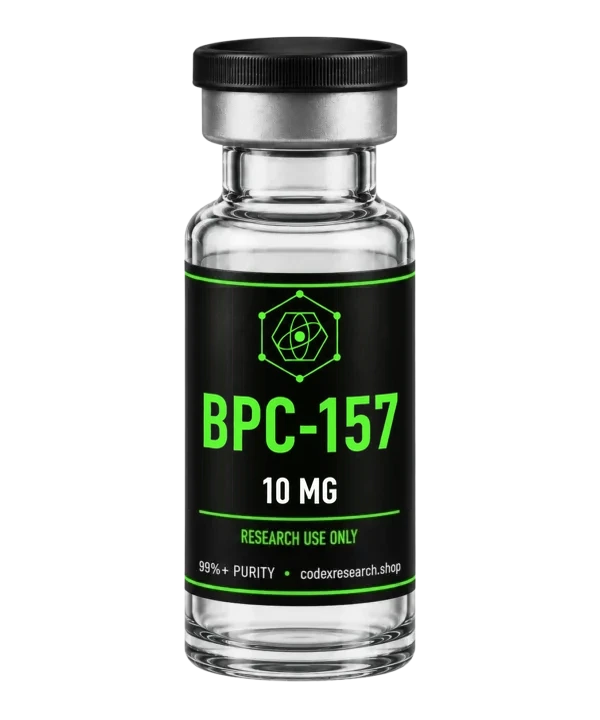 Repair
Research peptide
Tissue-Repair Research
BPC-157 is a 15-amino-acid synthetic peptide taken from a gastric-juice protein, studied in endothelial, fibroblast and growth-factor research. Lot-tested by HPLC and LC-MS.
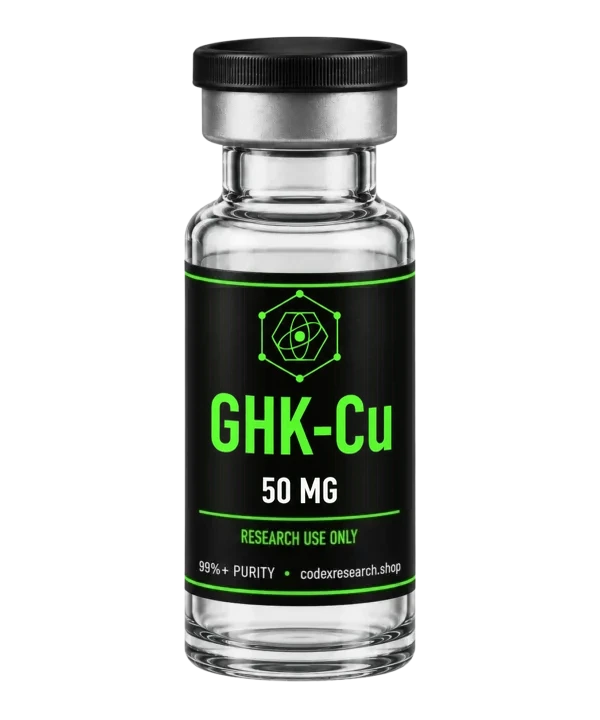 Dermal
Research peptide
Dermal Matrix Research
GHK-Cu is the copper(II) complex of the tripeptide Gly-His-Lys, a constituent of human plasma, studied in fibroblast matrix and copper-transport research. Lot-tested by HPLC.
Journal guideResearch peptides in transit: heat, cold and storageRead the guideKeep going
 From lab to your door
U.S.-made research vials, shipped with lot-matched, lab-tested COAs you can scan straight off the label.

21+ Only
Codex Research provides research-grade compounds for laboratory and research use only. By entering, you confirm you are at least 21 and agree to our Terms & Conditions.
By proceeding you affirm the statements above are true. Products are supplied for laboratory research use only — not for human or veterinary use, not for use in diagnostic procedures, and not evaluated by the U.S. Food and Drug Administration. Full disclaimer.


