
Water-avoiding
Nonpolar
Side chains that avoid water, such as alanine, valine, leucine, isoleucine, phenylalanine and methionine. They tend to sit on the inside of folded structures.
(“uh-MEE-noh AS-id”)
The building block every peptide sequence is written in.
The short answer
An amino acid is a small molecule with an amine group and a carboxylic acid group on the same carbon, and it is the building block peptides and proteins are made from.
Every amino acid shares the same backbone and differs only in its side chain. Twenty standard amino acids are encoded by DNA, each with a one-letter and three-letter code. A peptide is a chain of them joined by peptide bonds, and the order of that chain is its sequence.
Reviewed by the Codex Research quality teamUpdated Nov 8, 2026
Word study
Say it
a·mi·no ac·id
(“uh-MEE-noh AS-id”)
Roots and origin
RootLatin
OriginLatin
The name lists the two groups every amino acid carries. Amino comes from amine, a nitrogen group named after ammonia, whose own name traces back to a salt found near the temple of Ammon in ancient Libya. Acid is the carboxylic acid group. Both sit on the same central carbon.
Around the world
Tap a language to hear it spokenDefinition
An amino acid is an organic molecule built around a central carbon, called the alpha carbon. That carbon carries four things: an amine group (–NH₂), a carboxylic acid group (–COOH), a hydrogen atom and a side chain, usually written as R. The amine and the acid give the molecule its name, and they are also the two ends that let amino acids link together.
Twenty amino acids are standard, meaning they are encoded by the genetic code and used by living cells to build proteins. All twenty share the same backbone and differ only in the side chain. Glycine’s side chain is a single hydrogen atom; tryptophan’s is a large double ring; lysine’s ends in a positively charged nitrogen; cysteine and methionine contain sulfur. The side chain sets the amino acid’s size, its charge and how it behaves around water.
Amino acids join when the carboxylic acid group of one reacts with the amine group of the next, releasing a molecule of water and forming a peptide bond. Once it is part of a chain, each unit is called a residue. A chain has two distinct ends, the N-terminus with a free amine and the C-terminus with a free acid, and by convention every sequence is written from N to C. A short chain is a peptide; a long one is a protein.
Nineteen of the twenty standard amino acids are chiral: they exist in two mirror-image forms, L and D. Proteins made by living cells use the L form. Glycine is the exception, because two of the groups on its alpha carbon are identical. In synthetic peptides, D-amino acids are sometimes built in on purpose, and the configuration of each residue is part of what defines the molecule. Unintended conversion from one form to the other during synthesis creates an impurity.
In solid-phase synthesis, a peptide is assembled one amino acid at a time, each arriving with protecting groups that control which end reacts. On a certificate of analysis, amino acids appear in three places: the sequence, the molecular weight (the sum of the residues), and amino acid analysis, where the peptide is broken back down into its amino acids and counted to confirm composition or measure net peptide content.
Side chains
Side chains that avoid water, such as alanine, valine, leucine, isoleucine, phenylalanine and methionine. They tend to sit on the inside of folded structures.
Side chains that interact with water without carrying a charge, such as serine, threonine, asparagine, glutamine and tyrosine.
Basic side chains: lysine and arginine, plus histidine under acidic conditions. These are the charges counter-ions such as acetate or TFA balance.
Acidic side chains: aspartic acid and glutamic acid, which carry a negative charge at neutral pH.
Reference
One-letter codes are what you will see in most written sequences. Three-letter codes are joined with hyphens, as in Gly-Pro-Arg.
Interactive
Type any sequence in one-letter codes. Each residue is colored by its side-chain group, the chain is written out in three-letter codes from N to C, and the molecular weight is worked out the way a COA’s theoretical mass is: the sum of the amino acids minus one water for every peptide bond.
Molecular weight is the sum of the free amino acids minus one water (18.02) for each peptide bond, using average masses and a free N- and C-terminus. Modifications such as an amidated end change the number.
For buyers
A peptide is defined by which amino acids it contains and in what order. Change a single residue and it is a different molecule.
The molecular weight is the sum of the residues, minus one water for each peptide bond. Mass spectrometry checks the measured mass against that number.
A missing residue, a residue in the wrong mirror-image form, an oxidized methionine or a deamidated asparagine are all amino-acid-level defects that HPLC separates out.
At Codex Research
Each product page describes its compound by length, for example BPC-157 as a fifteen-amino-acid peptide, and the lot-matched certificate confirms identity by mass spectrometry: the check that the measured mass matches the residues the sequence calls for.
See it live: the BPC-157 product page
Myth vs fact
Tap a card to flip it.
Quick check
Sequences start at the N-terminus and end at the C-terminus.
Each letter is one residue; three-letter codes are joined with hyphens.
“Ac-” marks an acetylated start, “-NH₂” an amidated end, and “D-” a D-amino acid.
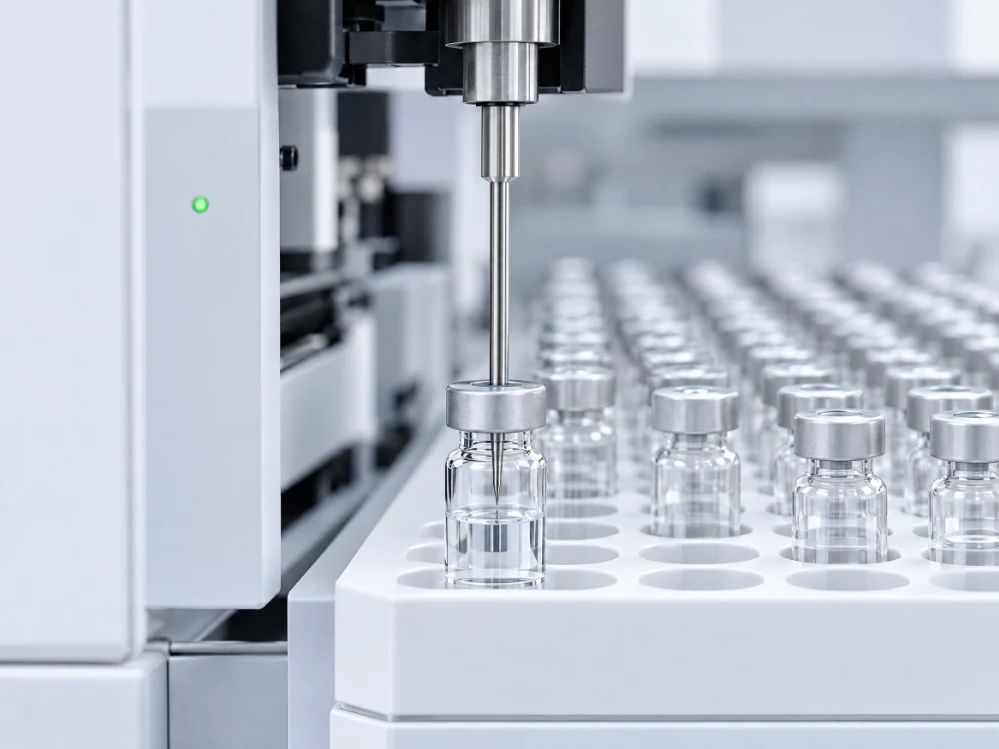 Full walkthrough · JournalHPLC vs mass spec: how purity is tested
Questions
A small molecule that acts as a building block. Amino acids link into chains to form peptides and proteins, and each has the same backbone with a different side chain.
Twenty are standard and encoded by DNA. Two more, selenocysteine and pyrrolysine, are encoded in some organisms, and hundreds of others occur in nature or are made synthetically.
An amino acid is one unit. A peptide is a short string of amino acids linked by peptide bonds, usually no more than about 50 units in length.
An amino acid once it is part of a chain. It is called a residue because it has lost the atoms of one water molecule in forming the peptide bond.
A shorthand for writing sequences, standardized by IUPAC: each amino acid gets one capital letter, such as G for glycine and K for lysine.
Mirror-image forms of the same amino acid. Living cells build proteins from L-amino acids; D-forms can be included in synthetic peptides on purpose.
A test that breaks the peptide back into its amino acids and measures them. It confirms the composition and is one way to determine net peptide content.
Sources and standards
Written and reviewed by the Codex Research quality team · Last reviewed November 8, 2026 · For laboratory research use only.
On real products
See amino acid in context on real Codex research products, then read the full guide.
 Repair
Research peptide
Tissue-Repair Research
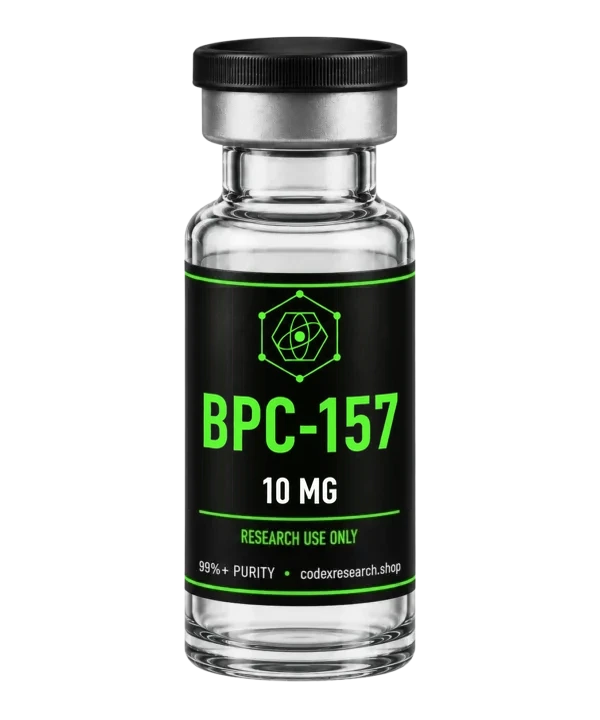
BPC-157 is a 15-amino-acid synthetic peptide taken from a gastric-juice protein, studied in endothelial, fibroblast and growth-factor research. Lot-tested by HPLC and LC-MS.
 Dermal
Research peptide
Dermal Matrix Research
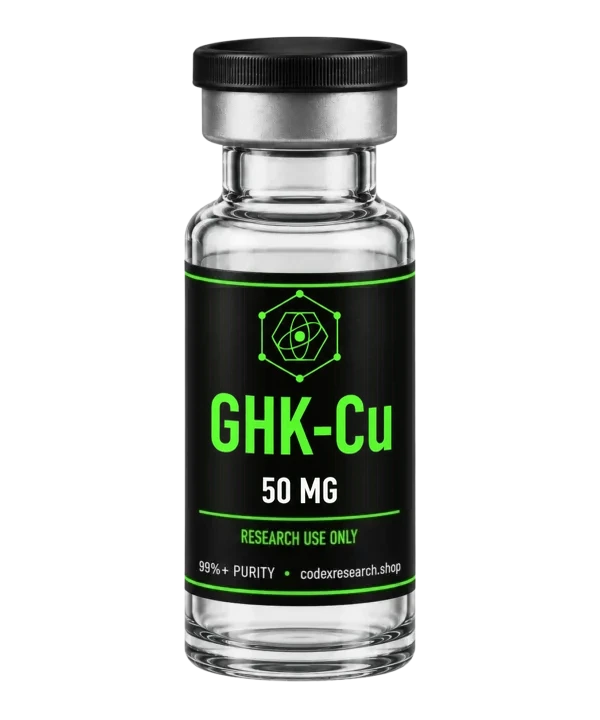
GHK-Cu is the copper(II) complex of the tripeptide Gly-His-Lys, a constituent of human plasma, studied in fibroblast matrix and copper-transport research. Lot-tested by HPLC.
 Cellular
Research peptide
Cellular Research
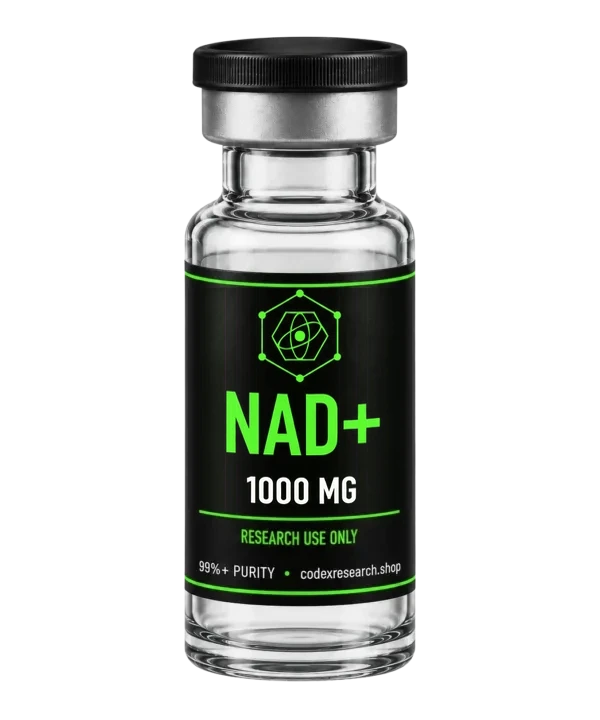
NAD+ is nicotinamide adenine dinucleotide, the oxidized redox coenzyme and sirtuin substrate, supplied as lyophilized powder in 500 mg and 1000 mg vials. Lot-tested by LC-MS.
Journal guideHPLC vs mass spec: how purity is testedRead the guideKeep going
 From lab to your door
U.S.-made research vials, shipped with lot-matched, lab-tested COAs you can scan straight off the label.

21+ Only
Codex Research provides research-grade compounds for laboratory and research use only. By entering, you confirm you are at least 21 and agree to our Terms & Conditions.
By proceeding you affirm the statements above are true. Products are supplied for laboratory research use only — not for human or veterinary use, not for use in diagnostic procedures, and not evaluated by the U.S. Food and Drug Administration. Full disclaimer.


