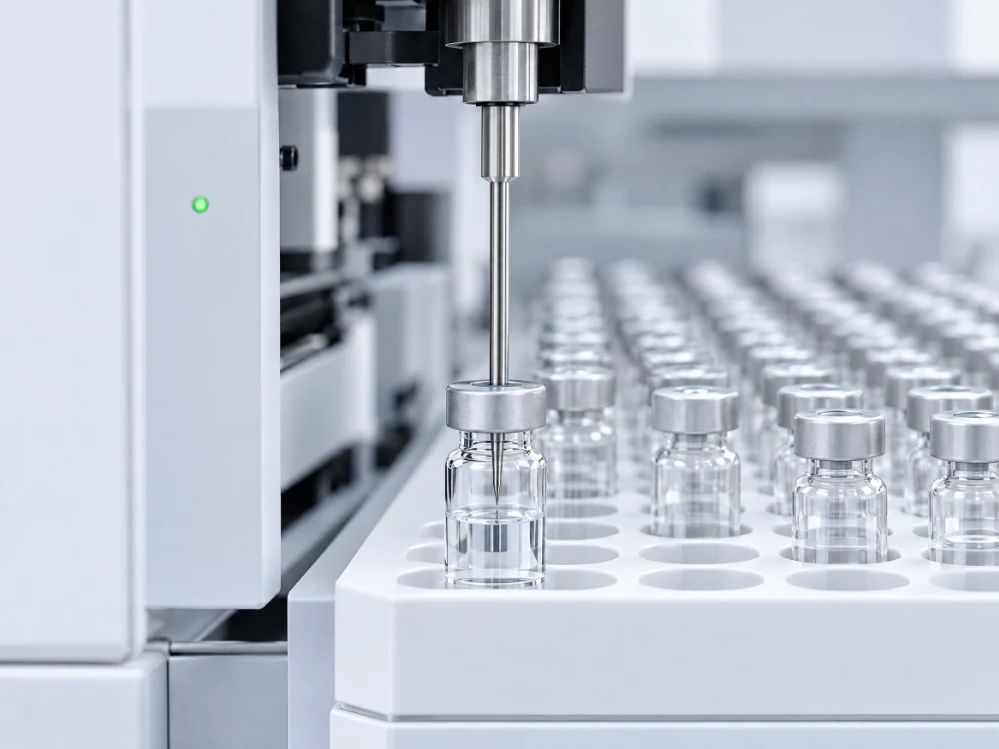
Reason 01
It is the headline quality number
Most buyers compare suppliers by purity first. Knowing what it measures, and what it leaves out, is what makes that comparison fair.
(“aych-pee-el-see PYOOR-ih-tee”)
The most quoted number on a peptide COA, and the most misread.
The short answer
HPLC purity is the percentage of the UV-detected peptide material that is the correct full-length sequence, calculated from peak areas in a chromatogram.
The calculation is simple: the main peak’s area divided by the total area of all integrated peaks. That makes it a relative measure of peptide-related material only. Water, salts and counter-ions are not part of it, and anything the method fails to separate or detect is not part of it either.
Reviewed by the Codex Research quality teamUpdated Nov 8, 2026
Word study
Say it
pu·ri·ty
(“aych-pee-el-see PYOOR-ih-tee”)
Roots and origin
RootLatin
OriginLatin
Purity is a state of being clean, and percent means by the hundred. An HPLC purity of 98% says that out of every hundred parts of detected peptide signal, ninety-eight belong to the right sequence. The word that does the most work is detected.
Around the world
Tap a language to hear it spokenDefinition
HPLC purity comes from a chromatogram. After a sample runs through the column, the software draws a baseline under the trace and measures the area of every peak it integrates. The purity is the main peak’s area as a percentage of the total area of all those peaks. If the main peak accounts for 98 units of area and the minor peaks for 2, the purity is 98%.
That makes purity a relative number. It describes the composition of what the UV detector saw, not the composition of the powder. Water does not absorb at 214–220 nm, and counter-ions such as trifluoroacetate or acetate either do not appear or are excluded from the peptide total, so none of them lower the purity. That is why a lot can be 99% pure and still be only 70–85% peptide by weight, which is what net peptide content measures.
The minor peaks are mostly peptide-related impurities: sequences missing an amino acid, chains cut short, residues in the wrong mirror-image form, or forms that have oxidized or deamidated. Purity counts them only if the method separates them from the main peak. An impurity that co-elutes, coming off the column at the same moment as the product, is integrated as product. A higher-resolution method can split it out and lower the reported purity of the very same material.
Integration settings matter too. Labs set a reporting threshold below which small peaks are ignored, and where the baseline is drawn changes every area slightly. These choices are normal and are covered by method validation, but they mean a purity figure is only fully meaningful alongside its method: the column, the gradient, the wavelength and ideally the chromatogram itself.
Independent re-testing shows why this matters. When researchers at Ghent University re-tested a set of synthetic peptides ordered at 95% purity or higher, only 44% met the purity their supplier certificates claimed, and one sample’s main compound turned out to be a different structure. In FDA guidance for certain synthetic peptide medicines, every peptide-related impurity at or above 0.10% is expected to be identified. Research materials are not held to that standard, which is why reading the number carefully is the buyer’s job.
Interactive
The chromatogram below shows a main peak and the minor peaks around it. Purity is the main peak’s area divided by the total of all integrated peaks. Raise the reporting threshold or reveal the impurity hidden under the main peak, and watch the same data produce a different number.
Simulated data. The sample is identical in every setting; only what the method separates and what the integration counts changes.
In and out
Purity is a share of what the HPLC run can see. Everything else in the vial needs its own measurement.
For buyers
Most buyers compare suppliers by purity first. Knowing what it measures, and what it leaves out, is what makes that comparison fair.
Closely related impurities can carry their own activity in an assay. Purity tells you how much of the detected material is something other than the target.
Two purities from different methods are not directly comparable. The method and chromatogram are what make a number trustworthy.
At Codex Research
Every Codex Research lot is tested for HPLC purity before release, and the lot-matched certificate on each product page shows the result for the lot currently in stock rather than a single figure reused across lots.
See it live: the lot-matched certificate on the BPC-157 product page
Myth vs fact
Tap a card to flip it.
Watch for
Quick check
Purity means little without the column, gradient and wavelength.
Minor peaks around the main one are normal and expected.
Purity is not the share of the powder that is peptide.
 Full walkthrough · JournalPeptide purity grades explained
Questions
The main peak’s area is divided by the total area of all integrated peaks in the chromatogram and multiplied by 100.
Research peptides are commonly sold at 95% or 98% and above. What counts as good depends on the work, and the number should always be read with its method.
No. Purity is the share of peptide material that is the right sequence. Net peptide content is the share of the total powder weight that is peptide at all.
Different columns, gradients, wavelengths and integration settings separate and count impurities differently. Higher-resolution methods often find more.
Mostly peptide-related impurities such as shortened or modified sequences, plus occasional synthesis leftovers. A small number of minor peaks is normal.
No. TFA, acetate and other counter-ions are not counted in the peptide purity figure.
It can overstate quality if impurities co-elute with the main peak or do not absorb UV, and independent studies have found supplier figures that did not hold up on re-testing.
Sources and standards
Written and reviewed by the Codex Research quality team · Last reviewed November 8, 2026 · For laboratory research use only.
On real products
These products’ current certificates report purity by RP-HPLC, the method behind purity. See the result on each product page, then read the full guide.
 GH axis
Research peptide
GH-Axis Research
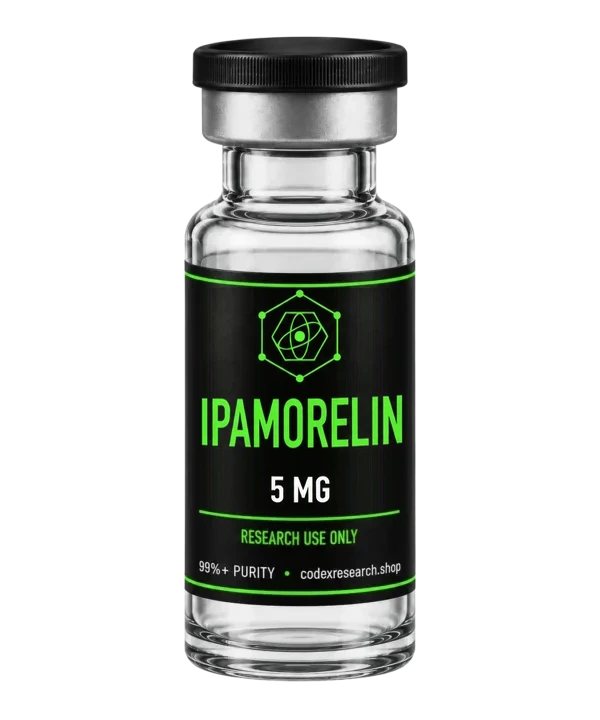
Ipamorelin is a five-residue synthetic peptide, Aib-His-D-2-Nal-D-Phe-Lys-NH2, studied as a selective agonist at the ghrelin receptor. Lot-tested by RP-HPLC.
 Neuro
Research peptide
Neuropeptide Research
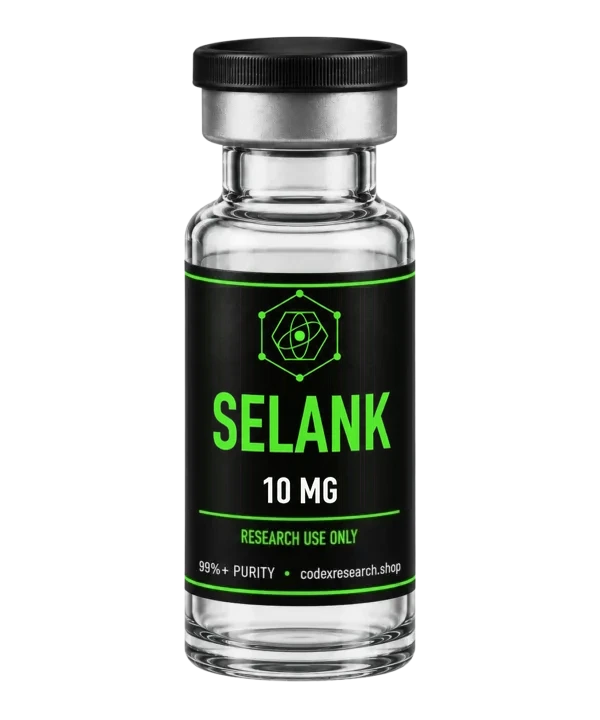
Selank is a seven-residue tuftsin analogue, Thr-Lys-Pro-Arg-Pro-Gly-Pro, studied in enkephalinase and neurotransmission gene-expression research. Lot-tested by LC-MS.
 Cellular
Research peptide
Hormonal Research
Kisspeptin-10 is the C-terminal decapeptide of kisspeptin and an agonist at KISS1R (GPR54), studied in receptor-signaling and GnRH-neuron research. Lot-tested by LC-MS.
Journal guidePeptide purity grades explainedRead the guideKeep going
 From lab to your door
U.S.-made research vials, shipped with lot-matched, lab-tested COAs you can scan straight off the label.

21+ Only
Codex Research provides research-grade compounds for laboratory and research use only. By entering, you confirm you are at least 21 and agree to our Terms & Conditions.
By proceeding you affirm the statements above are true. Products are supplied for laboratory research use only — not for human or veterinary use, not for use in diagnostic procedures, and not evaluated by the U.S. Food and Drug Administration. Full disclaimer.