
Class 1
As, Cd, Hg, Pb
Class 1
Highly toxic elements with limited use in manufacturing. Always considered in a risk assessment, whatever the source.
(“HEV-ee MET-ulz”)
Why a century-old color test was retired in favor of an instrument that counts atoms.
The short answer
Heavy metals testing measures trace amounts of toxic elements, such as lead, arsenic, cadmium and mercury, that can enter a material from raw materials, equipment or catalysts.
For decades, heavy metals were checked with a simple color test that darkened when certain metals were present. It could not tell metals apart and missed several of concern. Modern standards, USP chapters 232 and 233 and the ICH Q3D guideline, replaced it with element-by-element limits measured by ICP-MS or ICP-OES. The modern term is elemental impurities.
Reviewed by the Codex Research quality teamUpdated Nov 8, 2026
Word study
Say it
heav·y met·als
(“HEV-ee MET-ulz”)
Roots and origin
RootOld English
OriginGreek
Metal comes from the Greek word for a mine, and heavy refers to the high density of elements such as lead and mercury. Chemists now prefer “elemental impurities,” because some elements of concern, such as arsenic, are not heavy metals at all.
Around the world
Tap a language to hear it spokenDefinition
Heavy metals testing looks for trace amounts of toxic elements in a material. They can come from raw materials, from catalysts used in manufacturing, or from contact with equipment and packaging. Because they bring no benefit and some are toxic at very low levels, quality standards limit them.
For more than a century the standard was a single color test. The old USP general chapter <231> precipitated sulfide-forming metals and compared the darkness of the result with a lead standard. It gave one combined number, could not say which metal was present, and was not sensitive enough for several elements of concern. Chromium and nickel from stainless-steel equipment, for example, were not detected at all.
The replacement is element-specific. USP chapters <232> Elemental Impurities–Limits and <233> Elemental Impurities–Procedures replaced chapter <231>, which was removed on January 1, 2018. Internationally, the ICH Q3D guideline sets a permitted daily exposure for each element and groups elements into classes by toxicity and likelihood of being present.
The usual instruments are inductively coupled plasma mass spectrometry, ICP-MS, and inductively coupled plasma optical emission spectrometry, ICP-OES. The sample is digested, usually in acid, and sprayed into an argon plasma hot enough to break it into atoms and ions. ICP-MS then counts ions element by element, reaching parts per billion for most elements of concern.
For a certificate, the modern standard means naming the elements. A result for lead, arsenic, cadmium and mercury, with the method and limit for each, carries far more information than a single “heavy metals: pass.” The four Class 1 elements are always expected to be considered when elemental impurities are assessed.
By class
Highly toxic elements with limited use in manufacturing. Always considered in a risk assessment, whatever the source.
Route-dependent toxic elements with a relatively high chance of being present. Always considered.
Elements with a low chance of being present unless intentionally added, such as many metal catalysts.
Elements of relatively low oral toxicity, considered mainly for other routes such as inhalation and injection.
For buyers
A per-element result shows exactly which metals were measured. A combined result can hide the one that matters.
The color test could not detect several elements of concern. A modern method closes that gap.
Catalysts, equipment and raw materials each leave characteristic elements, so a profile can point back to a cause.
At Codex Research
Each Codex Research product page carries a lot-matched certificate of analysis reporting HPLC purity and mass spectrometry identity for the lot in stock.
See it live: the certificate of analysis guide in the glossary
Myth vs fact
Tap a card to flip it.
Watch for
Quick check
At least Pb, As, Cd and Hg, by name.
ICP-MS or ICP-OES, not a color test.
Usually µg/g (ppm) or ng/g (ppb).
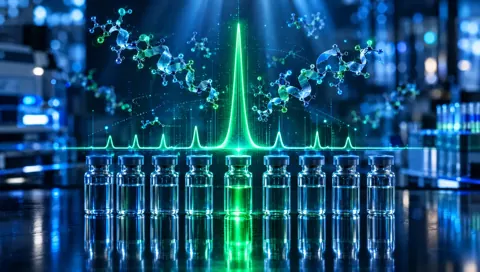 Full walkthrough · JournalThird-party testing and how to spot a fake COA
Questions
Measuring trace amounts of toxic elements, such as lead, arsenic, cadmium and mercury, in a material.
USP chapters <232> and <233> on elemental impurities, which became mandatory on January 1, 2018.
Inductively coupled plasma mass spectrometry: an instrument that breaks a sample into ions in an argon plasma and counts them element by element.
Arsenic, cadmium, mercury and lead.
Usually micrograms per gram (ppm) or nanograms per gram (ppb).
Because the elements of concern include some, like arsenic, that are not heavy metals, and because each element is now measured separately.
Not always. Identity and purity are the core results; elemental testing is reported when performed or requested.
Sources and standards
Written and reviewed by the Codex Research quality team · Last reviewed November 8, 2026 · For laboratory research use only.
On real products
The current certificates for these products report a heavy metals testing result for the lot in stock. See it on each product page, then read the full guide.
 Repair
Research peptide
Tissue-Repair Research
ARA-290 is an 11-residue peptide engineered from the helix-B face of erythropoietin that binds the EPOR/CD131 heteromer without erythropoietic activity.
 Dermal
Research peptide
Dermal Research
SNAP-8 is an eight-amino-acid peptide modelled on the SNAP-25 N-terminus, studied in SNARE-complex assembly research.
 Repair
Research peptide
Tissue-Repair Research
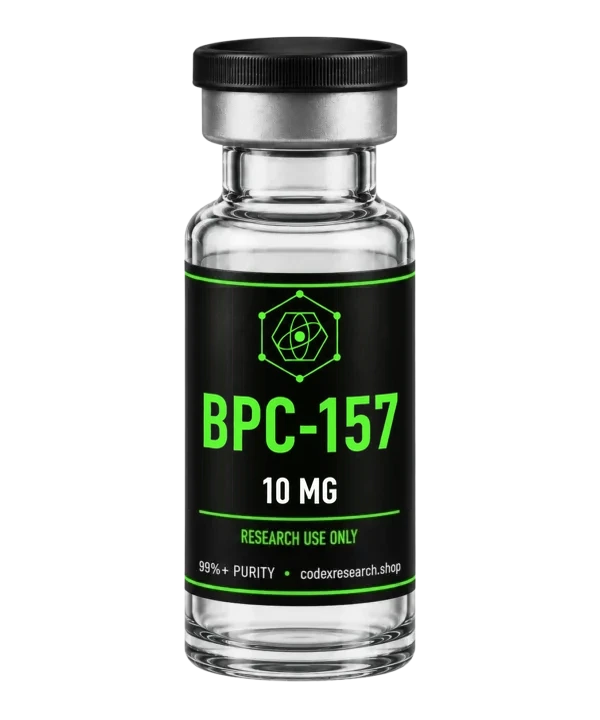
BPC-157 is a 15-amino-acid synthetic peptide taken from a gastric-juice protein, studied in endothelial, fibroblast and growth-factor research. Lot-tested by HPLC and LC-MS.
Journal guideThird-party testing and how to spot a fake COARead the guideKeep going
 From lab to your door
U.S.-made research vials, shipped with lot-matched, lab-tested COAs you can scan straight off the label.

21+ Only
Codex Research provides research-grade compounds for laboratory and research use only. By entering, you confirm you are at least 21 and agree to our Terms & Conditions.
By proceeding you affirm the statements above are true. Products are supplied for laboratory research use only — not for human or veterinary use, not for use in diagnostic procedures, and not evaluated by the U.S. Food and Drug Administration. Full disclaimer.


