3:1 · 10:1
Chromatography
Signal-to-noise
Compare the height of a small peak with the baseline noise around it. About 3:1 for detection and 10:1 for quantitation are the usual working values.
(“L-O-D and L-O-Q”)
Why “not detected” always means “not detected by this method, down to this level.”
The short answer
The limit of detection is the smallest amount a test can reliably tell apart from zero; the limit of quantitation is the smallest amount it can put a trustworthy number on.
Every analytical method has a floor. Below the limit of detection, a signal cannot be reliably distinguished from background noise. Between the detection and quantitation limits, something is there but its amount cannot be stated with acceptable precision. Only at or above the limit of quantitation does a reported number carry its full meaning.
Reviewed by the Codex Research quality teamUpdated Nov 8, 2026
Word study
Say it
L·O·D · L·O·Q
(“L-O-D and L-O-Q”)
Roots and origin
RootLatin
OriginLatin
Detection is literally taking the cover off something; quantitation is saying how much of it there is. The two limits mark the point where a method can first uncover a substance and the higher point where it can first put a reliable size on it.
Around the world
Tap a language to hear it spokenDefinition
No analytical method can see all the way down to zero. Detectors have background noise, blanks give small signals, and at some point a tiny real signal can no longer be told apart from chance variation. The limit of detection, LOD, marks that floor: the smallest amount of a substance a method can reliably distinguish from its absence.
Detection is not the same as measurement. Just above the LOD, a method can say that something is present, but repeated measurements of the same sample would scatter too widely to trust the number. The limit of quantitation, LOQ, is the higher level at which results meet set goals for precision and accuracy. FDA’s Q2(R2) guidance on validating analytical procedures defines both and describes how to establish them.
For chromatography the most familiar approach is signal-to-noise. The height of a small peak is compared with the noise of the nearby baseline; a ratio of about 3:1 is generally taken as the detection limit and about 10:1 as the quantitation limit. Other accepted approaches use the scatter of blank measurements or the standard deviation of the response and the slope of a calibration curve.
Clinical laboratory guidance adds a third level, the limit of blank, LoB: the highest result expected from a sample with nothing in it. The LoD then sits above the LoB by enough to be confident that a real sample is not just a high blank. The idea is the same in every field: a limit is a statistical statement about how often a method would be wrong, not a sharp physical line.
For anyone reading a certificate, the limits give meaning to the small numbers. An impurity reported as “not detected” was below the LOD of that particular method on that particular day. A result reported as “less than LOQ” was seen but too small to quantify. Without the limits, neither statement says how small “small” is.
Interactive
Lower the impurity level and watch its peak sink into the baseline. The signal-to-noise ratio decides whether the result is a number, “less than LOQ” or “not detected.”
A simulated detail of an HPLC baseline. Signal-to-noise is calculated as 2H ÷ h, where H is the peak height and h the peak-to-peak noise. A ratio of about 3:1 is the usual estimate of the detection limit and about 10:1 of the quantitation limit; the 0.015% and 0.05% levels here are illustrative.
How they are set
Compare the height of a small peak with the baseline noise around it. About 3:1 for detection and 10:1 for quantitation are the usual working values.
Use the scatter of the response and the slope of the calibration line: roughly 3.3σ/S for detection and 10σ/S for quantitation.
Measure many blanks, set the limit of blank from their spread, then set the detection limit far enough above it to be confident.
Analyze known low amounts and record the lowest level at which the substance is reliably seen. Used mostly for non-instrumental tests.
For buyers
A clean-looking result is only as good as the method’s detection limit. The limit says how much could still be there unseen.
Values near the bottom of a method’s range are the least precise. The LOQ tells you which small numbers to trust.
Two labs reporting “not detected” can mean very different things if their detection limits differ tenfold.
At Codex Research
Each Codex Research product page carries a lot-matched certificate of analysis with HPLC purity and mass spectrometry identity for the lot in stock.
See it live: the chromatogram guide, with small impurity peaks
Myth vs fact
Tap a card to flip it.
Watch for
Quick check
The method’s LOD and LOQ, or at least a reporting threshold.
Below the detection limit of this method, not zero.
The LOQ should sit well below the limit being checked.
 Full walkthrough · JournalWhat endotoxin testing means
Questions
The LOD is the smallest amount a method can detect; the LOQ is the smallest amount it can measure with acceptable precision and accuracy. The LOQ is always the higher of the two.
Commonly about 3:1 for the detection limit and 10:1 for the quantitation limit.
Common approaches use signal-to-noise, the standard deviation of the response and the calibration slope (about 3.3σ/S), or repeated blank measurements.
The substance was detected, but at a level too low to state a reliable amount.
No. It means the amount was below the method’s detection limit.
The highest result expected from a sample that contains none of the substance. Detection limits are set above it.
The laboratory, during validation of each method, following guidance such as FDA’s Q2(R2).
Sources and standards
Written and reviewed by the Codex Research quality team · Last reviewed November 8, 2026 · For laboratory research use only.
On real products
These products’ current certificates report results as none detected, which is where LOD and LOQ comes in. See the lines on each product page, then read the full guide.
 Dermal
Research peptide
Dermal Research
SNAP-8 is an eight-amino-acid peptide modelled on the SNAP-25 N-terminus, studied in SNARE-complex assembly research.
 Repair
Research peptide
Tissue-Repair Research
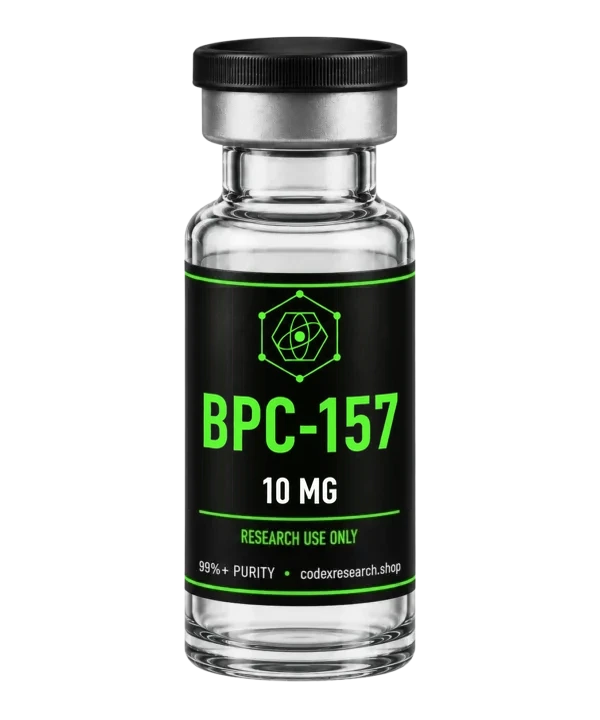
BPC-157 is a 15-amino-acid synthetic peptide taken from a gastric-juice protein, studied in endothelial, fibroblast and growth-factor research. Lot-tested by HPLC and LC-MS.
 Blends
Research peptide
Repair Blend
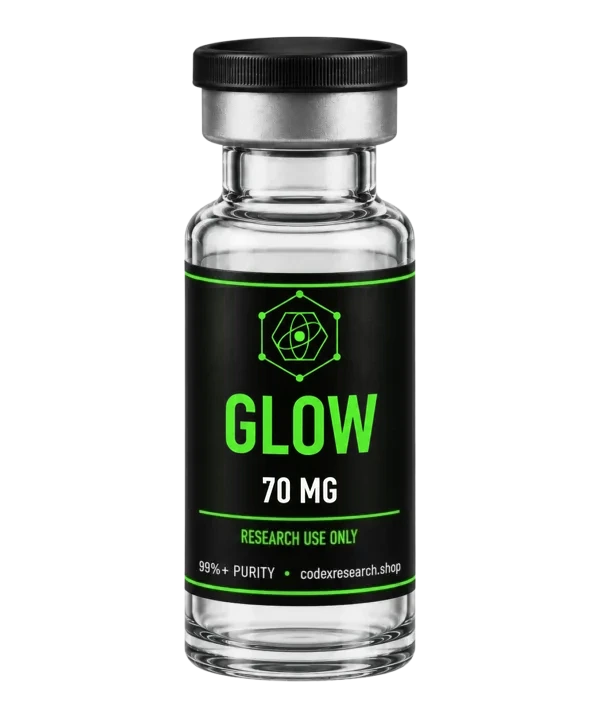
Glow is a three-peptide research blend: 49.87 mg GHK-Cu, 9.88 mg BPC-157 and 9.32 mg TB-500 per vial on the current lot, measured by HPLC and tested on a full safety panel.
Journal guideWhat endotoxin testing meansRead the guideKeep going
 From lab to your door
U.S.-made research vials, shipped with lot-matched, lab-tested COAs you can scan straight off the label.

21+ Only
Codex Research provides research-grade compounds for laboratory and research use only. By entering, you confirm you are at least 21 and agree to our Terms & Conditions.
By proceeding you affirm the statements above are true. Products are supplied for laboratory research use only — not for human or veterinary use, not for use in diagnostic procedures, and not evaluated by the U.S. Food and Drug Administration. Full disclaimer.