This page< LOD
Below the LOD
ND
Not detected. The signal was below the method’s limit of detection, so the amount lies between zero and the LOD.
(“N-D”)
Two letters that look like zero and are not.
The short answer
ND stands for “not detected”: the test looked for the substance and found nothing above the method’s limit of detection.
ND is a reporting convention, not a measurement. It says the signal was below the limit of detection of the specific method used, so the true amount lies somewhere between zero and that limit. An ND is only fully meaningful when the detection limit, or at least the method, is stated alongside it.
Reviewed by the Codex Research quality teamUpdated Nov 8, 2026
Word study
Say it
N·D
(“N-D”)
Roots and origin
RootOld English
OriginLatin
Read literally, ND says the test did not uncover the substance. It is a statement about the test’s reach, not a statement that the substance is absent, which is why the detection limit belongs next to it.
Around the world
Tap a language to hear it spokenDefinition
ND is short for “not detected.” On a certificate of analysis it appears where a test looked for something, such as a specific impurity, a residual solvent or a microbial contaminant, and found no signal above the method’s limit of detection. It is one of the most common entries on a COA and one of the most often misread.
The key word is detected. Every method has a detection limit below which a real signal cannot be told apart from background. ND means the result fell below that limit, so the honest reading is “somewhere between zero and the LOD.” For a method with a high LOD, ND can still allow a meaningful amount; for a sensitive method, it rules out almost everything.
ND sits on a ladder of notations. Above the detection limit but below the quantitation limit, a result is often written as “< LOQ” or “BLQ,” below the limit of quantitation: present, but too small to measure precisely. Above the LOQ, a number is reported. Some certificates instead summarize a result against a specification with words like “conforms” or “pass,” which say the result met the limit without giving its value.
Because ND depends on the method, two certificates can both say ND and mean very different things. A useful certificate therefore names the method and, ideally, its LOD or reporting limit. Validation guidance such as FDA’s Q2(R2) treats detection and quantitation limits as properties each method must establish for itself.
For a buyer, the practical rule is simple. Treat ND as “not found by this method, down to this level,” check that the level is low enough to matter for the test in question, and be wary of any ND that comes without a method or limit attached.
Result notations
Not detected. The signal was below the method’s limit of detection, so the amount lies between zero and the LOD.
Detected but below the limit of quantitation. Something is there, but too little to put a reliable number on.
At or above the limit of quantitation. The value carries the method’s stated precision and accuracy.
The result met the specification. The actual value may not be shown, only that it fell within the limit.
The test was not performed on this lot. Sometimes written as N/T or a dash, and easy to confuse with ND.
For buyers
The true amount lies between nothing and the detection limit. The limit decides whether that range is reassuring.
ND, < LOQ, conforms and not tested answer different questions. Mixing them up changes what a certificate says.
An ND from a sensitive, named method says far more than an ND from an unnamed one.
At Codex Research
Each Codex Research product page carries a lot-matched certificate of analysis reporting HPLC purity and mass spectrometry identity for the lot in stock. For any other test on a lot, contact us and we will tell you what was performed and how.
See it live: the certificate of analysis guide in the glossary
Myth vs fact
Tap a card to flip it.
Watch for
Quick check
Which test produced the ND, by name.
An LOD or reporting limit next to the result or in the notes.
Make sure ND is a result, not a placeholder.
 Full walkthrough · JournalThird-party testing and how to spot a fake COA
Questions
Not detected: the test was run and the result was below the method’s limit of detection.
No. It means the amount is somewhere between zero and the method’s detection limit.
ND is below the detection limit. < LOQ means the substance was detected but is below the level that can be measured reliably.
Below the limit of quantitation: present, but too low to report as a reliable number.
The result met the specification for that test. The exact value may not be shown.
Because the limit tells you how much could still be present without being detected.
No. ND is a result from a test that was performed. Not tested means the test was not run.
Sources and standards
Written and reviewed by the Codex Research quality team · Last reviewed November 8, 2026 · For laboratory research use only.
On real products
These products’ current certificates report results as none detected, which is where ND comes in. See the lines on each product page, then read the full guide.
 Repair
Research peptide
Immune Research
Thymosin alpha-1 is a 28-residue acetylated peptide isolated from calf thymus in 1977 and generated from prothymosin alpha, studied in T-cell biology.
 Repair
Research peptide
Tissue-Repair Research
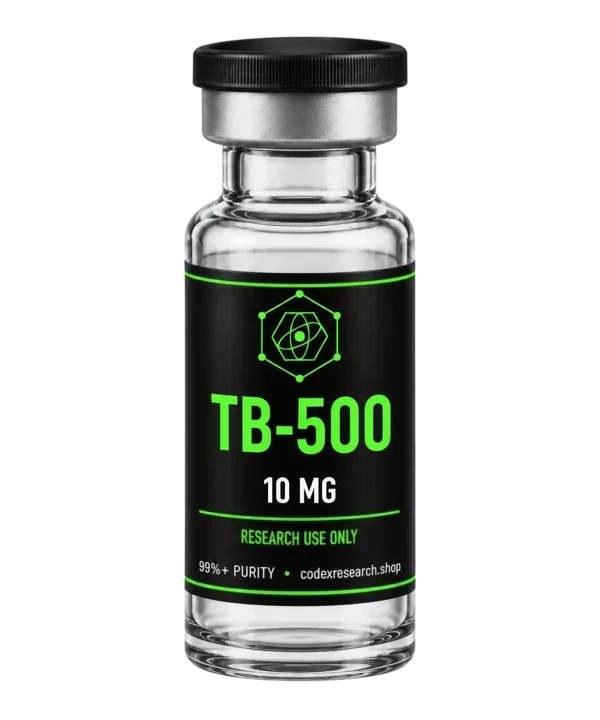
TB-500 is Ac-LKKTETQ, the acetylated actin-binding fragment of Thymosin Beta-4 (residues 17–23), supplied as a lyophilized peptide for actin-regulation and cell-migration research.
 Cellular
Research peptide
Cellular Research
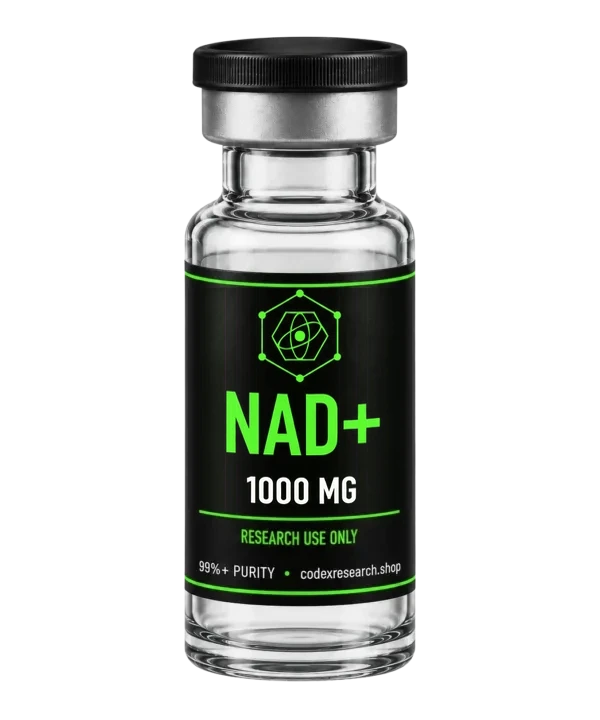
NAD+ is nicotinamide adenine dinucleotide, the oxidized redox coenzyme and sirtuin substrate, supplied as lyophilized powder in 500 mg and 1000 mg vials. Lot-tested by LC-MS.
Journal guideThird-party testing and how to spot a fake COARead the guideKeep going
 From lab to your door
U.S.-made research vials, shipped with lot-matched, lab-tested COAs you can scan straight off the label.

21+ Only
Codex Research provides research-grade compounds for laboratory and research use only. By entering, you confirm you are at least 21 and agree to our Terms & Conditions.
By proceeding you affirm the statements above are true. Products are supplied for laboratory research use only — not for human or veterinary use, not for use in diagnostic procedures, and not evaluated by the U.S. Food and Drug Administration. Full disclaimer.