C18
The peptide standard
Reversed-phase HPLC
Separates by hydrophobicity on a water-repelling column. The default for peptide purity and the method behind most COA results.
(“aych-pee-el-see”)
The separation method behind almost every peptide purity number.
The short answer
HPLC is a lab method that pumps a dissolved sample through a packed column under high pressure, separating it into its components so each one can be detected and measured.
For peptides, the usual form is reversed-phase HPLC: components separate by how strongly they cling to a water-repelling column, and a UV detector at about 214–220 nm records each one as a peak. The result is a chromatogram, and the main peak’s share of the total area is the purity figure on a COA.
Reviewed by the Codex Research quality teamUpdated Nov 8, 2026
Word study
Say it
H·P·L·C
(“aych-pee-el-see”)
Roots and origin
RootGreek
OriginLatin
Chromatography literally means color writing. The first separations, by the botanist Mikhail Tsvet in the early 1900s, split plant pigments into colored bands down a glass column. Peptides are colorless, so modern HPLC writes its bands as peaks on a UV trace instead, but the principle is the same.
Around the world
Tap a language to hear it spokenDefinition
High-performance liquid chromatography is a way of pulling a mixture apart. The sample is dissolved and injected into a stream of liquid, the mobile phase, which is pumped at high pressure through a narrow steel column packed with very fine particles, the stationary phase. Each component in the sample interacts with those particles to a different degree, so each one travels through the column at a different speed and comes out at a different time.
For peptides, the standard form is reversed-phase HPLC. The column is packed with silica particles coated in long carbon chains, usually C18, which repel water. The mobile phase starts mostly as water and gradually gains an organic solvent such as acetonitrile, a program called a gradient. Peptides stick to the water-repelling surface and let go as the solvent strengthens, the less hydrophobic ones first and the more hydrophobic ones later. A small amount of trifluoroacetic acid is usually added to sharpen the peaks.
As each component leaves the column it passes a detector. For peptides that is almost always an ultraviolet detector set around 214–220 nm, the range where the peptide bond itself absorbs light. Every component that absorbs there shows up as a peak, and the record of peaks against time is the chromatogram. The time a peak appears is its retention time; the area under it reflects how much of that component is present.
Because a peptide and its most common impurities, such as a sequence missing one amino acid, are chemically very close, they often elute within seconds of each other. How well a method separates them is called resolution, and it depends on the column, the gradient, the flow and the temperature. A method with poor resolution can let an impurity hide inside the main peak, which makes the product look purer than it is.
HPLC is used two ways in peptide work. Preparative HPLC uses large columns to purify a crude peptide after synthesis. Analytical HPLC uses small columns and tiny injections to measure the result, and that analytical run is what produces the purity figure on a certificate of analysis. Newer systems that run at much higher pressures with smaller particles are called UHPLC or UPLC; they give sharper peaks and often reveal impurities a standard run would miss.
Modes
Separates by hydrophobicity on a water-repelling column. The default for peptide purity and the method behind most COA results.
Separates by charge on a column carrying charged groups. Useful for impurities that differ by charge, such as deamidated forms.
Separates by size, with larger molecules leaving first. Used to look for aggregates, where peptide molecules have stuck together.
The same chemistry at far higher pressure with particles under 2 µm. Sharper, faster peaks and better resolution of close impurities.
Interactive
A peptide and its closest impurities often differ by a single amino acid, so they come off the column close together. Drag the gradient: a shallower gradient spreads the peaks apart, a steeper one runs faster but can push an impurity into the main peak, where it would be counted as product.
On the COA
Two labs can run “HPLC” and get different numbers from the same lot. These are the conditions that make a result readable and comparable.
For buyers
Nearly every peptide purity number comes from an HPLC run. Knowing what the method can and cannot see is the key to reading that number.
Column, gradient and wavelength all change what gets separated. The same lot can read differently on two methods, which is why the method belongs on the COA.
A trace with its peaks and integration is far harder to fake than a single percentage, and it lets anyone see what was counted.
At Codex Research
Every Codex Research lot is tested for HPLC purity before release, and the lot-matched certificate on each product page reports the result for the lot in stock.
See it live: the lot-matched certificate on the BPC-157 product page
Myth vs fact
Tap a card to flip it.
Watch for
Quick check
A purity number should come with the trace it was calculated from.
214 or 220 nm is standard for peptides; it should be stated.
A real chromatogram almost always shows minor peaks around the main one.
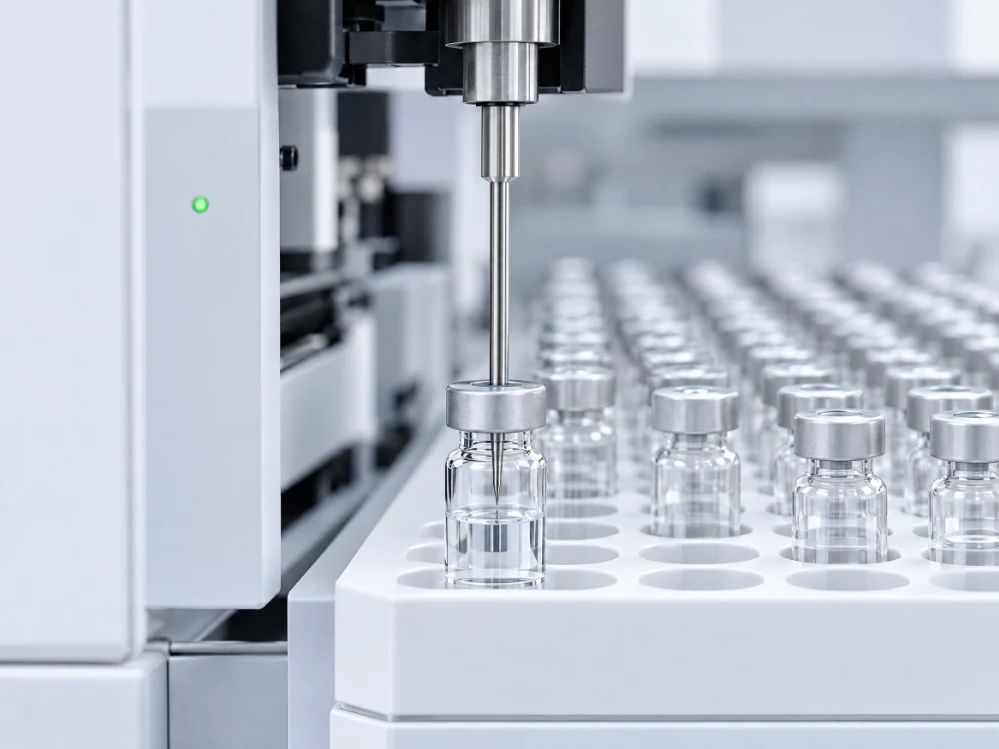 Full walkthrough · JournalHPLC vs mass spec: how purity is tested
Questions
High-performance liquid chromatography. It was originally called high-pressure liquid chromatography, after the pumps that push the liquid through the column.
It separates the sample into peaks and measures the area of each. Purity is the main peak’s area as a share of the total area of all the peaks.
The peptide bond absorbs ultraviolet light strongly in that range, so every peptide and peptide fragment shows up regardless of its sequence.
UPLC, or UHPLC, uses smaller particles and much higher pressure. The peaks are sharper and close impurities are easier to separate, so results can be more revealing.
The time a component takes to travel through the column and reach the detector. Under the same conditions, the same compound comes off at the same time.
Not on its own. HPLC shows how many components there are and how much of each; mass spectrometry confirms that the main one has the right molecular weight.
Trifluoroacetic acid pairs with charged groups on the peptide and sharpens the peaks. It is also why purified peptides often end up as TFA salts.
Sources and standards
Written and reviewed by the Codex Research quality team · Last reviewed November 8, 2026 · For laboratory research use only.
On real products
These products’ current certificates report purity by RP-HPLC, the method behind HPLC. See the result on each product page, then read the full guide.
 Repair
Research peptide
Tissue-Repair Research
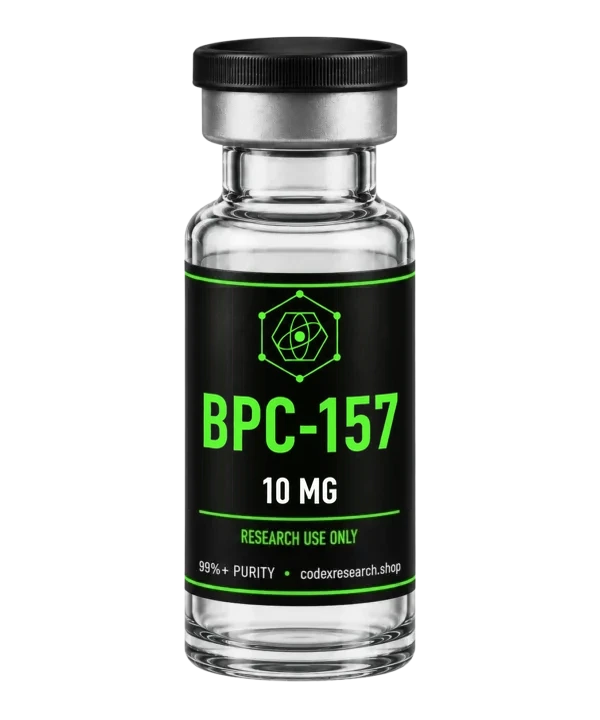
BPC-157 is a 15-amino-acid synthetic peptide taken from a gastric-juice protein, studied in endothelial, fibroblast and growth-factor research. Lot-tested by HPLC and LC-MS.
 Blends
Research peptide
Repair Blend
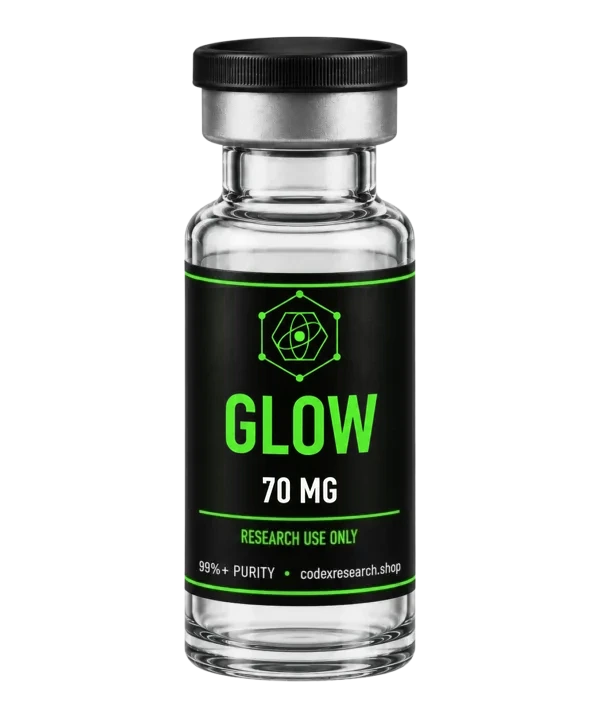
Glow is a three-peptide research blend: 49.87 mg GHK-Cu, 9.88 mg BPC-157 and 9.32 mg TB-500 per vial on the current lot, measured by HPLC and tested on a full safety panel.
 GH axis
Research peptide
GH-Axis Research
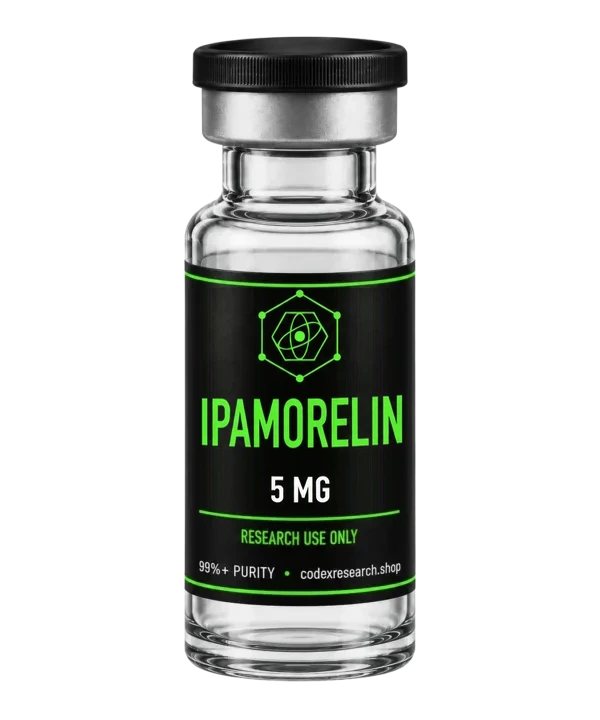
Ipamorelin is a five-residue synthetic peptide, Aib-His-D-2-Nal-D-Phe-Lys-NH2, studied as a selective agonist at the ghrelin receptor. Lot-tested by RP-HPLC.
Journal guideHPLC vs mass spec: how purity is testedRead the guideKeep going
 From lab to your door
U.S.-made research vials, shipped with lot-matched, lab-tested COAs you can scan straight off the label.

21+ Only
Codex Research provides research-grade compounds for laboratory and research use only. By entering, you confirm you are at least 21 and agree to our Terms & Conditions.
By proceeding you affirm the statements above are true. Products are supplied for laboratory research use only — not for human or veterinary use, not for use in diagnostic procedures, and not evaluated by the U.S. Food and Drug Administration. Full disclaimer.