
HS-GC
Residual solvents
Headspace GC
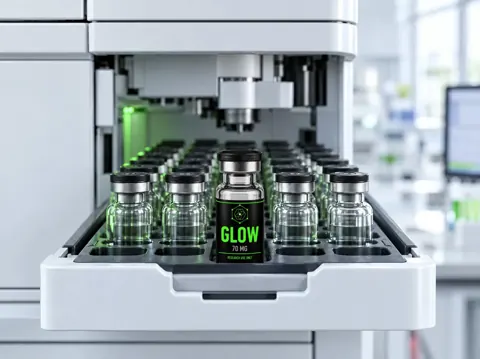
Only the vapor above a warmed, sealed sample is injected. The standard approach for residual solvents.
(“gas kroh-muh-TOG-ruh-fee”)
The test for what should have evaporated, and didn’t.
The short answer
Gas chromatography separates compounds that can be turned into vapor by carrying them through a heated column with an inert gas.
In GC a sample is vaporized and carried by an inert gas such as helium or nitrogen through a long, heated column. Volatile compounds separate by how readily they vaporize and how they interact with the column. Peptides are too large and fragile to vaporize, so they are measured by HPLC instead. GC’s main job in peptide quality is finding residual solvents left over from processing.
Reviewed by the Codex Research quality teamUpdated Nov 8, 2026
Word study
Say it
gas chro·ma·tog·ra·phy
(“gas kroh-muh-TOG-ruh-fee”)
Roots and origin
Root
OriginGreek
Chromatography was named for the colored bands of plant pigments it first separated. In GC the “writing” is done by a gas carrying vapors through a column, long after color stopped mattering.
Around the world
Tap a language to hear it spokenDefinition
Gas chromatography is chromatography in which the mobile phase is a gas. IUPAC defines it as a separation technique where the mobile phase is a gas, and the carrier gas as the gas used to move the sample through the column. A small sample is vaporized in a heated inlet, swept by the carrier gas into a long, thin column, and each compound leaves at its own retention time to be recorded by a detector.
GC only works for compounds that can become vapor without breaking apart. Small, volatile molecules such as solvents do this easily. Peptides do not: they are large, charged and heat-sensitive, so they decompose before they would vaporize. That is why peptide purity and identity are measured by HPLC and mass spectrometry, and why a GC purity figure for a whole peptide is a warning sign.
Where GC earns its place is residual solvents. Solvents used in processing and purification, such as acetonitrile, can remain in a finished powder. ICH Q3C, adopted by FDA, classifies residual solvents by risk and sets limits for many of them. Reviews of pharmaceutical residual-solvent testing describe GC as the standard technique for this, because it separates and quantifies volatile solvents at very low levels.
Headspace GC is the usual way to do it. Instead of injecting the sample itself, the sealed vial is warmed so volatile solvents move into the gas above the sample, the headspace, and only that gas is injected. This keeps non-volatile material such as the peptide out of the instrument and makes the measurement cleaner.
Detectors determine what the result can say. A flame ionization detector responds to most organic compounds and is the workhorse for solvent quantitation. Coupling GC to a mass spectrometer, GC-MS, adds identification by mass, which helps when an unexpected peak appears.
Set-ups
Only the vapor above a warmed, sealed sample is injected. The standard approach for residual solvents.
A liquid sample is injected and vaporized in the inlet. Used for samples that are volatile throughout.
A flame ionization detector measures most organic compounds with a wide, linear response.
A mass spectrometer identifies compounds by mass as they leave the column.
For buyers
Solvents used during processing can remain. GC is how they are measured.
GC measures volatile leftovers, not the peptide itself. Peptide purity is an HPLC test.
ICH Q3C sets residual-solvent limits, so results can be compared against a recognized standard.
At Codex Research
Each Codex Research product page carries a lot-matched certificate of analysis that reports HPLC purity and mass spectrometry identity for the lot in stock. For residual-solvent testing on a specific lot, contact us.
See it live: the residual solvents guide in the glossary
Myth vs fact
Tap a card to flip it.
Watch for
Quick check
GC for solvents, HPLC for peptide purity.
Results in ppm against a stated limit.
Headspace GC or another named technique.
 Full walkthrough · JournalPeptide purity grades explained
Questions
A separation technique that carries vaporized compounds through a heated column with an inert gas.
Peptides are large and heat-sensitive and break down before they vaporize. HPLC is used instead.
Mainly residual solvents left over from processing and purification.
A method that injects only the vapor above a warmed sample, keeping non-volatile material out of the instrument.
Usually helium, nitrogen or hydrogen.
Gas chromatography coupled to a mass spectrometer, which identifies compounds by mass.
ICH guideline Q3C, adopted by FDA and other regulators, classifies solvents and sets limits.
Sources and standards
Written and reviewed by the Codex Research quality team · Last reviewed November 8, 2026 · For laboratory research use only.
On real products
The current certificates for these products include a residual-solvent screen run by gas chromatography. See the result on each product page, then read the full guide.
 Cellular
Research peptide
Cellular Research
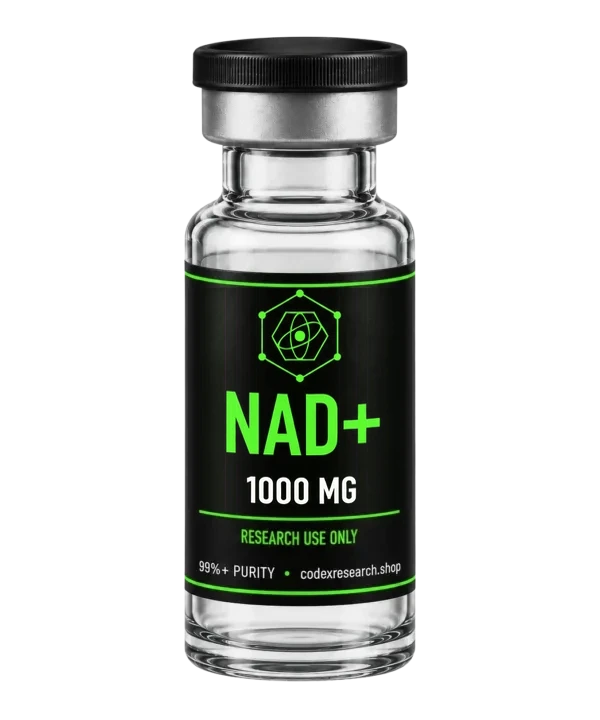
NAD+ is nicotinamide adenine dinucleotide, the oxidized redox coenzyme and sirtuin substrate, supplied as lyophilized powder in 500 mg and 1000 mg vials. Lot-tested by LC-MS.
 Neuro
Research peptide
Neuropeptide Research
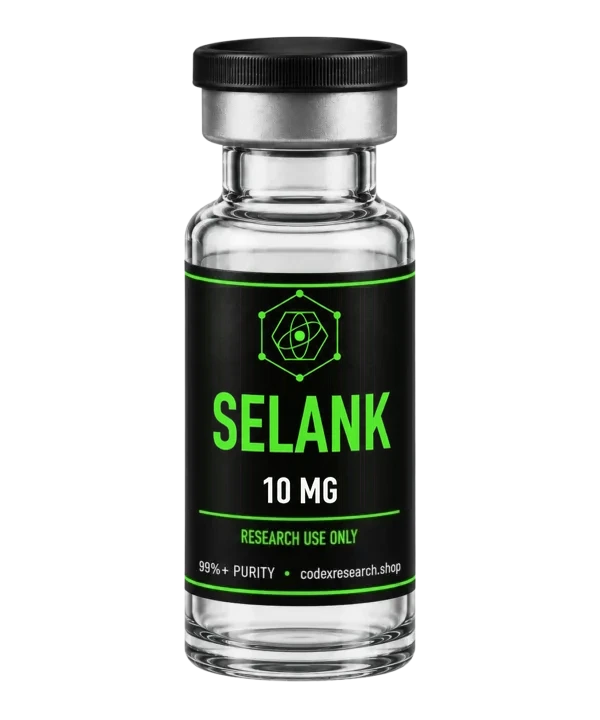
Selank is a seven-residue tuftsin analogue, Thr-Lys-Pro-Arg-Pro-Gly-Pro, studied in enkephalinase and neurotransmission gene-expression research. Lot-tested by LC-MS.
 Cellular
Research peptide
Cellular Research
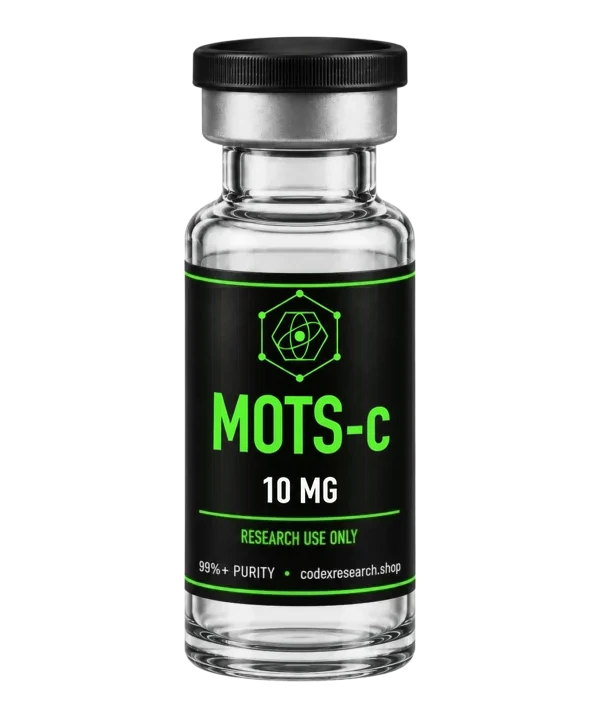
MOTS-c is a 16-residue peptide encoded inside the mitochondrial 12S rRNA gene, studied in AMPK, folate-cycle and mitonuclear signaling research. Lot-tested by LC-MS.
Journal guidePeptide purity grades explainedRead the guideKeep going
 From lab to your door
U.S.-made research vials, shipped with lot-matched, lab-tested COAs you can scan straight off the label.

21+ Only
Codex Research provides research-grade compounds for laboratory and research use only. By entering, you confirm you are at least 21 and agree to our Terms & Conditions.
By proceeding you affirm the statements above are true. Products are supplied for laboratory research use only — not for human or veterinary use, not for use in diagnostic procedures, and not evaluated by the U.S. Food and Drug Administration. Full disclaimer.


