
LC
Separate
Liquid chromatograph
Pumps a solvent gradient through a packed column and separates the sample into components that leave at different times.
(“L-C-M-S”)
The test that turns an anonymous peak into a named molecule.
The short answer
LC-MS is an analysis that separates a sample by liquid chromatography and sends each component straight into a mass spectrometer, so every peak gets a measured mass.
The liquid chromatograph separates the sample into components over time, as in an ordinary HPLC run. As each component leaves the column it is ionized, usually by electrospray, and the mass spectrometer measures its mass-to-charge ratio. The result links retention time to mass, which confirms the main peak’s identity and shows what the smaller peaks are.
Reviewed by the Codex Research quality teamUpdated Nov 8, 2026
Word study
Say it
L·C·M·S
(“L-C-M-S”)
Roots and origin
RootGreek
OriginLatin
The abbreviation is simply the two techniques side by side: liquid chromatography to separate, mass spectrometry to weigh. The hyphen marks that they run as one connected analysis rather than two separate tests.
Around the world
Tap a language to hear it spokenDefinition
LC-MS joins two techniques into one analysis. Liquid chromatography separates the components of a sample as they travel through a column at different speeds. Instead of only measuring each component with a UV detector, the column outlet feeds into a mass spectrometer, which measures the mass of whatever is leaving the column at each moment.
The difficult part is the connection. A mass spectrometer works on charged molecules in a vacuum, while a liquid chromatograph delivers a steady stream of solvent. Electrospray ionization, developed for large biomolecules in the late 1980s, solved this by spraying the liquid into a fine mist of charged droplets that release intact, charged molecules into the instrument. The work was recognized with a share of the 2002 Nobel Prize in Chemistry.
Peptides usually pick up more than one charge in electrospray, so a single peptide appears at several mass-to-charge values. Software works back from this pattern to the peptide’s actual mass. The measured mass is then compared with the expected mass calculated from the sequence, including any modifications such as amidation.
Pairing the two gives more than either alone. HPLC with UV can say that a material is 98% one component, but not what that component is. Mass spectrometry on its own can confirm a mass, but a mixture of similar molecules muddles the spectrum. LC-MS gives each peak a retention time and a mass, so identity and impurity profile come from the same run.
On a certificate of analysis, LC-MS usually appears as the identity result: an observed mass next to the expected mass, ideally with the spectrum attached. Quality-control laboratories increasingly use a mass detector routinely alongside UV for exactly this reason, because it catches identity problems a UV trace cannot.
How it is built
Pumps a solvent gradient through a packed column and separates the sample into components that leave at different times.
Turns each component leaving the column into gas-phase ions. Electrospray is the usual choice for peptides because it keeps them intact.
Sorts the ions by mass-to-charge ratio. Quadrupole, time-of-flight and Orbitrap analyzers differ in speed, resolution and accuracy.
Records the ion signal over time, building both a chromatogram and a mass spectrum for every point in the run.
A second mass analyzer that fragments selected ions. The fragment pattern can confirm the sequence itself, not only the total mass.
For buyers
A high purity figure says the material is mostly one thing. LC-MS says which thing, by weighing it.
Small impurity peaks become specific variants, such as an oxidized or one-residue-short form, once they have a mass.
Separation and mass measurement in a single analysis link each mass to a peak, which is harder to misreport than two disconnected results.
At Codex Research
Each Codex Research product page carries a lot-matched certificate of analysis with mass spectrometry identity and HPLC purity for the lot in stock.
See it live: the mass spectrometry guide in the glossary
Myth vs fact
Tap a card to flip it.
Watch for
Quick check
Observed mass within a small tolerance of the expected mass.
An actual spectrum, not just a number.
Any amidation or acetylation reflected in the expected mass.
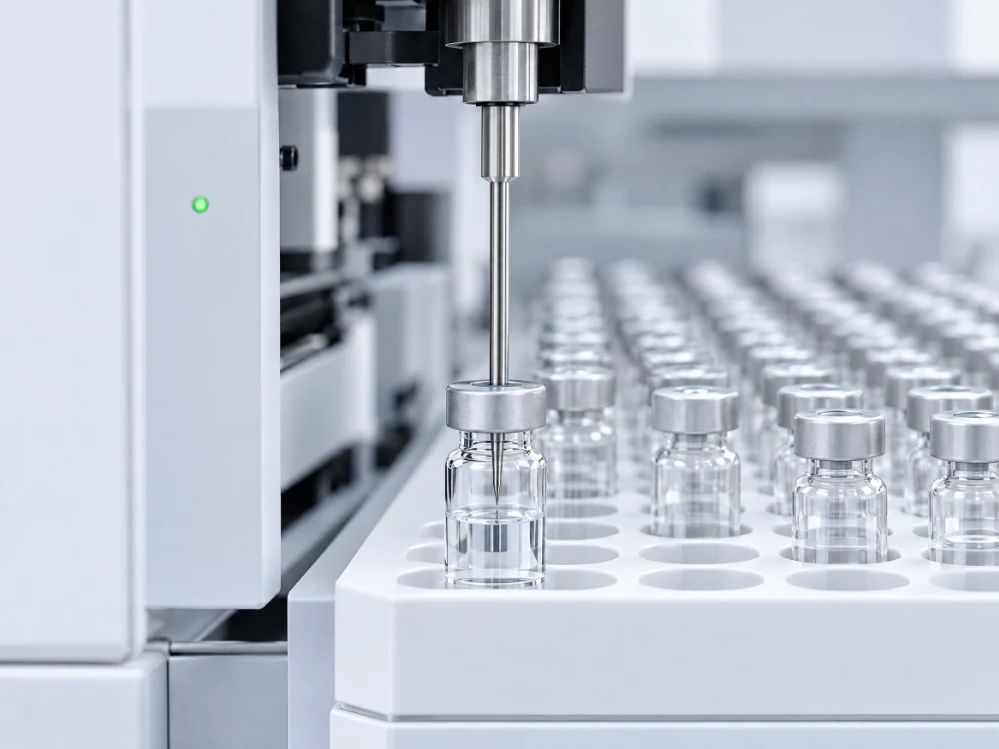 Full walkthrough · JournalHPLC vs mass spec: how purity is tested
Questions
Liquid chromatography–mass spectrometry: a liquid chromatograph connected directly to a mass spectrometer.
Mainly to confirm identity by measuring the peptide’s mass, and to identify impurity peaks by their masses.
HPLC separates components and usually detects them by UV absorbance. LC-MS adds a mass spectrometer that measures the mass of each component.
A way of spraying a liquid into charged droplets so that large molecules such as peptides enter the mass spectrometer intact as ions.
Electrospray usually gives peptides several charges, and each charge state appears at its own mass-to-charge value.
LC-MS with a second stage that fragments selected ions. The fragments can confirm the amino acid sequence.
Within the instrument’s stated tolerance of the expected mass, often within about 1 Da for routine instruments and much closer for high-resolution ones.
Sources and standards
Written and reviewed by the Codex Research quality team · Last reviewed November 8, 2026 · For laboratory research use only.
On real products
These products’ current certificates confirm identity by LC-MS, which is where LC-MS appears. See it on each product page, then read the full guide.
 Blends
Research peptide
Repair Blend
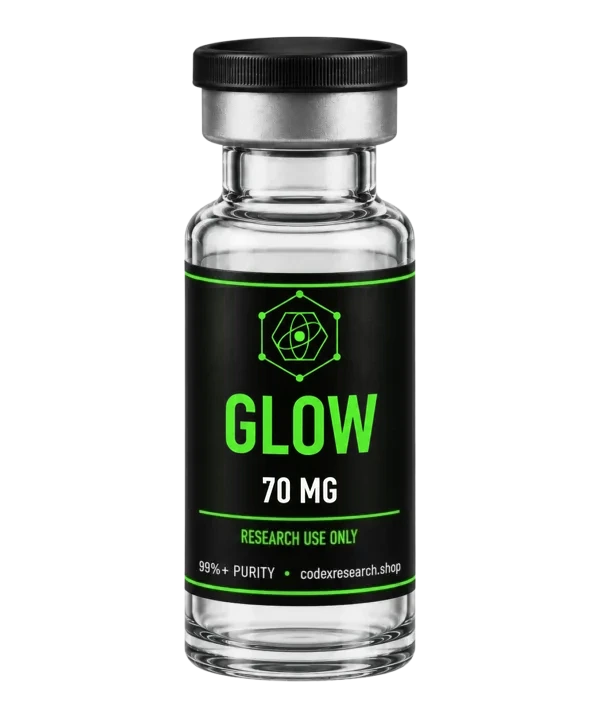
Glow is a three-peptide research blend: 49.87 mg GHK-Cu, 9.88 mg BPC-157 and 9.32 mg TB-500 per vial on the current lot, measured by HPLC and tested on a full safety panel.
 Neuro
Research peptide
Neuropeptide Research
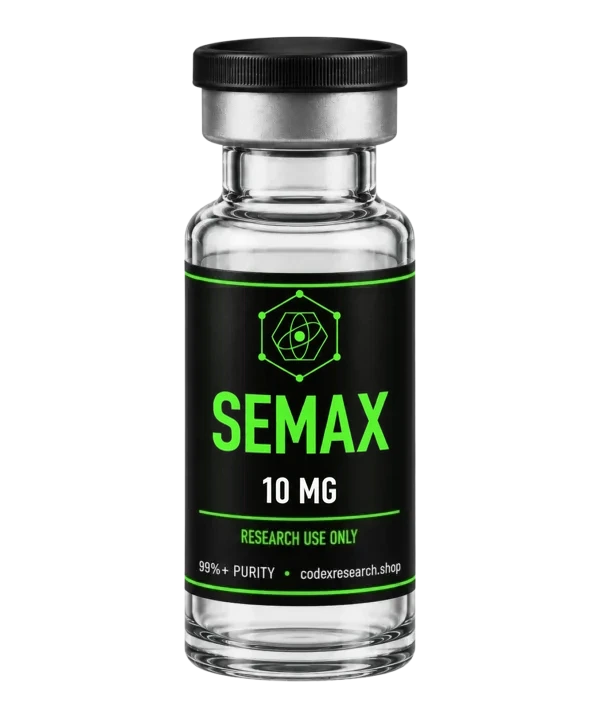
Semax is a seven-residue ACTH(4-7) analogue with a Pro-Gly-Pro tail, studied in BDNF, trkB and cholinergic-neuron research. 5 mg and 10 mg vials, lot-tested by LC-MS.
 Cellular
Research peptide
Hormonal Research
Kisspeptin-10 is the C-terminal decapeptide of kisspeptin and an agonist at KISS1R (GPR54), studied in receptor-signaling and GnRH-neuron research. Lot-tested by LC-MS.
Journal guideHPLC vs mass spec: how purity is testedRead the guideKeep going
 From lab to your door
U.S.-made research vials, shipped with lot-matched, lab-tested COAs you can scan straight off the label.

21+ Only
Codex Research provides research-grade compounds for laboratory and research use only. By entering, you confirm you are at least 21 and agree to our Terms & Conditions.
By proceeding you affirm the statements above are true. Products are supplied for laboratory research use only — not for human or veterinary use, not for use in diagnostic procedures, and not evaluated by the U.S. Food and Drug Administration. Full disclaimer.


