40–50
The headline difference
Chain length
Peptide: 2 to about 50 amino acids in the NIH genome glossary, and 40 or fewer under the FDA line. Protein: more than 40 by the FDA rule, and generally 50 to 2,000 in cell biology.
(“PEP-tide VUR-sus PROH-teen”)
Two words for one kind of molecule, and three references that draw the line in three places.
The short answer
Peptide vs protein means the difference between a short chain of amino acids and a long, folded one.
Both are built from amino acids joined by peptide bonds. The FDA defines a protein as a chain of more than 40 amino acids, the NIH genome glossary puts peptides at 2 to 50, and IUPAC places proteins above a molecular weight of about 10,000.
Reviewed by the Codex Research quality teamUpdated Nov 17, 2026
Word study
Say it
pep·tide vs pro·tein
(“PEP-tide VUR-sus PROH-teen”)
Roots and origin
RootGreek
OriginGreek
Protein is the older word, proposed in 1838 from the Greek for “of the first rank”. Peptide followed in 1902, as a name for the short chains chemists had begun to build in the laboratory.
Around the world
Tap a language to hear it spokenDefinition
A peptide and a protein are the same kind of molecule at two scales. Both are chains of amino acids, and in both each amino acid is joined to the next by a peptide bond. IUPAC defines peptides as amides formed from two or more amino acids, with the carbonyl carbon of one bonded to the nitrogen of another and the formal loss of water. What separates the two words is how long the chain is and whether it folds into a stable three-dimensional shape.
No single number divides them, and three respected references draw the line in three places. The National Human Genome Research Institute describes a peptide as typically 2 to 50 amino acids and calls a chain of 51 or more a polypeptide. IUPAC uses polypeptide from ten residues up and keeps protein for polypeptides with molecular weights greater than about 10,000, adding that the limit is not precise.
US regulation gives the sharpest line. Since March 23, 2020, the FDA rule at 21 CFR 600.3(h)(6) has defined a protein as any alpha amino acid polymer with a specific, defined sequence that is greater than 40 amino acids in size. When separate chains associate the way they do in nature, the count is the total number of amino acids across those chains. A chain of 40 or fewer falls outside that definition.
Length matters because of what it allows. A cell biology textbook hosted by the National Library of Medicine describes proteins as generally between 50 and 2,000 amino acids long, each with a three-dimensional structure determined by the order of its amino acids. That order is the primary structure. The full fold of one chain is its tertiary structure, and a complex of more than one chain has quaternary structure. A short peptide is described by its sequence, and the sequence fixes its mass.
Polypeptide covers the ground in between and is used loosely. In IUPAC’s wording it starts at ten residues, in the NIH genome glossary it starts at 51, and the same textbook notes that proteins are also known as polypeptides. When a listing uses any of the three words, the residue count and the molecular weight are what settle the question.
For someone reading a certificate of analysis, the practical difference is what has to be shown. A short synthetic peptide is defined on paper by its sequence and its expected mass, so identity by mass spectrometry and purity by HPLC answer the main questions. Most compounds in a research peptide catalog are short: GHK has 3 residues and BPC-157 has 15.
Diagram
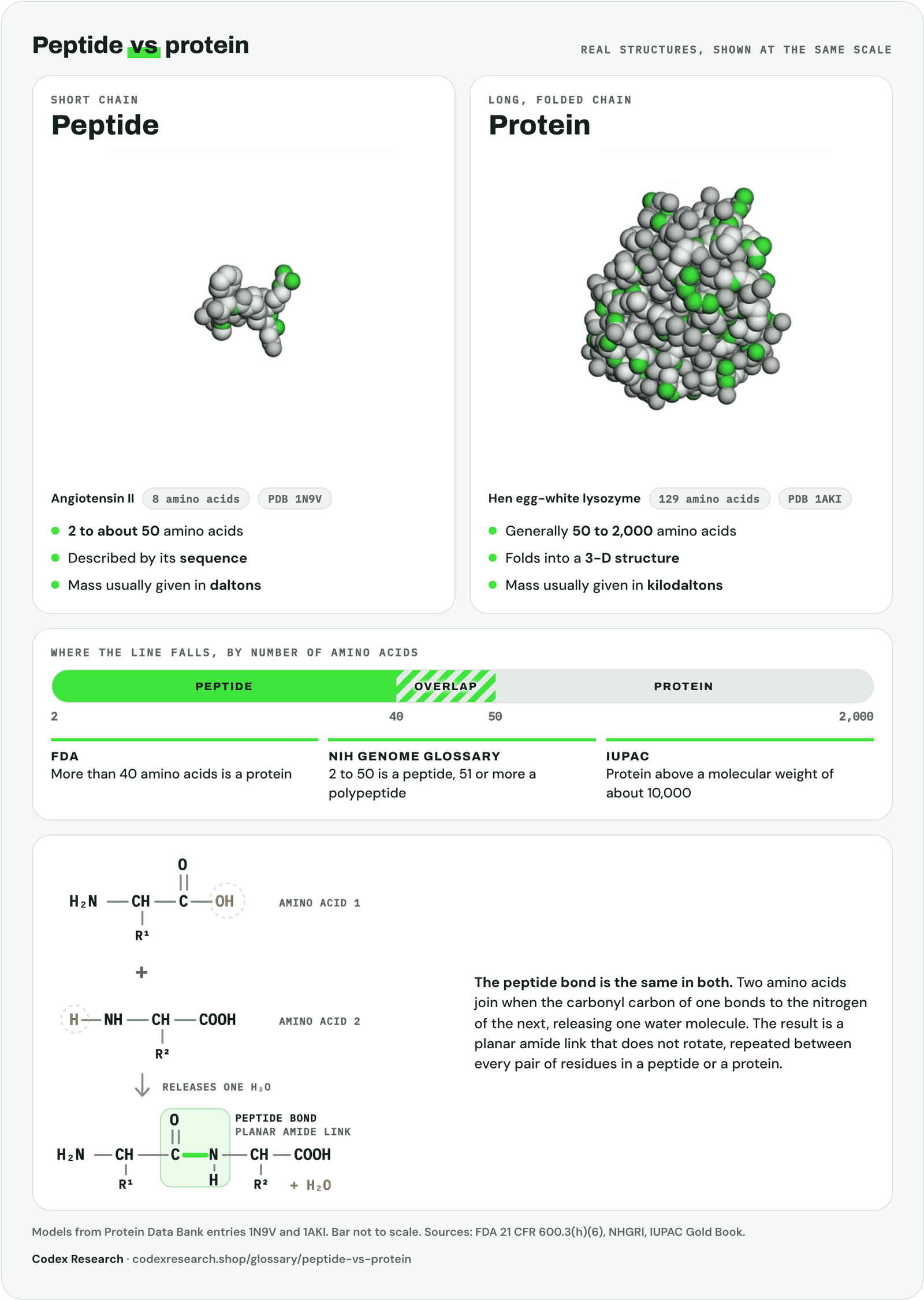
A real peptide and a real protein, drawn from their solved structures at the same scale, with the three dividing lines and the bond both share.
Peptide protein
Real structures, shown at the same scaleShort chain
Peptide
Angiotensin II8 amino acidsPDB 1N9V
Long, folded chain
Protein
Hen egg-white lysozyme129 amino acidsPDB 1AKI
Where the line falls, by number of amino acids
The peptide bond is the same in both. It is a planar amide link between the carbonyl carbon of one amino acid and the nitrogen of the next, formed with the loss of one water molecule.
Free to reuse with credit to Codex Research and a link to this page.Download the diagram (PNG)
Side by side
Peptide: 2 to about 50 amino acids in the NIH genome glossary, and 40 or fewer under the FDA line. Protein: more than 40 by the FDA rule, and generally 50 to 2,000 in cell biology.
IUPAC places proteins above a molecular weight of about 10,000 and says the limit is not precise. Peptide masses are small enough to quote in daltons, while protein masses are commonly quoted in kilodaltons.
A protein folds into a specific three-dimensional structure set by the order of its amino acids. A short peptide is described by its sequence, which fixes its expected mass.
A protein can be a complex of more than one chain, which is its quaternary structure, and the FDA counts amino acids across chains that associate as they do in nature. A peptide is normally a single chain.
The bond
A peptide bond is the amide link between two amino acids. Every peptide and every protein is held together by the same one.
For buyers
Peptide signals a short chain, usually under about 50 residues, and protein signals a long one. Knowing which applies tells you what mass range to expect on the certificate.
The FDA uses more than 40 amino acids, the NIH genome glossary uses 51, and IUPAC uses a molecular weight near 10,000. A stated residue count removes the ambiguity.
Every chain is built from the same peptide bond, so the same detection wavelength and the same sequence notation apply to a 3-residue peptide and a 300-residue protein.
At Codex Research
Most compounds in the Codex Research catalog are short synthetic peptides, each listed by name with a lot-matched certificate of analysis. Identity is confirmed by mass spectrometry against the expected mass, and purity is measured by HPLC for the lot in stock.
See it live: the BPC-157 product page, a 15-residue peptide
Myth vs fact
Tap a card to flip it.
Watch for
Quick check
Find the sequence length. At 40 or fewer the FDA line makes it a peptide; above that, a protein.
A molecular weight far below 10,000 points to a peptide by IUPAC’s measure.
The mass found by mass spectrometry should agree with the expected mass for the stated sequence.
 Full walkthrough · JournalHPLC vs mass spec: how purity is tested
Questions
Chain length and folding. A peptide is a short chain of amino acids, typically 2 to 50 in the NIH genome glossary. A protein is a longer chain, generally 50 to 2,000 amino acids, that folds into a specific three-dimensional structure. Both are held together by the same peptide bonds.
Not by the usual definitions. Peptides and proteins are both chains of amino acids, but protein is kept for the longer ones. The FDA defines a protein as a chain of more than 40 amino acids with a defined sequence, so a chain of 40 or fewer falls outside that definition.
More than 40 under the FDA rule at 21 CFR 600.3(h)(6). Other references differ: the NIH genome glossary calls chains of 51 or more polypeptides, and IUPAC defines proteins by a molecular weight greater than about 10,000 while noting that the limit is not precise.
A polypeptide is one chain, while a protein can be one folded chain or several. IUPAC uses polypeptide for chains of ten or more residues and protein for polypeptides above about 10,000 in molecular weight. The NIH genome glossary describes proteins as made from one or more polypeptides.
A peptide bond forms when the carbonyl carbon of one amino acid bonds to the nitrogen of the next, with the formal loss of one water molecule. The result is an amide link that is planar and does not permit rotation. The same bond joins every residue in peptides and proteins.
Because the peptide bond itself absorbs ultraviolet light there. A 2007 study measured its molar extinction coefficient at 923 M⁻¹ cm⁻¹ at 214 nm. Every residue adds a bond, so an HPLC detector set to 214 to 220 nm responds to the backbone of any peptide or protein.
Not for the word. The FDA definition of a protein rests on a specific, defined sequence of more than 40 amino acids, and the earlier exception for chemically synthesized polypeptides was removed from the statutory definition. Length and sequence decide the term, however the chain was produced.
Sources and standards
Written and reviewed by the Codex Research quality team · Last reviewed November 17, 2026 · For laboratory research use only.
On real products
See peptide vs protein in context on real Codex research products, then read the full guide.
 Dermal
Research peptide
Dermal Matrix Research
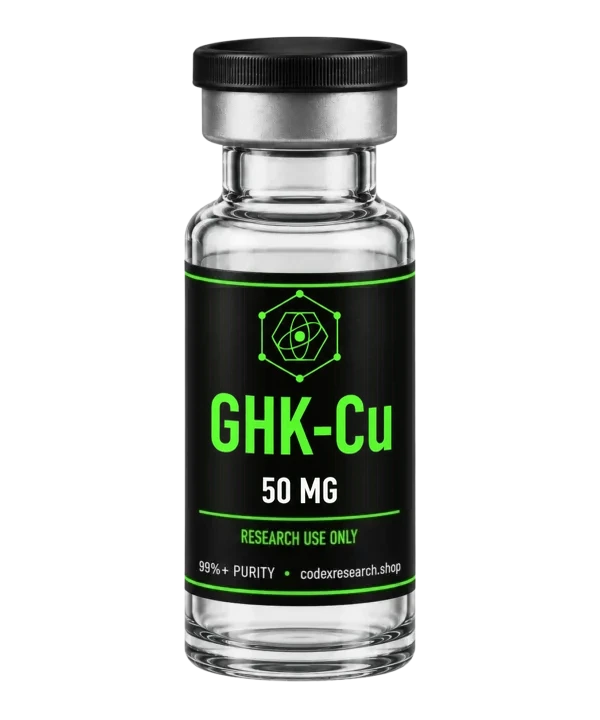
GHK-Cu is the copper(II) complex of the tripeptide Gly-His-Lys, a constituent of human plasma, studied in fibroblast matrix and copper-transport research. Lot-tested by HPLC.
 Cellular
Research peptide
Cellular Research
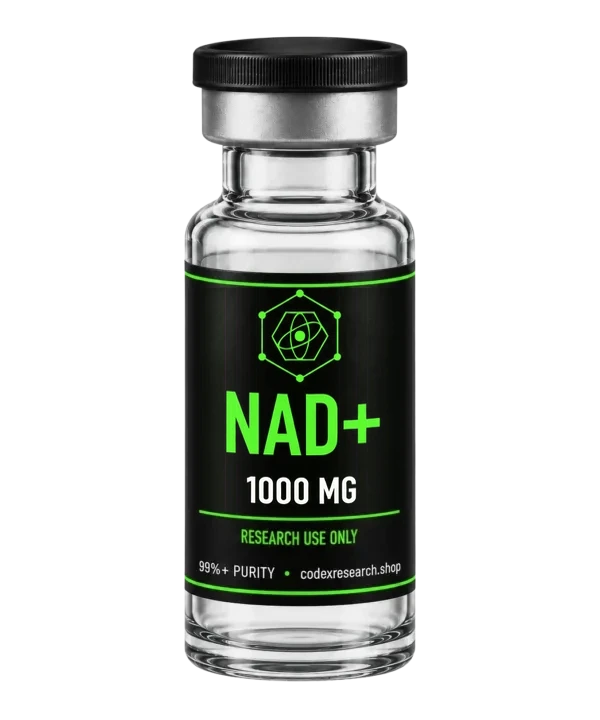
NAD+ is nicotinamide adenine dinucleotide, the oxidized redox coenzyme and sirtuin substrate, supplied as lyophilized powder in 500 mg and 1000 mg vials. Lot-tested by LC-MS.
 Dermal
Research peptide
Melanocortin Research
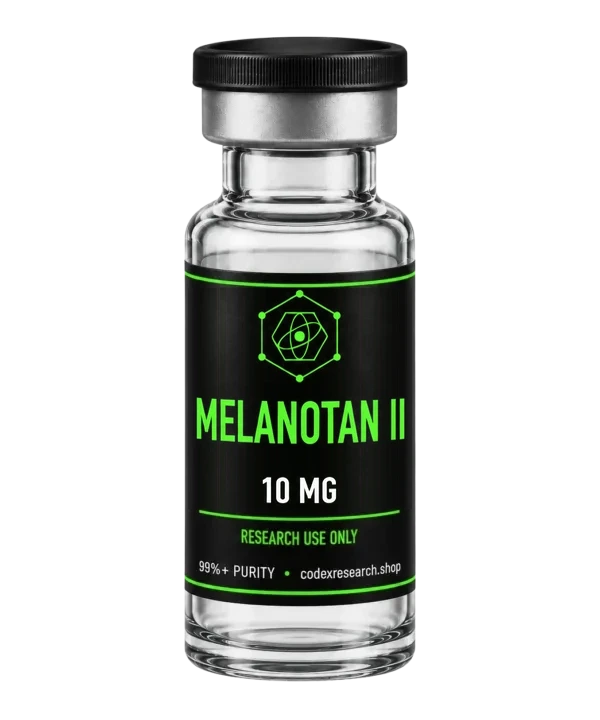
Melanotan II is a cyclic lactam analog of alpha-MSH that binds the melanocortin receptors, lot-tested at 99.91% purity with a published certificate.
Journal guideHPLC vs mass spec: how purity is testedRead the guideKeep going
 From lab to your door
U.S.-made research vials, shipped with lot-matched, lab-tested COAs you can scan straight off the label.

21+ Only
Codex Research provides research-grade compounds for laboratory and research use only. By entering, you confirm you are at least 21 and agree to our Terms & Conditions.
By proceeding you affirm the statements above are true. Products are supplied for laboratory research use only — not for human or veterinary use, not for use in diagnostic procedures, and not evaluated by the U.S. Food and Drug Administration. Full disclaimer.