Assay
mg per vial
Assay (chemical)
The amount of the named substance, measured by HPLC against a reference standard. The meaning on a peptide COA.
(“POH-tun-see AS-ay”)
The one line on a COA that answers “how much is in there?”
The short answer
On a peptide COA, potency or assay is the measured amount of target peptide in the vial, reported in milligrams.
Potency, or assay, on a peptide COA is the amount of target peptide a lab measured in the vial, usually in milligrams and often as a percent of the label. The lab compares the sample’s HPLC peak with a reference standard of known concentration, so the result is an amount.
Reviewed by the Codex Research quality teamUpdated Nov 14, 2026
Word study
Say it
po·ten·cy · as·say
(“POH-tun-see AS-ay”)
Roots and origin
RootLatin
OriginOld French
Assay comes from a Latin word for weighing, and metallurgists used it for testing how much gold or silver an ore held. On a chemical COA it kept that meaning: measuring how much of the named substance is present.
Around the world
Tap a language to hear it spokenDefinition
Every vial carries two questions: what is in it, and how much. HPLC purity answers part of the first one. Potency, also printed as assay or content, answers the second. On the Codex BPC-157 certificate the line reads “Potency (assay) · HPLC · 4.85 mg” for a vial labeled 5 mg, which is 97% of the label.
The word potency means something different in biologics. U.S. biologics rules define it as a product’s specific ability or capacity to produce a given result, shown by appropriate tests, which is why vaccine and antibody makers run cell-based potency assays. A peptide COA uses the word in the older chemical sense, close to “strength”: the measured quantity of the named substance.
The measurement is an external-standard HPLC run. The lab prepares a reference standard of the same peptide at a known concentration, runs it, then runs a solution made from the sample. The ratio of the two main-peak areas, scaled by the known concentration and the sample volume, gives the milligrams of peptide in the vial. The method assumes the standard and the sample give the same detector response per milligram, which holds when both are the same peptide. Federal rules for drug-testing labs require the record to keep the weight of sample used for each test and every calculation, with its conversion factors, so the result can be rebuilt from the raw data.
Assay and purity diverge because a freeze-dried peptide powder holds more than peptide. Residual water and counter-ions such as acetate or trifluoroacetate add weight without forming peptide-related peaks, so a lot can be 99% pure by area and still assay a few percent under the label. A chromatography case study shows the same arithmetic for a reference standard: 99.5% HPLC purity, corrected for 1.4% water and 7.5% salt, gave an assigned potency of 90.6%.
Validation guidance sets out what a credible assay looks like. ICH Q2(R2) gives the typical reportable range for an assay as 80% to 120% of declared content, and expects accuracy to be shown against reference material or by adding a known amount of analyte and checking how much of it the method finds. A COA that reports assay with the method named and a reference standard behind it is giving you a number you can reason with.
Meanings
The amount of the named substance, measured by HPLC against a reference standard. The meaning on a peptide COA.
A product’s ability to produce a given result in a biological test system. The meaning in biologics regulation.
The share of the powder’s total weight that is peptide, measured by amino acid or nitrogen analysis.
HPLC purity corrected for water, solvents and salt, used to assign a reference standard’s strength.
For buyers
Purity is a share. Assay is the line that states milligrams of peptide in the vial.
Water and counter-ions mean a vial can assay below its label while still being high purity.
Assay describes the vial size the lab tested. A 10 mg vial needs its own figure.
At Codex Research
Codex Research product pages show assay on its own line in milligrams for the fill size tested, beside the HPLC purity, so the two numbers are never presented as one. Ask for the certificate for a different fill size or lot.
See it live: the potency (assay) line on the BPC-157 certificate
Myth vs fact
Tap a card to flip it.
Watch for
Quick check
mg per vial, or % of label claim.
Divide the result by the label amount.
The tested size should be the size you bought.
 Full walkthrough · JournalHow to read a peptide certificate of analysis
Questions
On a peptide COA, potency means the measured amount of target peptide in the vial, usually in milligrams. Labs often print it as “Potency (assay)” or “Content.” It is measured by HPLC against a reference standard, and it differs from purity, which is a percentage of the detected peptide material.
Purity is a share: the main HPLC peak’s area as a percent of all peaks. Potency, or assay, is an amount: milligrams of target peptide in the vial, read against a reference standard. Water and counter-ions lower the amount without lowering purity, so the two numbers can differ.
HPLC quantitation is the assay line. The lab compares the sample’s main peak with the peak from a reference standard of known concentration and converts the ratio into milligrams per vial. It differs from HPLC purity, which compares peaks within the sample’s own run and gives a percentage.
A freeze-dried peptide powder holds residual water and counter-ions such as acetate or trifluoroacetate. They add weight but are not peptide, so the measured amount of peptide sits below the gross fill. A result a few percent under label, such as 4.85 mg for a 5 mg vial, is common.
No. Assay gives milligrams of peptide in the vial by HPLC against a reference standard. Net peptide content gives the percentage of the powder’s weight that is peptide, measured by amino acid or nitrogen analysis. Both explain why the label weight is not all peptide, using different measurements.
A specification of “Report” means the lab measured and recorded the value without judging it against a pass limit. Assay rows often appear this way on research COAs. The row cannot pass or fail, so compare the number with the label amount yourself and with the same product’s earlier lots.
No. Assay is measured per vial, so it describes the fill size the lab tested. Identity and HPLC purity describe the peptide and can carry across sizes filled from the same lot. Ask the supplier which size was tested and for the certificate of the size you bought.
Sources and standards
Written and reviewed by the Codex Research quality team · Last reviewed November 14, 2026 · For laboratory research use only.
On real products
The current certificates for these products report a potency result for the lot in stock. See it on each product page, then read the full guide.
 Cellular
Research peptide
Cellular Research
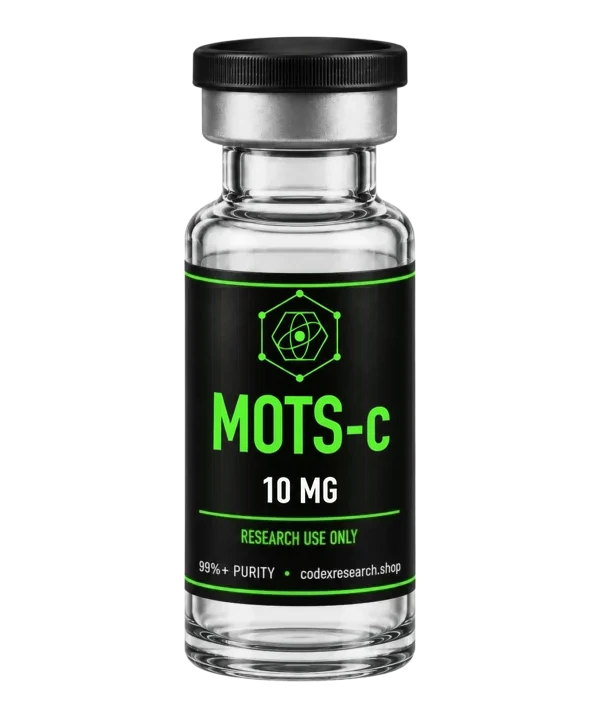
MOTS-c is a 16-residue peptide encoded inside the mitochondrial 12S rRNA gene, studied in AMPK, folate-cycle and mitonuclear signaling research. Lot-tested by LC-MS.
 Repair
Research peptide
Tissue-Repair Research
ARA-290 is an 11-residue peptide engineered from the helix-B face of erythropoietin that binds the EPOR/CD131 heteromer without erythropoietic activity.
 Dermal
Research peptide
Dermal Research
SNAP-8 is an eight-amino-acid peptide modelled on the SNAP-25 N-terminus, studied in SNARE-complex assembly research.
Journal guideHow to read a peptide certificate of analysisRead the guideKeep going
 From lab to your door
U.S.-made research vials, shipped with lot-matched, lab-tested COAs you can scan straight off the label.

21+ Only
Codex Research provides research-grade compounds for laboratory and research use only. By entering, you confirm you are at least 21 and agree to our Terms & Conditions.
By proceeding you affirm the statements above are true. Products are supplied for laboratory research use only — not for human or veterinary use, not for use in diagnostic procedures, and not evaluated by the U.S. Food and Drug Administration. Full disclaimer.