

A certificate of analysis reports the tests a lab ran on one sample on one date. This guide sets out eight things the page cannot tell you, from untested properties and method blind spots to storage after the test, and names the document that fills each gap.
Key takeaways
- A COA reports on the sample a lab tested. ISO/IEC 17025 requires the report to say its results relate only to the items tested.
- A property with no row on the report was not tested. Salt form, water content and residual solvents are the rows most often missing.
- A purity figure depends on the method. In a published re-test, one peptide certified at 95.0% or higher came out at 80.6% on a more selective column.
- Purity is a percentage of the peptide signal, and it says nothing about milligrams. The assay row carries the amount.
- Nothing after the test date is on the page: shipping heat, storage and age all sit outside the report.
ImportantResearch use only. This guide explains the limits of a laboratory test report. It does not describe human or animal use. Codex Research compounds are not evaluated or approved by the FDA and are sold for in-vitro laboratory research only.
Quick answer
A peptide certificate of analysis reports the tests a lab ran on one sample on one date. It cannot tell you about other lots, properties nobody tested, impurities the method could not separate, the amount of peptide when only purity is stated, an unnamed salt form, anything after the test date, or behavior in a biological system.
A COA is a report on a sample
The limits start with what the document is. The WHO model certificate describes it as the list of test procedures applied to a particular sample, with the results and the acceptance criteria [3]. ISO/IEC 17025 requires an accredited lab to print a statement on each report that the results relate only to the items tested [1]. European Accreditation gives the reason for the rule: readers should not extend the results to other items [2]. A2LA, a U.S. accreditation body, describes its labs' results the same way [16].
Everything a COA appears to say beyond "this sample, these tests, this day" is an inference someone else makes. The eight limits below are the places where that inference can fail. For how to read what the page does say, see how to read a peptide COA line by line.
Limit 1: other lots and other vials
A lab tests one vial or a few. The report reaches the rest of the lot through two assumptions. The run was uniform, which is how federal rules define a batch: material intended to have uniform character and quality [4]. And the sample represented the run.
The second assumption has a detail worth asking about: where the sample was drawn. A sample of bulk powder taken before filling describes the peptide. Filling, freeze-drying and sealing all come later, so the fill amount, the dryness of the cake and anything picked up on the filling line show only in a sample of finished vials. Our guide to lyophilized peptides describes those later steps.
Neither assumption reaches a different lot. Purity and assay shift from one production run to the next, so a report for lot A describes lot B no better than a guess. Our guide to matching a COA to your lot number covers the check. See also lot number in the glossary.
Limit 2: tests nobody ran
A COA lists the tests performed. It has no row for a test that was skipped, so the gap is easy to miss.
| Row often missing | What it would have shown | Glossary |
|---|---|---|
| Identity by mass spectrometry | Whether the main peak is the named peptide | LC-MS |
| Assay | Milligrams of peptide in the vial | Net peptide content |
| Counter-ion content | Which salt, and how much of the weight it makes up | Counter-ion |
| Water content | How much of the weight is moisture | Karl Fischer |
| Residual solvents | Solvents left from synthesis and purification | Residual solvents |
| Heavy metals | Trace metals from reagents and equipment | Heavy metals |
| Endotoxin | Bacterial cell-wall fragments | Endotoxin |
| Sterility | Viable microorganisms | Sterility testing |
A second version of the gap sits between the lab and the web page. Many product pages show a table the supplier built from the lab's report. A summary table is the supplier's transcription, and it can leave out rows, methods and the lab's own notes. The lab's PDF is the record.
A two-row report with identity and purity can be accurate on both rows and tell you nothing about the other six. "Pass" applies to the rows present. Count them before you read them.
Drug specifications allow a version of this on purpose. ICH Q6A describes periodic or skip testing, where a maker runs certain tests on pre-selected batches or at set intervals in place of every batch [11]. In that setting the practice is justified and documented. On a research COA, an absent row carries no such explanation unless the supplier gives one.
Limit 3: what the method could not separate or detect
A result is a statement about a method as much as about a sample.
Separation. HPLC purity is the area percent of the main peak: its area as a share of all peaks. Two compounds that leave the column together count as one peak. The Ghent University group showed the size of the effect with a supplier's own trace. The supplier's method reported 95.0% or more for one peptide, and the university's method, run on a different column at a different wavelength, measured 80.6% [5]. The group concluded the supplier's method lacked selectivity.
Same-mass impurities. Mass spectrometry confirms the mass of the main component. A peptide with one racemized residue, a known by-product of synthesis [7], has the same mass as the target. An identity row will not flag it.
Detection floor. Every quantitative method has a quantitation limit, the lowest amount it can measure with suitable precision and accuracy [8]. "None detected" means below the floor. The glossary covers LOD and LOQ and ND.
ICH Q2(R2) states the remedy: where one method lacks specificity, one or more supporting methods should make up for it [8]. That is why a peptide report pairs HPLC with mass spectrometry, as our comparison of HPLC and mass spectrometry explains. A COA that names its column, gradient and wavelength lets a chemist judge the method. Most summaries give the technique's name and stop.
Limit 4: a purity percentage carries no milligrams
Purity compares peptide peaks with each other. It is blind to anything the UV detector does not see, and that includes water and salts. A vial can read 99% pure while counter-ions and moisture make up a real share of the powder's weight.
The amount comes from a different row. Assay, sometimes labeled HPLC quantitation, compares the sample against a reference of known concentration and reports milligrams. If the report has purity and no assay, the label is the only statement of how much peptide is in the vial, and the label is the supplier's figure. See HPLC purity in the glossary and our guide to peptide purity grades.
Limit 5: salt form and counter-ions
Peptides purified by HPLC usually leave the process as salts, most often trifluoroacetate (TFA), because TFA is in the solvent. Many reports never say so.
The omission has a measured cost in cell culture. In a 1999 study from the University of Auckland, TFA alone lowered cell counts in fetal rat osteoblast cultures within 24 hours at concentrations between 10⁻⁸ and 10⁻⁷ M. The authors then ran three peptides as TFA salts and as hydrochloride salts. The TFA versions gave lower proliferation each time, enough to hide an effect or suggest a false one [9]. A researcher who does not know the salt form cannot control for it. The glossary has entries for TFA and acetate.
Limit 6: everything after the test date
A COA is dated. The vial keeps aging after that date, and the report does not follow it.
Under ICH Q1A(R2), stability testing exists to show how the quality of a material changes over time as temperature, humidity and light act on it [10]. A COA is one point on that curve. It contains no stability data unless the report says so.
Three things happen after the test:
- Transit. A parcel can sit in a hot truck or a cold depot. See research peptides in transit.
- Storage. A hygroscopic cake takes up moisture if a seal fails, and moisture speeds degradation such as deamidation.
- Time. Regulated materials carry a retest date, the point after which they should be examined again before use [12]. Most research COAs carry a report date alone.
The WHO model allows for this. A certificate that travels with goods can list the shipping and storage conditions it assumes, and it stops being valid if those conditions are not kept [3]. See also shelf life and stability study.
Limit 7: biological behavior
A COA is analytical chemistry. Identity, purity, amount and contaminants are all measured on the material itself. No row describes what the compound does in a cell, a tissue or an organism, and no row can.
The same goes for regulatory status. A testing lab's report involves no regulator. The federal rule for research materials, 21 CFR § 312.160, turns on labeling: the container has to say the contents are for laboratory research animals or in-vitro tests and are not for use in humans [15]. See what research use only means, whether research peptides are legal and RUO in the glossary.
Limit 8: the page cannot vouch for itself
A PDF shows what its author put on it. Whether a lab issued it, and for which sample, is a question the page cannot answer about itself.
Standards put the means of checking on the document. The WHO model calls for the lab's name and address, a certificate number and the signature of an authorized person [3]. ISO/IEC 17025 requires the report to identify who authorized it [1]. ICH Q7 asks a repacker or distributor that issues its own certificate to name the laboratory that did the analysis and to attach the original maker's certificate [12].
Those fields let you verify the issuer. Look up the lab's contact details yourself, quote the report ID and ask it to confirm the lot and the results. A report that names no lab gives you nothing to call. Our guide to third-party testing and fake COAs lists the signs of an altered report, and the glossary covers third-party testing, ISO 17025 and chain of custody.
Pass, conforms and Report: what a specification can hide
A specification, in ICH Q6A's words, is a list of tests, references to analytical procedures and acceptance criteria [11]. The third column of a COA is judged against it, and the wording there can hold back information.
| What the row says | What you learn | What you do not learn |
|---|---|---|
| "Pass" or "Conforms" | The result met the limit | The measured value and the margin |
| Specification: "Report" | A value was recorded | Whether any limit applies |
| "≤ 0.05 EU/mg: Pass" | The result was at or under the limit | Whether it was near the limit or far under |
| "None detected" | Nothing above the detection floor | Where the floor is |
ICH Q6A adds that specifications are one part of a total control strategy, chosen to confirm quality rather than to characterize a material in full [11]. The limit itself is the supplier's choice. A purity specification of 95.0% and one of 98.0% produce the same "Pass" for a lot at 98.5%.
Measurement uncertainty: why 99.2% is a range
A purity of 99.23% looks exact to two decimals. It is a single measurement, and a second run would land a little to either side. ICH Q2(R2) defines precision as the closeness of agreement between a series of measurements from multiple samplings of the same homogeneous sample, and it separates repeatability within one lab from reproducibility between labs [8]. The WHO model says a certificate should state the uncertainty of a result where that is relevant [3].
Few research COAs state it. Without it, a small difference between two lots, or between two suppliers, may sit inside the noise of the method. Compare 99.2% and 99.4% with that in mind.
How often certificates and re-tests disagree
Published re-tests give the limits a size.
- Ghent University, 2015. The group ordered 98 synthetic peptides at 95.0% purity or higher. All 98 certificates stated at least 95.0%. On re-test, 43 met it. None of the nine cyclic peptides exceeded 90.0%, and after discussion the suppliers said they had been unable to make them at the requested purity [5].
- Ghent University, 2008. One peptide bought from several sources: one product was a different peptide, and two-thirds of the rest had purity under 95% or a single impurity above 1% [6].
- Impurity review, 2014. The same group catalogued what such impurities are: sequences with missing or extra amino acids, racemized residues, oxidized side chains, dimers, residual TFA and, in some products, contamination by unrelated peptides [7].
These studies looked at custom research peptides, and they are over a decade old. They do not measure any supplier today. They show that a certificate and the material can disagree, and that the disagreement was common enough to publish.
Why regulated industry does not stop at the certificate
Drug makers take a supplier's certificate as a starting point, by rule.
- Identity is always re-tested. Under 21 CFR § 211.84, a supplier's report can stand in for a maker's own testing on other attributes, provided the maker performs an identity test of its own and has validated the supplier's results over time [13]. FDA's slides give the short form: some attributes, never identity [14].
- Trust is earned batch by batch. ICH Q7 has a maker fully analyze a minimum of three batches from a supplier before it leans on that supplier's certificates, and repeat a full analysis from time to time [12].
The structure matters more than the detail. People whose work depends on certificates read them as claims to be checked against the supplier's record.
Documents that fill each gap
| Gap | Ask for |
|---|---|
| Other lots | The certificate for the lot on your vial |
| Missing tests | The full lab report, or the supplier's test list for that lot |
| Method blind spots | Chromatogram, peak table and mass spectrum |
| Amount | An assay row in mg per vial |
| Salt form | The salt named, with counter-ion content if measured |
| After the test date | Storage conditions, shipping method and any re-test |
| Authenticity | Lab name, report ID and a contact route |
| Lab safety information | The safety data sheet |
Each request is ordinary. A supplier that commissions lot testing receives most of these from the lab already.
Common misconceptions
"A COA proves the vial is pure." It reports one lab's measurement on one sample. That is evidence of a kind, weighted by the method.
"More decimals mean more accuracy." Decimals show how the instrument printed the number.
"Pass on every row means tested for everything." It means the rows present passed.
"A recent date means a current result." The date marks the test. The material has aged since.
"An accredited lab's report certifies the product." Accreditation covers the lab's competence for the listed tests. The report still relates to the items tested [1].
What a COA does tell you
None of this makes the document weak. A lot-matched report with an identity row, a purity row with its method, an assay and contaminant tests answers the questions that matter most at the bench: which molecule, how pure, how much, and what else came with it. No other document does that. The limits tell you where to look next.
How Codex Research handles these limits
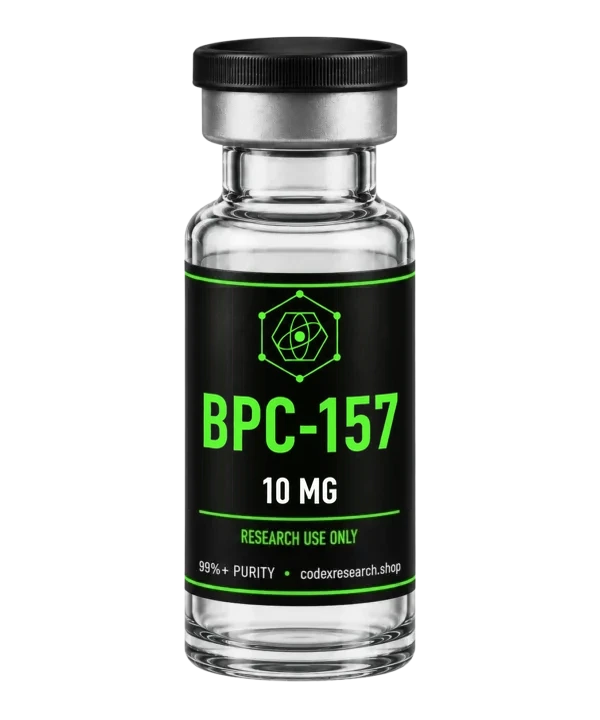
Codex Research compounds are lab tested. For lots with reported results, the product page carries the lot code, the test table and the certificate as a download. The BPC-157 report, for example, has ten rows: identity by LC-MS, assay, purity, pH, water activity, endotoxin, sterility, yeast and mold, residual solvents and heavy metals. Each report names the fill size the lab tested and carries its report date.
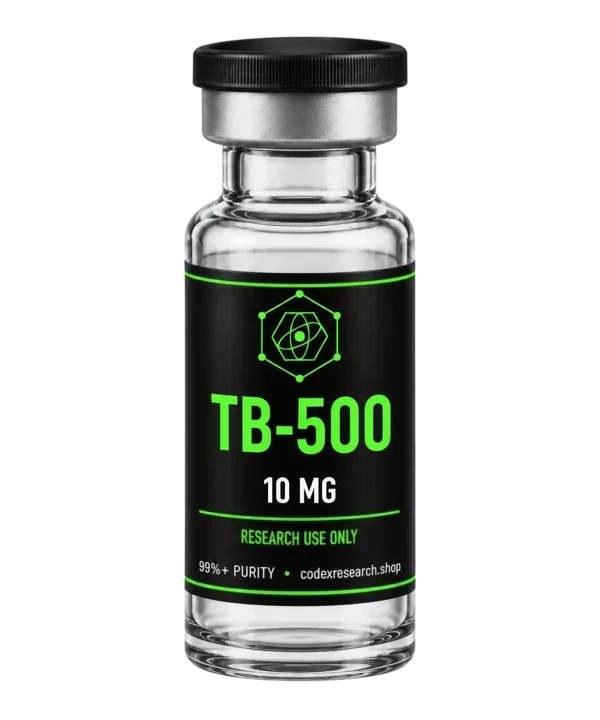
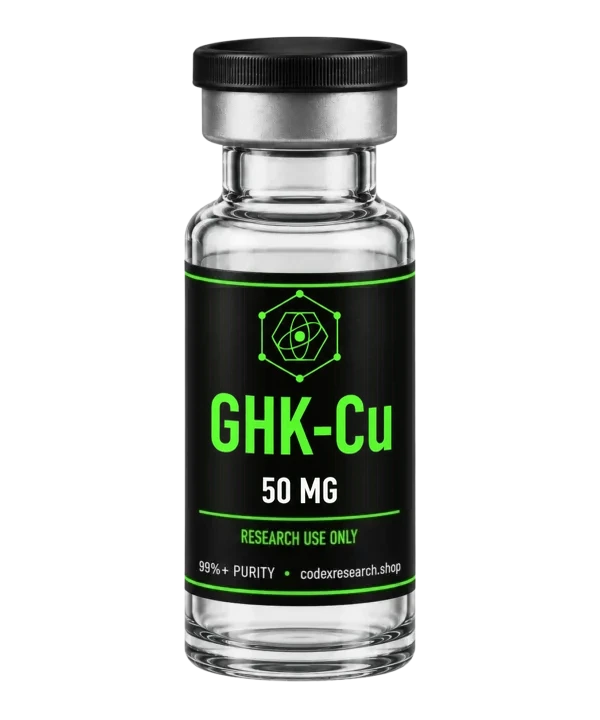
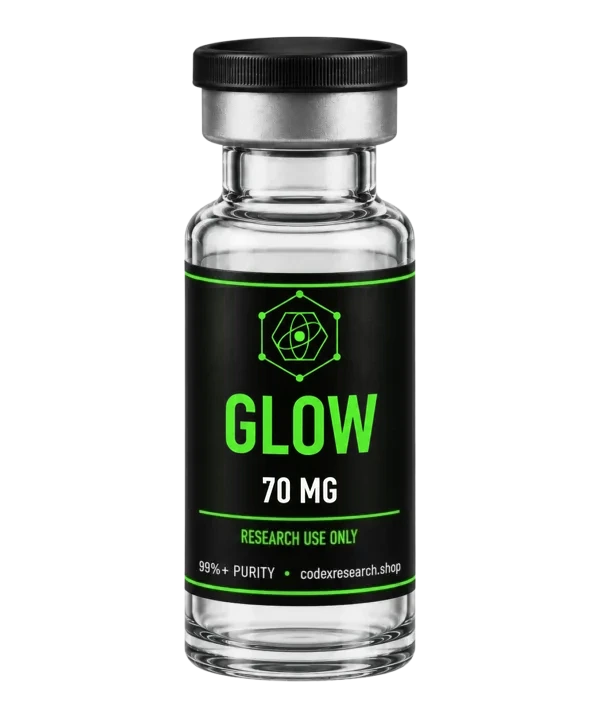
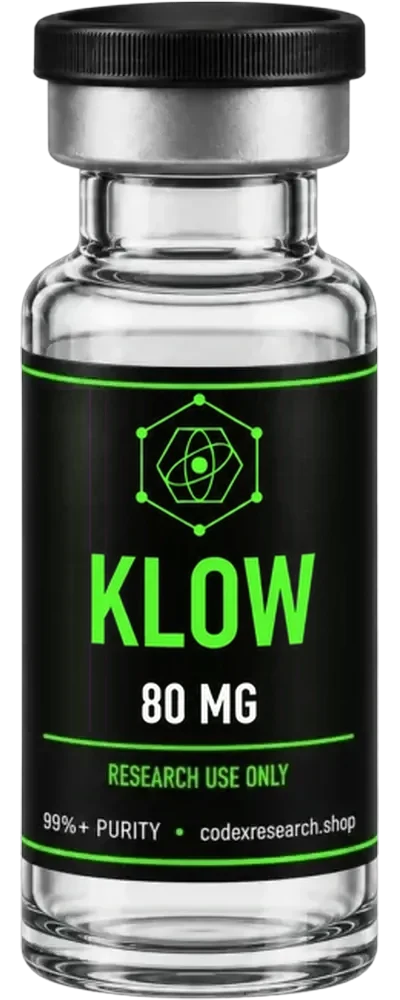
The limits above apply to our reports as they do to any other. A result describes the sample tested on the report date. For a different lot or fill size, or for a question the table does not answer, write to info@codexresearch.shop. You can compare reports on the pages for TB-500, MOTS-c, GHK-Cu, Glow and Klow, or browse the glossary for any term on them.
Frequently asked questions
What information is missing from a peptide COA?
What are the limits of a peptide certificate of analysis?
Does a peptide certificate of analysis prove purity?
Does a COA cover every vial in the lot?
Does HPLC quantitation on a peptide COA show how much peptide is in the vial?
How do you verify the issuer of a peptide COA?
Can a peptide be 99% pure and still be the wrong compound?
What does a COA not say about storage and shipping?
Does a passing COA mean every test was run?
Why can two labs report different purity for the same peptide lot?
Does a COA show the counter-ion or salt form?
Does none detected mean a contaminant is absent?
How long is a peptide COA valid?
Does a certificate of analysis mean a peptide is FDA approved?
What should I ask a supplier when a COA leaves something out?
References
- National Institute of Standards and Technology. ISO/IEC 17025 crosswalk, clause 7.8: Reporting of results.
- European Accreditation. FAQ 42.1: Question on reporting, ISO/IEC 17025:2017 clause 7.8.2.1 l).
- World Health Organization. Model certificate of analysis. WHO Technical Report Series 1010, Annex 4.
- Electronic Code of Federal Regulations. 21 CFR § 210.3, Definitions (batch, lot, lot number).
- Verbeke F, Wynendaele E, Braet S, D’Hondt M, De Spiegeleer B. Quality evaluation of synthetic quorum sensing peptides used in R&D. J Pharm Anal. 2015;5(3):169-181.
- De Spiegeleer B, Vergote V, Pezeshki A, Peremans K, Burvenich C. Impurity profiling quality control testing of synthetic peptides using liquid chromatography-photodiode array-fluorescence and liquid chromatography-electrospray ionization-mass spectrometry: the obestatin case. 2008. PMID 18342612.
- D’Hondt M, Bracke N, Taevernier L, et al. Related impurities in peptide medicines. J Pharm Biomed Anal. 2014;101:2-30.
- ICH. Q2(R2) Validation of Analytical Procedures.
- Cornish J, Callon KE, Lin CQ, et al. Trifluoroacetate, a contaminant in purified proteins, inhibits proliferation of osteoblasts and chondrocytes. Am J Physiol. 1999;277(5):E779-E783.
- ICH. Q1A(R2) Stability Testing of New Drug Substances and Products.
- ICH. Q6A Specifications: Test Procedures and Acceptance Criteria for New Drug Substances and New Drug Products: Chemical Substances.
- ICH. Q7 Good Manufacturing Practice Guide for Active Pharmaceutical Ingredients, sections 7.3 and 11.4.
- Electronic Code of Federal Regulations. 21 CFR § 211.84, Testing and approval or rejection of components, drug product containers, and closures.
- U.S. FDA. Presentation slides on component testing and reliance on supplier certificates of analysis.
- Electronic Code of Federal Regulations. 21 CFR § 312.160, Drugs for investigational use in laboratory research animals or in vitro tests.
- American Association for Laboratory Accreditation (A2LA). Article on what accredited test results cover.








 From lab to your door