


Glow and Klow share three of their peptides. The difference is one small molecule, KPV, and everything that follows from adding it: a fourth research pathway, a higher total mass and a harder job for the testing lab. This guide compares the two blends component by component.
Key takeaways
- Glow is a three-peptide blend: GHK-Cu, BPC-157 and TB-500. Klow keeps those three and adds KPV, a three-residue piece of α-MSH.
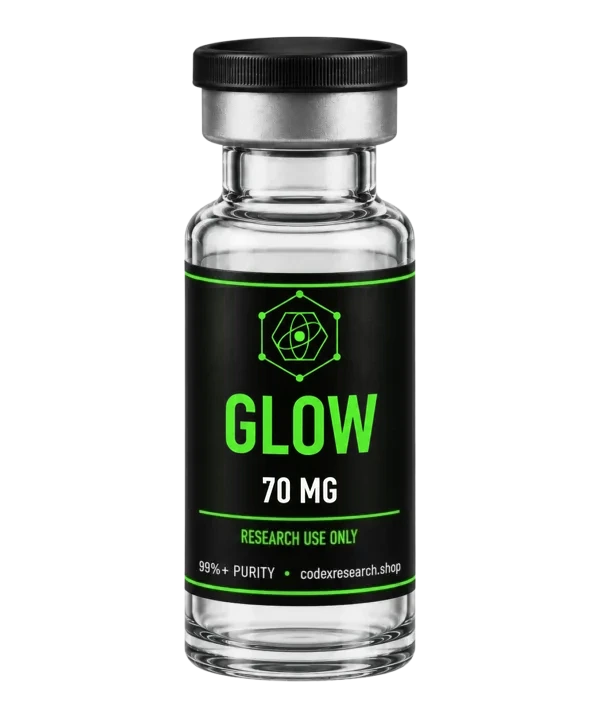
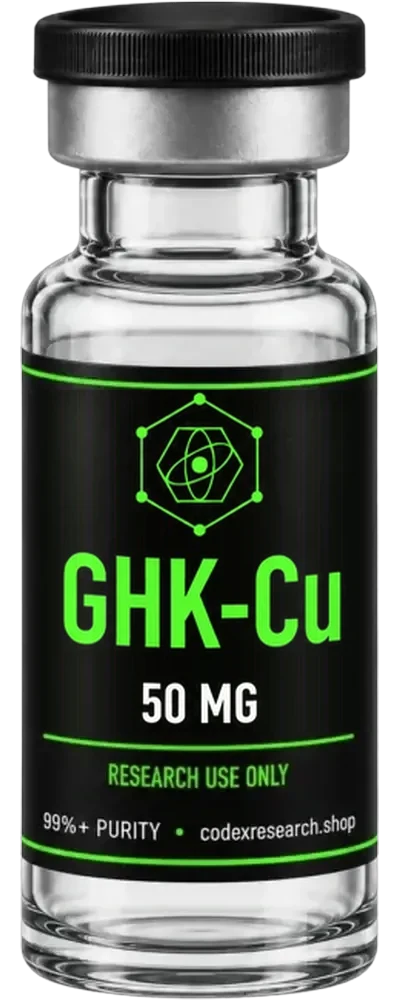
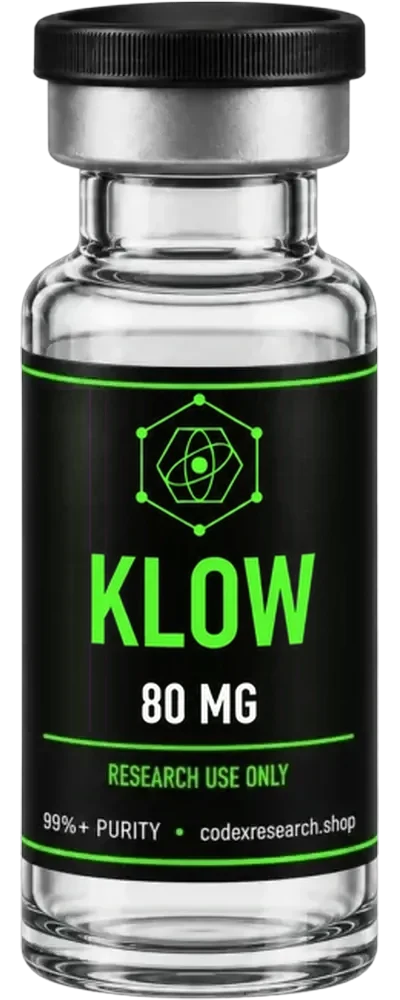
- On Codex vials, Glow is labelled 70 mg and Klow 80 mg. The current Glow certificate breaks the 70 mg into roughly 50 mg GHK-Cu, 10 mg BPC-157 and 10 mg TB-500.
- KPV is studied mainly in inflammatory-signalling models, where it is taken up by the PepT1 transporter and is reported to dampen NF-κB activity in cell lines. That pathway is the research difference between the two blends.
- Neither blend has been studied as a finished combination in the published literature. What exists is research on each component on its own, so blend work is comparative by design.
- A blend is harder to test than a single peptide. A strong certificate names every component, confirms each identity and, ideally, reports how much of each is present.
ImportantResearch use only. This comparison describes the composition of two research blends and how their components are studied in laboratory models. It does not describe human or animal use. Codex Research compounds are not approved by the FDA and are sold for in-vitro laboratory research only.
Quick answer
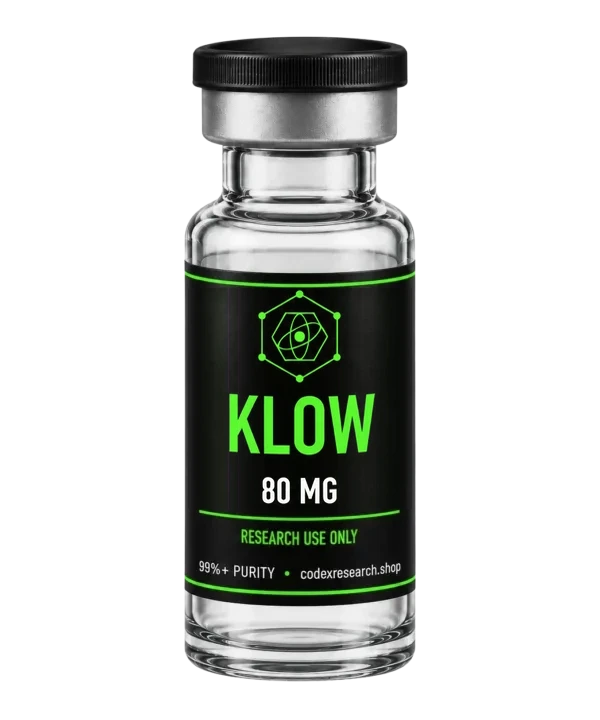
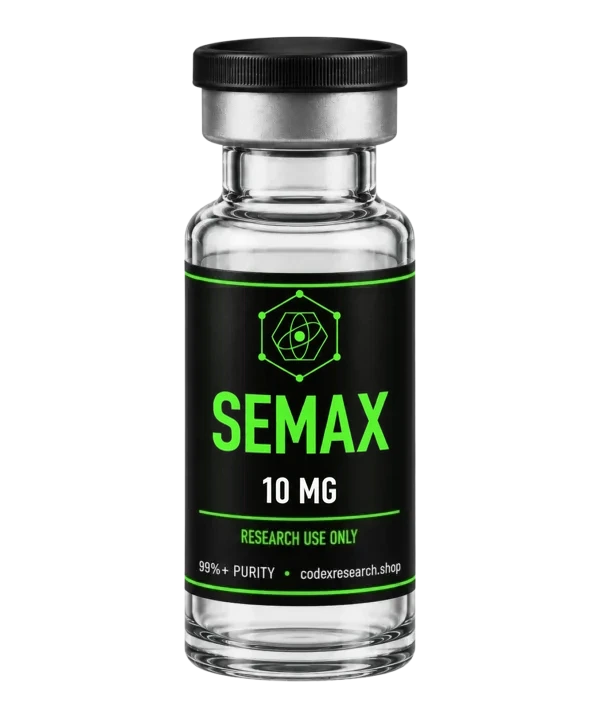
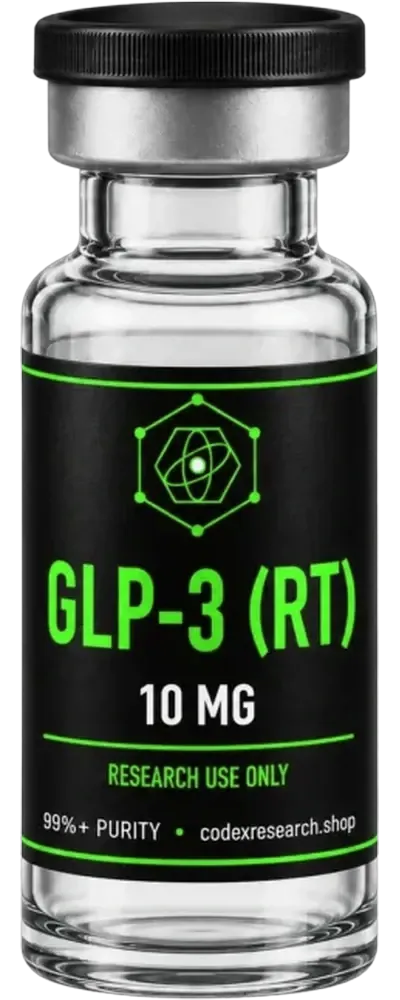
Glow and Klow are the same blend with one difference: KPV. Glow combines three research peptides in one vial: GHK-Cu, BPC-157 and TB-500. Klow contains those same three plus KPV, a three-amino-acid fragment of alpha-melanocyte-stimulating hormone (α-MSH). On Codex vials, Glow is labelled 70 mg and Klow 80 mg.
KPV is small, but it brings a different research pathway into the vial, inflammatory signalling through the PepT1 transporter and NF-κB [11, 12], alongside the matrix, migration and angiogenic pathways the Glow components are studied in. It also makes the blend harder to test, because every added component is another identity to confirm and another amount to measure.
Glow and Klow at a glance
| Glow | Klow | |
|---|---|---|
| Components | GHK-Cu, BPC-157, TB-500 | KPV, GHK-Cu, BPC-157, TB-500 |
| Number of peptides | 3 | 4 |
| Codex label | 70 mg | 80 mg |
| Component split (current Codex lot) | 49.87 / 9.88 / 9.32 mg by HPLC assay | 80.20 mg total across four peptides |
| Current Codex purity | 99.91% by RP-HPLC | 99.77% by HPLC (four peptides) |
| Research pathways covered | Copper and matrix (GHK-Cu), angiogenic signalling (BPC-157), actin and migration (TB-500) | All of Glow's, plus PepT1 uptake and NF-κB signalling (KPV) |
| Format | Lyophilized powder, single vial | Lyophilized powder, single vial |
| Regulatory status | Not FDA approved; research use only | Not FDA approved; research use only |
The rest of this guide takes each component in turn, then looks at what changes when you put four peptides in one vial instead of three.
Why research blends exist at all
Most laboratory work with peptides starts with a single, well-characterized compound. Blends exist because many of the processes researchers study involve several pathways at once. A cell-migration assay, for example, can be influenced by changes in the actin cytoskeleton, by angiogenic growth-factor signalling and by the surrounding extracellular matrix. A blend lets a lab add several reference compounds in a fixed ratio from a single lot, with one certificate behind them.
That convenience comes with a trade-off. A blend is only as useful as the documentation that describes it. Researchers need to know which components are present, in what amounts, and how pure each one is, otherwise any result is hard to attribute. The testing section later in this guide covers what that documentation should include.
On the evidence: neither Glow nor Klow has been studied as a finished combination in the published literature. What exists is research on each component individually. Work with a blend is therefore comparative by design: the combination is usually run alongside each single peptide so that any difference can be traced back to a specific component.
The shared core: GHK-Cu, BPC-157 and TB-500
Three of Klow's four peptides are identical to Glow's. Understanding those three explains most of what either blend is.
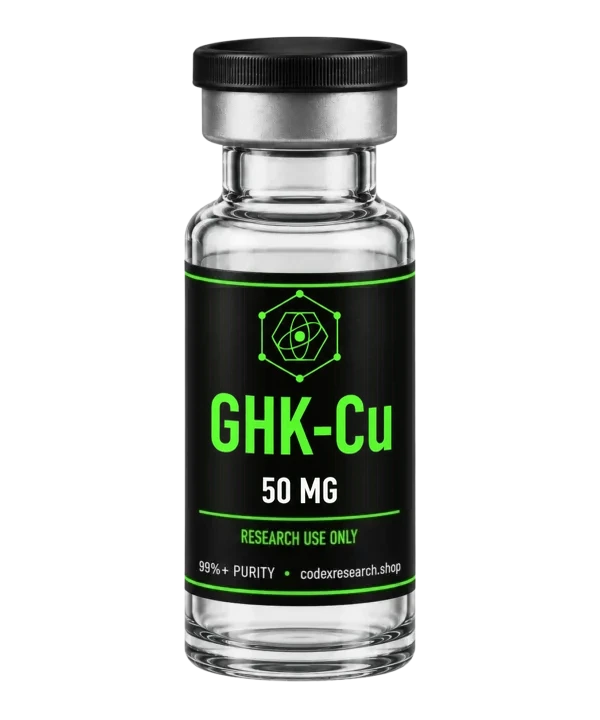
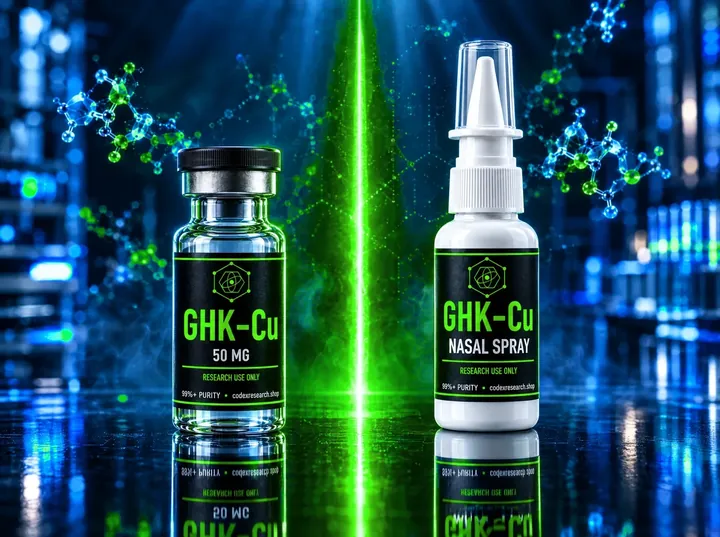
GHK-Cu
GHK is a tripeptide, glycyl-L-histidyl-L-lysine, first isolated from human plasma in 1973 [1]. It binds copper(II) with high affinity, and in that complexed form it is known as GHK-Cu. Early work proposed that the peptide acts as a copper-transport factor, showing that it readily forms complexes with copper and enhances copper uptake into cultured cells [2].
In laboratory research, GHK-Cu is studied mainly in collagen and extracellular-matrix models. Studies in cultured dermal fibroblasts report changes in collagen and elastin production and in the expression of matrix metalloproteinases and their inhibitors, and gene-expression analyses using the Broad Institute's Connectivity Map report that GHK influences a large share of human genes [3, 4].
| Property | GHK-Cu |
|---|---|
| Sequence | Gly-His-Lys, complexed with copper(II) |
| Length | 3 amino acids |
| Approximate molecular weight | About 340 Da for GHK; about 402 Da for the copper complex |
| Origin | Isolated from human plasma |
| Main research areas | Copper transport, collagen and extracellular-matrix models, gene-expression studies |
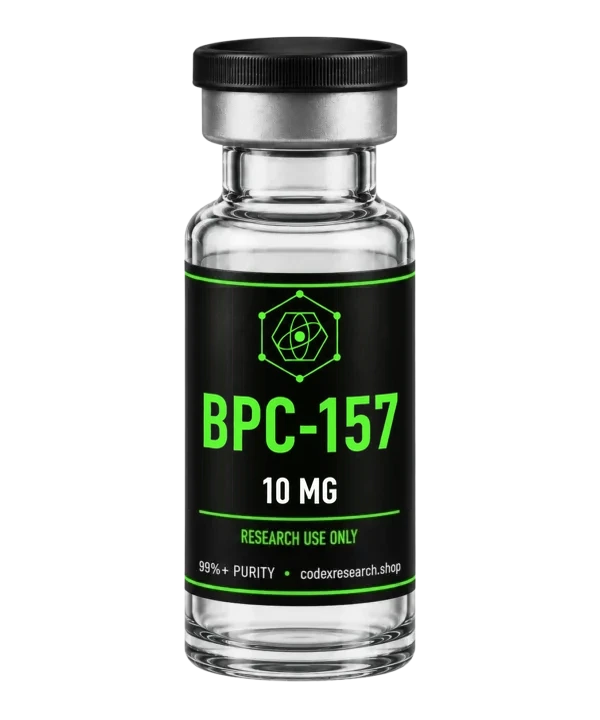
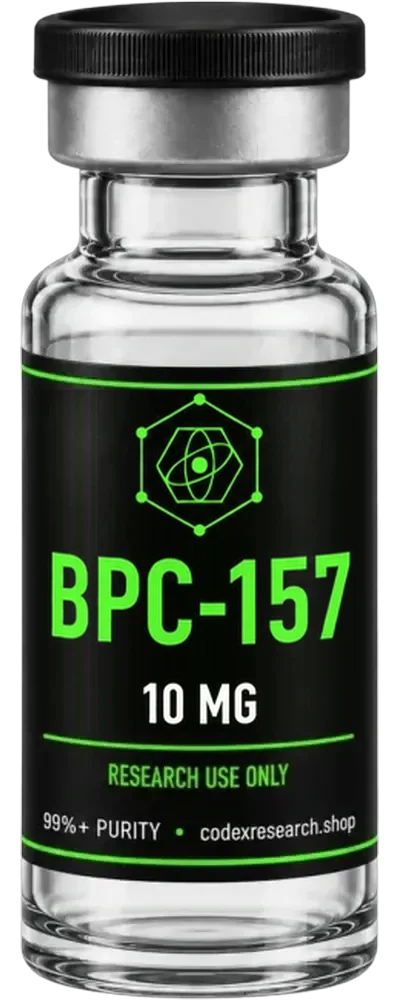
BPC-157
BPC-157 is a fifteen-residue peptide, a partial sequence of a larger "body protection compound" first described in gastric juice. It is notable among peptides for its stability, which is one reason it has been studied so widely.
Two lines of laboratory work dominate. In tendon fibroblast cultures, BPC-157 was reported to accelerate the outgrowth of fibroblasts from tendon explants and to increase their migration and spreading, effects linked to activation of the FAK-paxillin pathway, while having no direct effect on proliferation [5]. In endothelial cell work, it was associated with increased expression and internalization of vascular endothelial growth factor receptor 2 (VEGFR2) and activation of the VEGFR2-Akt-eNOS signalling pathway [6]. A broad review places these findings in the context of standard angiogenic growth factors [7].
| Property | BPC-157 |
|---|---|
| Sequence | Gly-Glu-Pro-Pro-Pro-Gly-Lys-Pro-Ala-Asp-Asp-Ala-Gly-Leu-Val |
| Length | 15 amino acids |
| Approximate molecular weight | About 1,419 Da |
| Origin | Partial sequence of a protein described in gastric juice |
| Main research areas | Fibroblast migration, VEGFR2 angiogenic signalling, cytoprotection models |
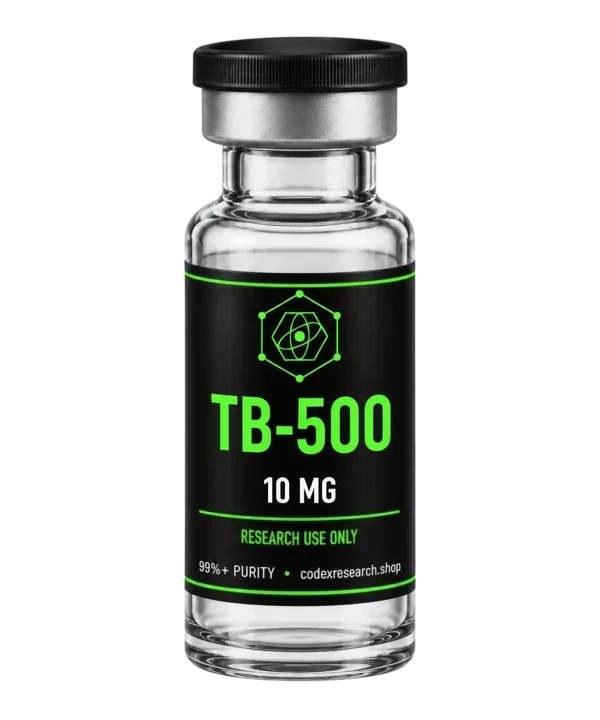
TB-500
TB-500 refers to a synthetic peptide modelled on the actin-binding region of thymosin beta-4 (Tβ4), a 43-amino-acid protein found in most cells. Tβ4 is the main actin-sequestering protein in many cell types: it holds monomeric actin in reserve, which cells draw on when they reorganize their internal scaffolding to move or change shape [8]. Mutational work mapped the actin-binding site to the region around residues 17 to 23 [14].
Analytical studies of products sold as TB-500 identified the active content as the N-terminally acetylated heptapeptide Ac-LKKTETQ, corresponding to that 17-23 region [9, 10]. Most of the biological literature, including foundational work in dermal repair models, concerns full-length Tβ4 rather than the fragment [8, 15], so check which molecule a source describes.
| Property | TB-500 |
|---|---|
| Sequence | Ac-Leu-Lys-Lys-Thr-Glu-Thr-Gln (Tβ4 residues 17-23, N-acetylated) |
| Length | 7 amino acids |
| Approximate molecular weight | About 889 Da |
| Parent protein | Thymosin beta-4 (43 amino acids) |
| Main research areas | Actin binding, cell migration, angiogenesis models |
How the three fit together
The reason these three appear together is that they are studied in different but overlapping pathways. GHK-Cu is associated with the matrix that cells sit in, BPC-157 with angiogenic signalling and fibroblast migration, and TB-500 with the actin machinery that drives movement. In a cell-migration or matrix-remodelling model, each touches a different part of the same process. Glow is built on that logic, and Klow keeps it unchanged.
The difference: what KPV adds in Klow
What KPV is
KPV is a tripeptide, lysine-proline-valine, that corresponds to residues 11 to 13 at the C-terminal end of α-MSH [11, 12]. α-MSH is a melanocortin peptide hormone, and its C-terminal fragment was investigated because it appeared to retain some of the parent hormone's activity in inflammatory models while being far smaller.
| Property | KPV |
|---|---|
| Sequence | Lys-Pro-Val |
| Length | 3 amino acids |
| Approximate molecular weight | About 342 Da |
| Parent peptide | Alpha-melanocyte-stimulating hormone, residues 11-13 |
| Main research areas | PepT1 transport, NF-κB and MAP kinase signalling, inflammatory models |
How KPV is studied
The main mechanistic paper on KPV examined human intestinal epithelial cell lines (Caco2-BBE and HT29-Cl.19A) and Jurkat T cells stimulated with pro-inflammatory cytokines. Nanomolar concentrations of KPV were reported to inhibit activation of the NF-κB and MAP kinase signalling pathways and reduce pro-inflammatory cytokine secretion, and the study found that KPV is taken up into cells by PepT1, a di- and tripeptide transporter [11]. The same paper and a second group's work examined KPV in mouse models of intestinal inflammation, and the second study reported that its effects appeared to be at least partly independent of the melanocortin-1 receptor [11, 12].
No Glow component is studied through this pathway. GHK-Cu, BPC-157 and TB-500 are studied for matrix, angiogenic and cytoskeletal processes. KPV is studied for inflammatory signalling inside the cell, reached through a transporter rather than a surface receptor.
Why that matters for research design
Adding KPV changes the questions a blend can address. A study using Glow can look at matrix, migration and vascular endpoints. A study using Klow can include an inflammatory-signalling arm in the same system, for example cytokine-release assays in epithelial or macrophage cell lines run alongside migration assays.
It also adds a variable. If a lab moves from Glow to Klow and sees a different result, the cleanest interpretation requires KPV alone as a control, plus the Glow components without it. This is the main reason many protocols keep the single peptides on hand alongside either blend.
Side by side: the four components
| Component | In Glow | In Klow | Length | Approx. MW | Studied pathway |
|---|---|---|---|---|---|
| GHK-Cu | Yes | Yes | 3 aa + Cu | ~402 Da | Copper transport, collagen and matrix |
| BPC-157 | Yes | Yes | 15 aa | ~1,419 Da | FAK-paxillin migration, VEGFR2-Akt-eNOS |
| TB-500 | Yes | Yes | 7 aa (acetylated) | ~889 Da | Actin binding, cell migration |
| KPV | No | Yes | 3 aa | ~342 Da | PepT1 uptake, NF-κB and MAPK signalling |
The two smallest components, GHK and KPV, are each only three amino acids long and carry a lot of charge for their size. Small, polar peptides are among the harder molecules to resolve well by reversed-phase HPLC, which affects how a blend containing both is tested.
Composition and the label: what 70 mg and 80 mg mean
The number on a blend vial is the total labelled peptide content, not the amount of any one component. On the current Codex Glow certificate (lot KIZN072426), the HPLC assay reports 49.87 mg GHK-Cu, 9.88 mg BPC-157 and 9.32 mg TB-500, which is consistent with a 50 / 10 / 10 mg design and the 70 mg label.
Klow is labelled 80 mg, 10 mg more than Glow, and its current certificate (lot FLL-0629) reports 80.20 mg total across four peptides. Read together, the labels show Klow carrying the same Glow core plus 10 mg of additional content.
Three points are worth keeping in mind when reading blend labels:
- Molecules, not milligrams, drive ratios. GHK-Cu is about a quarter of the molecular weight of BPC-157, so 50 mg of GHK-Cu represents far more molecules than 10 mg of BPC-157. A mass ratio and a molar ratio can look very different.
- Assay figures land near the label, not on it. Real assay results sit slightly above or below the design amounts. 9.32 mg against a 10 mg design is ordinary analytical and manufacturing variation, which is why certificates report measured values instead of repeating the label.
- Net peptide content is a separate number. Lyophilized peptides also contain bound water and counter-ions, so the weight of powder in a vial is not the same as the weight of peptide. See the glossary entry on net peptide content for how the two figures differ.
How each blend is tested, and what a strong COA shows
Why blends are harder to test than single peptides
For a single peptide, the core tests answer two questions: is it the right molecule, and how much of the material is that molecule? For a blend, both questions have to be answered for every component, and the components can interfere with each other.
- Identity has to confirm several expected masses, not one. A good LC-MS run shows the mass of each component at its own retention time.
- Purity becomes more complicated. A single main-peak percentage no longer applies, so a report gives a total figure across all the expected components, and the method has to separate each of them from the others and from their impurities.
- Quantity is where blends differ most. Reporting how much of each component is present needs a calibrated assay for each one.
Each extra component makes all three harder, and Klow has one more than Glow.
What the current Codex certificates report
The current lots of the two blends were tested by different independent laboratories with different panels, and the reports reflect that.
| Test | Glow (lot KIZN072426, Optiq Health Labs) | Klow (lot FLL-0629, Accurate Test Labs) |
|---|---|---|
| Identity | GHK-Cu + BPC-157 + TB-500 by LC-MS | Four peptides covered by the HPLC purity test |
| Per-component assay | 49.87 / 9.88 / 9.32 mg | 80.20 mg total |
| Purity | 99.91% by RP-HPLC (spec ≥ 98.0%) | 99.77% across four peptides |
| Endotoxin | Pass (spec ≤ 0.05 EU/mg, LAL) | 0.01 EU/mg (spec ≤ 35.00 EU/mg) |
| Sterility | No growth (USP <71>) | Not on this report |
| Residual solvents | None detected (GC-MS, 22 analytes) | Not on this report |
| Heavy metals | None detected (ICP-OES) | Not on this report |
Both reports are lot-specific and name the testing laboratory. The Glow report is the fuller panel. When comparing blends, or any two products, check that you are comparing the same tests, not just the headline purity number. A 99.9% figure from one panel and a 99.8% figure from another are not directly comparable if the methods differ.
A checklist for any blend certificate
When you review a COA for a multi-peptide product, look for:
- The lot number, matching the vial.
- Every component named in the identity line.
- An identity method, such as LC-MS, ideally with observed and theoretical masses.
- A purity method and specification, such as RP-HPLC against ≥ 98.0%.
- An assay for each component, so the ratio on the label can be verified.
- Contaminant results such as endotoxin, with the limit stated.
- The laboratory and report ID, so the document can be checked.
Our guide on third-party testing covers what a complete certificate contains and how to verify it, and HPLC vs mass spec explains why identity and purity need different methods.
Stability and handling as research materials
Both blends are supplied as lyophilized (freeze-dried) powder, which is the most stable form for peptides in storage and transit. Lyophilized peptides are typically hygroscopic, so moisture is the main threat to a sealed vial, followed by heat and light.
Blends add one consideration. Different peptides have different chemical weak points. BPC-157 contains aspartic acid residues, TB-500 contains glutamine, and several components contain lysine, so the overall stability of a blend reflects its least stable component, not its most stable one. Pathways such as deamidation and oxidation are the usual reasons a peptide degrades over time, and our guide to peptides in transit, heat, cold and storage covers how temperature affects lyophilized material.
| Handling point | Glow | Klow |
|---|---|---|
| Supplied form | Lyophilized powder | Lyophilized powder |
| Main storage risks | Moisture, heat, light | Moisture, heat, light |
| Lot traceability | Lot number on vial and COA | Lot number on vial and COA |
Regulatory status of both blends
The FDA has not approved either blend, or any of the four peptides in them, for human or veterinary use. Codex Research supplies Glow and Klow for in-vitro laboratory research and nothing else. Our explainer on what research use only means covers what that designation does and does not permit.
Sporting bodies regulate this category strictly. Section S0 of the World Anti-Doping Agency's Prohibited List bans any pharmacological substance that no health authority has approved for human use, and the list cites BPC-157 by name [13]. TB-500 has been the subject of doping-control method development in equine sport [10]. Both blends contain BPC-157 and TB-500, so this applies to Glow and Klow equally.
Common misconceptions
"Klow is a stronger version of Glow." It is a different composition, not a stronger one. The Glow core is the same; Klow adds a fourth peptide studied in a different pathway.
"A bigger number on the label means more of everything." The extra 10 mg on a Klow label reflects the added component. It does not mean more GHK-Cu, BPC-157 or TB-500.
"The blend has been studied as a combination." The published research covers the individual components. There is no body of literature on these specific finished blends.
"Two purity numbers can be compared directly." Only if they come from the same method and panel. A blend's purity figure depends heavily on how the laboratory separated and integrated each component.
Which blend fits which research question?
The choice comes down to whether a study needs an inflammatory-signalling component.
| If the study focuses on | The closer fit is |
|---|---|
| Matrix, collagen and copper-dependent processes, cell migration and angiogenic signalling | Glow |
| All of the above plus NF-κB or cytokine signalling in epithelial or immune cell lines | Klow |
| Attributing an effect to one specific pathway | The single peptides, run alongside either blend |
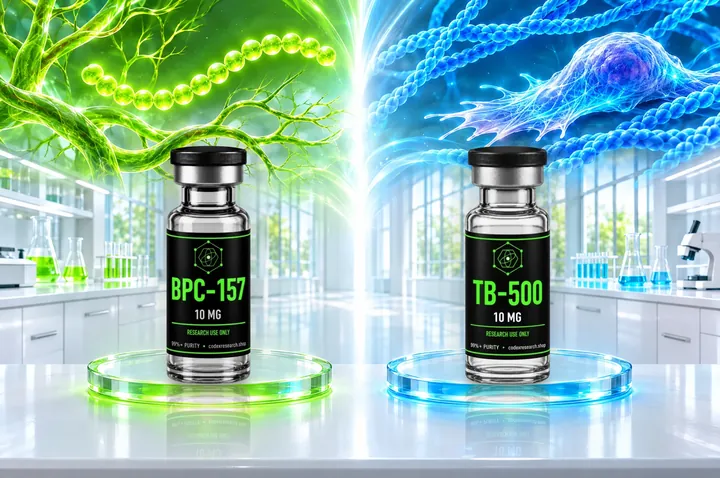
Codex Research also supplies the components individually, including GHK-Cu, BPC-157 and TB-500, for labs that need single-compound controls. For a closer look at the two most-studied components, see our BPC-157 vs TB-500 comparison. Single-compound profiles are also available: What is BPC-157? and What is GHK-Cu?.
What this comparison does not tell you
This comparison covers what is in each vial, what the published research says about each component and how each lot is tested. It says nothing about how either blend behaves in a person or an animal, makes no safety or effectiveness claim, and does not stand in for the certificate that comes with your lot.
How Codex Research documents Glow and Klow
An independent laboratory tests each Codex Glow and Klow lot, and the current certificate sits on each product page: Glow and Klow. Check that the lot number on the page matches the one printed on your vial. For the full PDF report of a specific lot, email info@codexresearch.shop.
Frequently asked questions
What is the difference between Glow and Klow?
Why is it called Klow?
What is KPV?
How much of each peptide is in Glow?
Is Klow just Glow with KPV added?
Has the Glow or Klow blend been studied as a combination?
What pathways are the Glow components studied in?
Why is GHK-Cu the largest component?
Which blend is harder to test?
What should a COA for a peptide blend show?
Why do the Glow and Klow certificates look different?
Are Glow and Klow FDA approved?
Is KPV on the WADA Prohibited List?
How should Glow and Klow be stored as research materials?
Which blend should a lab choose?
References
- Pickart L, Thaler MM. Tripeptide in human serum which prolongs survival of normal liver cells and stimulates growth in neoplastic liver. Nat New Biol. 1973;243(124):85-87.
- Pickart L, Freedman JH, Loker WJ, et al. Growth-modulating plasma tripeptide may function by facilitating copper uptake into cells. Nature. 1980;288(5792):715-717.
- Pickart L, Margolina A. Regenerative and protective actions of the GHK-Cu peptide in the light of the new gene data. Int J Mol Sci. 2018;19(7):1987.
- Pickart L, Vasquez-Soltero JM, Margolina A. GHK peptide as a natural modulator of multiple cellular pathways in skin regeneration. Biomed Res Int. 2015;2015:648108.
- Chang CH, Tsai WC, Lin MS, Hsu YH, Pang JH. The promoting effect of pentadecapeptide BPC 157 on tendon healing involves tendon outgrowth, cell survival, and cell migration. J Appl Physiol. 2011;110(3):774-780.
- Hsieh MJ, Liu HT, Wang CN, et al. Therapeutic potential of pro-angiogenic BPC157 is associated with VEGFR2 activation and up-regulation. J Mol Med. 2017;95(3):323-333.
- Seiwerth S, Rucman R, Turkovic B, et al. BPC 157 and standard angiogenic growth factors. Gastrointestinal tract healing, lessons from tendon, ligament, muscle and bone healing. Curr Pharm Des. 2018;24(18):1972-1989.
- Goldstein AL, Hannappel E, Kleinman HK. Thymosin β4: actin-sequestering protein moonlights to repair injured tissues. Trends Mol Med. 2005;11(9):421-429.
- Esposito S, Deventer K, Goeman J, Van der Eycken J, Van Eenoo P. Synthesis and characterization of the N-terminal acetylated 17-23 fragment of thymosin beta 4 identified in TB-500, a product suspected to possess doping potential. Drug Test Anal. 2012;4(9):733-738.
- Ho EN, Kwok WH, Lau MY, et al. Doping control analysis of TB-500, a synthetic version of an active region of thymosin β4, in equine urine and plasma by liquid chromatography-mass spectrometry. J Chromatogr A. 2012;1265:57-69.
- Dalmasso G, Charrier-Hisamuddin L, Nguyen HT, et al. PepT1-mediated tripeptide KPV uptake reduces intestinal inflammation. Gastroenterology. 2008;134(1):166-178.
- Kannengiesser K, Maaser C, Heidemann J, et al. Melanocortin-derived tripeptide KPV has anti-inflammatory potential in murine models of inflammatory bowel disease. Inflamm Bowel Dis. 2008;14(3):324-331.
- World Anti-Doping Agency. The Prohibited List, section S0: Non-approved substances.
- Van Troys M, Dewitte D, Goethals M, et al. The actin binding site of thymosin beta 4 mapped by mutational analysis. EMBO J. 1996;15(2):201-210.
- Malinda KM, Sidhu GS, Mani H, et al. Thymosin β4 accelerates wound healing. J Invest Dermatol. 1999;113(3):364-368.






 From lab to your door